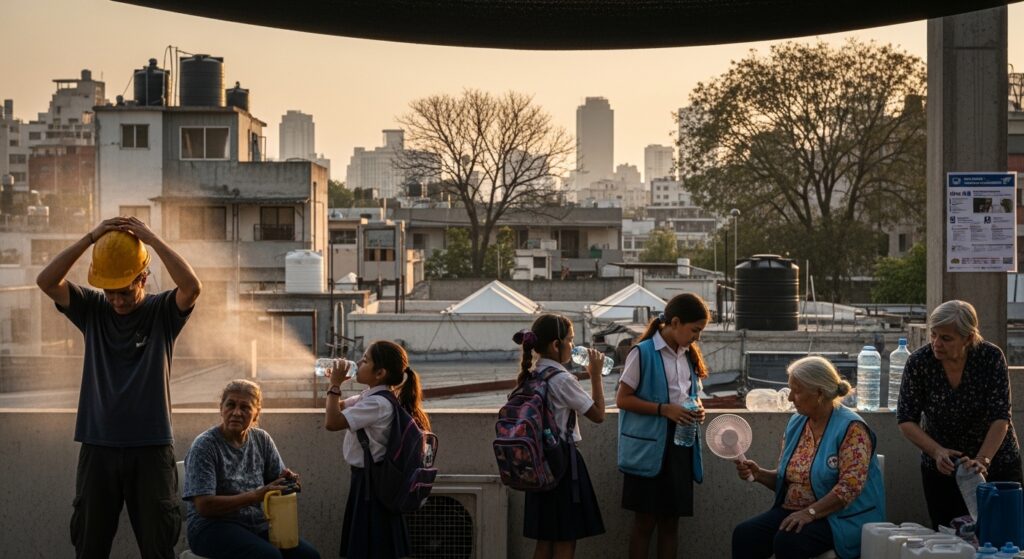
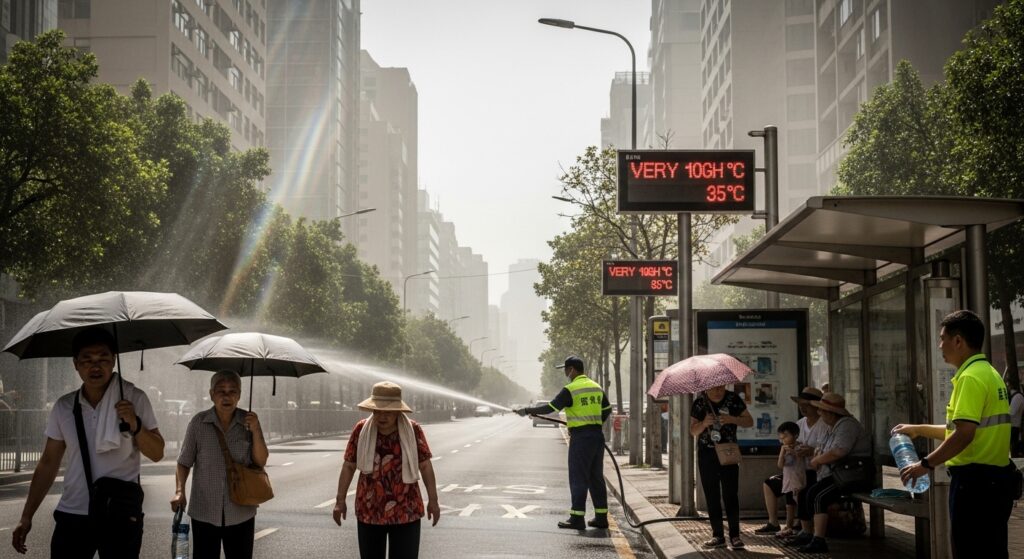
From crowded cities and strained power grids to fields, factories and classrooms, extreme heat is becoming one of the clearest and most relentless signs of a warming planet.
Extreme heat is no longer a seasonal anomaly. It is becoming a defining feature of life in a warming world, arriving earlier, lasting longer and pushing communities far beyond what public health systems, infrastructure and daily routines were built to handle.
Scientists say the trend is clear. Human-caused climate change has increased the frequency and intensity of heatwaves since the 1950s, and every additional increment of warming raises the odds of even more severe heat extremes. What once qualified as a rare event is now appearing with unsettling regularity across multiple continents in the same year.
The stakes have risen sharply after 2024 became the hottest year on record globally, according to major international climate monitors. It was also the first calendar year to exceed 1.5 degrees Celsius above the pre-industrial average in global mean temperature, a symbolic and sobering milestone for a planet already showing the strain of higher baseline heat.
For ordinary people, the consequences are measured less in climate charts than in disrupted lives. Heat now shuts schools, buckles roads, threatens harvests, weakens labor productivity and fills emergency rooms with patients suffering dehydration, heat exhaustion and heart stress. In many places, the danger is magnified by humidity, poor housing, scarce green space and unreliable electricity, turning a hot day into a public emergency.
Cities are on the front line. Dense construction, traffic, concrete and limited tree cover trap heat long after sunset, creating urban heat islands where nighttime relief can vanish. That matters because prolonged exposure without recovery is one of the deadliest aspects of a heatwave. When temperatures stay high overnight, the human body has less chance to cool down, and risks rise for older adults, infants, pregnant women and those with chronic illnesses.
Health agencies have been warning that heat is not simply uncomfortable weather. It can worsen cardiovascular disease, respiratory illness and kidney problems, while also increasing the risk of heatstroke, a medical emergency that can kill quickly if untreated. Outdoor workers, delivery drivers, farm laborers, construction crews and factory workers are especially vulnerable because the heat they face is often inseparable from the wages they need to survive.
That economic pressure is turning extreme heat into a quiet labor crisis. Global labor experts have long warned that rising temperatures reduce working hours and productivity, particularly in agriculture and construction. The pattern is increasingly visible across lower-income and middle-income countries, where millions of people work outdoors or in poorly ventilated spaces and cannot afford to stop. For them, adaptation is not just about air-conditioning or urban design. It is about whether a day’s income can be earned without risking collapse.
Children are also emerging as some of the most exposed victims of hotter extremes. Schools without cooling, insulation or safe drinking water become difficult or dangerous places to learn during prolonged heat. UNICEF has warned that climate-related disruptions, including heatwaves, interrupted schooling for hundreds of millions of children in 2024, underlining how climate stress is spilling directly into education systems. The burden falls hardest on poorer communities, where backup systems are weakest and classrooms are least prepared.
In wealthier countries, the heat crisis looks different but no less serious. Power demand surges as households and businesses switch on cooling systems, increasing the risk of grid stress and blackouts precisely when cooling becomes lifesaving. Hospitals face spikes in admissions. Fire risk can intensify in dry landscapes. Water systems come under pressure. Insurance losses climb. What is sometimes described as a natural disaster increasingly behaves like a cross-sector shock, hitting health, energy, transport and food supply at the same time.
The problem is not only that heatwaves are becoming more frequent. It is that societies remain poorly adapted to them. Many countries still treat extreme heat as a secondary hazard, despite evidence that it can be one of the deadliest weather-related threats. Floods and storms are visually dramatic and often command immediate attention. Heat, by contrast, kills more quietly. Death certificates may list cardiac arrest or renal failure rather than the heat that helped trigger them. That invisibility has allowed the danger to remain underestimated.
Researchers are also paying closer attention to the limits of human survival under compounded heat and humidity. New studies suggest that dangerous thresholds may arrive sooner for older people and other vulnerable groups than earlier models assumed. That has sharpened concerns for rapidly growing cities in South Asia, the Middle East, parts of Africa and other regions where intense sun, dense population and limited cooling access can combine into lethal conditions.
The response is slowly changing. Governments, cities and employers are beginning to develop heat action plans that include early warning alerts, public cooling centers, adjusted working hours, school closures, shaded public spaces and emergency health messaging. International agencies are also pushing for stronger worker protections, including access to water, rest, shade and revised safety standards during heat events. But progress remains uneven, and implementation often lags behind the speed of the threat.
Adaptation, experts say, must go beyond temporary emergency measures. Cooler roofs, more trees, better building materials, stronger public health surveillance and heat-aware urban planning can reduce risk over time. So can social policies that protect workers from lost wages when temperatures become dangerous. In many countries, the question is no longer whether extreme heat will arrive, but whether institutions can respond before it becomes catastrophic.
Yet adaptation alone will not solve the problem. Climate scientists continue to stress that the long-term trajectory of heat extremes depends on reducing greenhouse gas emissions. The hotter the world becomes, the harder and more expensive it will be to protect people from the consequences. Every fraction of a degree matters, not only in annual averages but in the severity of the hottest days that communities must endure.
What is unfolding now is a slow-moving redefinition of normal. Summer is lengthening in many places. Heat records are falling with startling frequency. Seasons once associated with renewal are starting with emergency warnings. The language used by officials has changed too, with heat increasingly described not as inconvenience but as hazard, crisis and killer.
The world has faced heat before, but today’s extremes are arriving in a climate system that has already been fundamentally altered. That means tomorrow’s heatwave begins from a higher starting point than yesterday’s. The consequences are visible in overloaded clinics, exhausted workers, sleepless cities and classrooms sent home early. They are visible in the widening gap between those who can buy protection and those who cannot.
For millions of people, extreme heat is no longer a headline that appears for a few days and passes. It is becoming an organizing reality of modern life, shaping where people work, when children learn, how cities are built and who is left most exposed. The world is not merely enduring hotter weather. It is entering an era in which heat itself is one of the central tests of resilience, equity and political will.