Health authorities say the appearance of new virus variants is not, by itself, a reason for panic. But it is a reminder that surveillance, rapid data-sharing and public-health preparedness remain essential in a world where pathogens continue to evolve faster than political attention spans.
The warning signs are familiar by now. A new lineage is detected through genomic sequencing. Scientists begin tracking its mutations. Health agencies examine whether it spreads more easily, slips past immunity more effectively or changes the severity of disease. Most of these variants never become major global threats. Some fade quickly. Others settle into the background of routine transmission. But occasionally, one of them alters the course of an outbreak and forces governments, hospitals and vaccine makers to adjust.
That cycle has not ended with the acute phase of the COVID-19 pandemic. If anything, the latest monitoring by the World Health Organization and the U.S. Centers for Disease Control and Prevention suggests that viral evolution remains a permanent feature of the public-health landscape. SARS-CoV-2 continues to generate new sublineages, and other viruses with pandemic potential, including avian influenza strains, are still being watched closely. The lesson from recent years is not simply that new variants emerge. It is that countries that detect them early and communicate clearly are usually better positioned to contain uncertainty before it becomes fear.
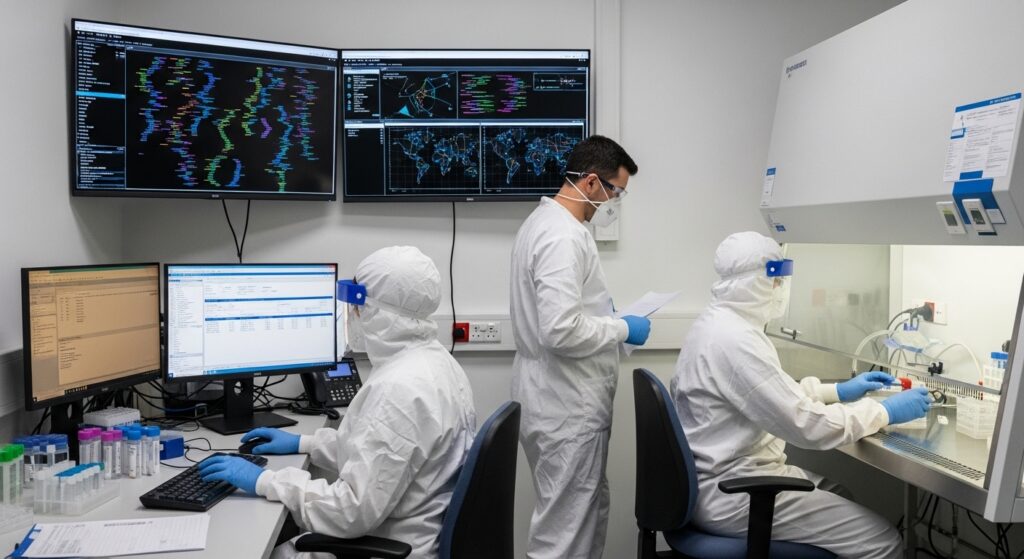
For scientists, the concern is rarely about a mutation in isolation. Viruses mutate constantly. What matters is the pattern: which mutations appear together, whether they affect the virus’s spike or surface proteins, how they change transmission dynamics, and whether they reduce the ability of prior infection, vaccination or existing treatments to blunt disease. This is why genomic surveillance has become such a central tool. It allows public-health agencies to identify genetic changes early, compare sequences across borders and decide which lineages deserve closer laboratory study.
The current picture around SARS-CoV-2 reflects that logic. WHO’s latest tracking framework continues to classify JN.1 as a variant of interest, while several descendants, including KP.3.1.1, NB.1.8.1, XFG and BA.3.2, have been listed as variants under monitoring. That status does not mean they are automatically more dangerous. It means they have features or growth patterns that justify closer attention. In public-health terms, monitoring is a warning light, not a siren.
Among the lineages drawing attention, BA.3.2 stands out because of how genetically divergent it is. In a March 2026 surveillance report, CDC researchers said BA.3.2 was first identified in South Africa in late 2024 and later detected through traveler-based surveillance, clinical samples and wastewater monitoring in the United States. The report said the variant carries roughly 70 to 75 substitutions and deletions in the spike gene relative to JN.1 and LP.8.1, the antigens used in the 2025-26 COVID-19 vaccines. Scientists also noted evidence of enhanced immune escape in laboratory settings, suggesting the variant merits close study even if its real-world impact remains under assessment.
That distinction matters. Immune escape does not automatically translate into catastrophe. A variant may show reduced neutralization in the laboratory and still fail to drive a major wave if population immunity remains broad, disease severity does not rise sharply or the lineage struggles to compete with other circulating strains. This is why health agencies are careful, sometimes frustratingly so, in their wording. They aim to avoid two equal and opposite mistakes: underreacting to an emerging threat or overstating preliminary findings before the evidence is mature.
WHO’s approach increasingly reflects that balance. The organization has emphasized that variant tracking should focus not only on spread in humans, but also on circulation in animal populations and chronically infected individuals, where prolonged viral replication can increase opportunities for meaningful mutation. The launch of CoViNet, the WHO-led network for coronaviruses, was designed to widen that lens beyond the emergency mindset of the pandemic years and build more durable monitoring capacity for SARS-CoV-2, MERS-CoV and other novel coronaviruses of public-health importance.
The broader concern is that the world’s surveillance systems are uneven. Some countries sequence large numbers of viral samples and share data quickly. Others have reduced testing and sequencing as emergency funding has faded. That creates blind spots. A new lineage can circulate for weeks or months before its scale becomes clear, especially if symptoms are mild enough to keep people away from clinics. Wastewater monitoring, airport surveillance and digital epidemiology have become more important partly because they can detect changes even when routine case reporting weakens.
The same logic applies beyond COVID-19. Avian influenza A(H5) remains a case study in why variant and strain surveillance cannot be treated as a single-virus exercise. CDC says H5 bird flu is widespread in wild birds worldwide and has caused outbreaks in poultry and U.S. dairy cows, with sporadic human cases among exposed workers. The agency continues to describe the current public-health risk as low, but the language of reassurance comes alongside a clear signal of vigilance: low risk is not the same as no risk. Every spillover into humans is scrutinized because influenza viruses are notorious for their capacity to change through mutation and reassortment.
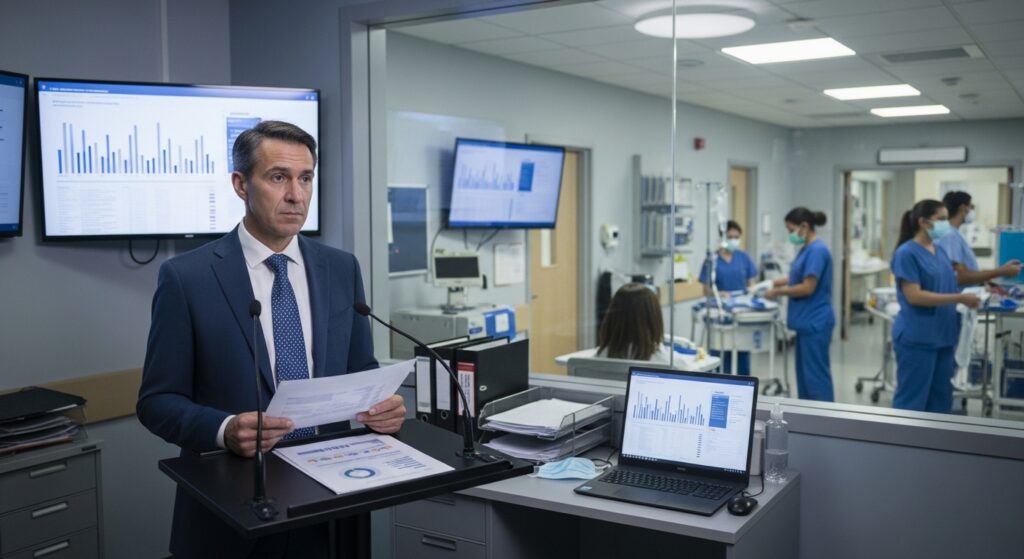
That is why warnings about new variants should not be read only through the lens of public alarm. They are also an operational message to health systems. Laboratories need sequencing capacity. Hospitals need outbreak awareness. Governments need transparent reporting channels. Vaccine advisers need enough data to judge whether formulations should be updated. Risk communication teams must explain uncertainty without amplifying rumor. In the age of fast-moving social media, the information ecosystem can mutate almost as quickly as the viruses themselves.
There is also a political dimension. Pandemic fatigue has made many governments reluctant to discuss emerging variants unless the evidence is overwhelming. Officials know that public trust can erode if warnings appear exaggerated. But trust can also collapse when authorities appear late, evasive or overly reassuring. The challenge is not to make every new variant front-page news. It is to maintain a credible system that can distinguish ordinary viral drift from a development that may require action.
For the public, the practical implications are less dramatic than the headlines sometimes suggest. In most cases, warnings about variants do not mean lockdowns are imminent or that existing protections have suddenly become useless. More often, they mean experts are checking whether vaccines still match the virus well enough, whether diagnostics remain accurate and whether transmission is changing in ways that could affect vulnerable groups. For older adults, immunocompromised people and those with chronic illness, those distinctions remain especially important because variant-driven changes in transmission can still carry disproportionate consequences.
The deeper issue is preparedness culture. During crises, countries tend to build emergency systems quickly. During calmer periods, they often let them decay. New virus variants expose the cost of that cycle. Surveillance only works when it is continuous. Data-sharing only works when laboratories and governments trust the process. Public communication only works when institutions speak with enough humility to acknowledge what they do not yet know.
So the warning over new virus variants is best understood not as a prediction of imminent disaster, but as a test of whether the world learned anything durable from the last one. Viruses will keep changing. That much is certain. The real variable is whether surveillance, science and public trust can evolve quickly enough to keep up.