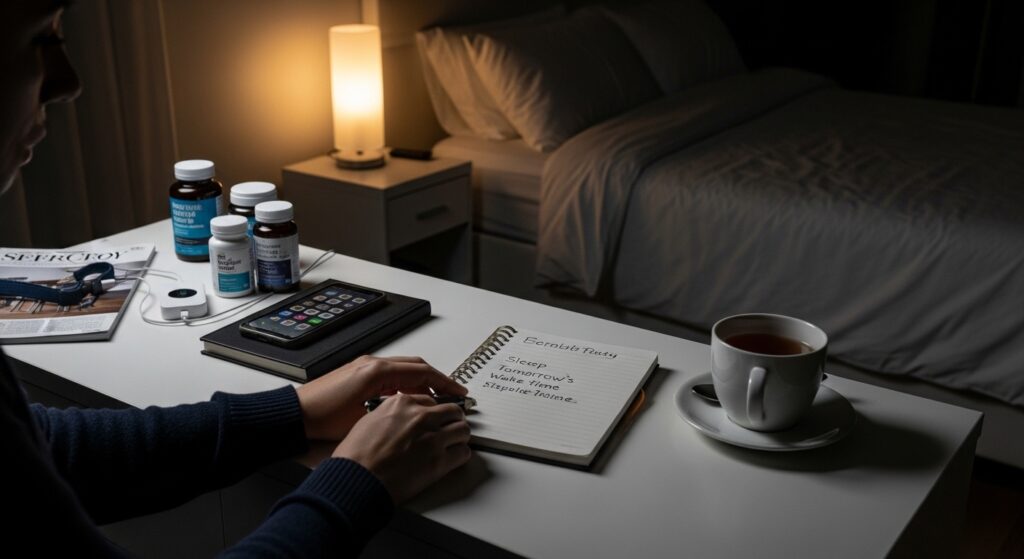
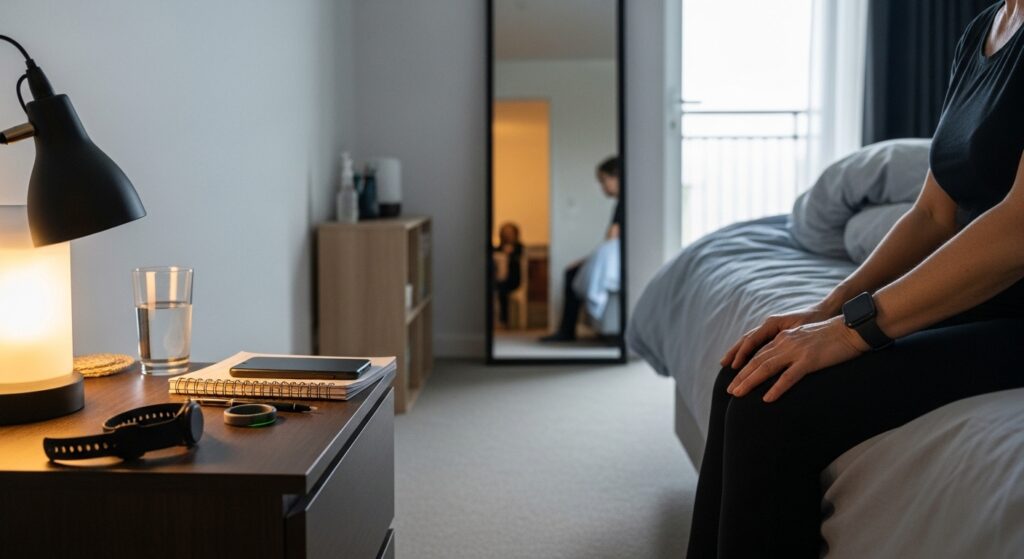
As sleep moves from basic health advice to a booming industry of wearables, supplements and “biohacking” routines, doctors and researchers are drawing a sharper line between evidence-based sleep optimization and the promise of quick fixes.
For years, sleep was treated as the negotiable part of modern life: the first thing sacrificed to deadlines, entertainment, travel and the persistent glow of screens. Now it is being rebranded as a performance tool, a longevity strategy and a marker of self-discipline. The phrase “sleep optimization” has emerged from that shift, carrying with it an appealing promise: that sleep can be measured, upgraded and engineered like a training plan or a diet. It appears in wellness marketing, athlete recovery programs, executive coaching and social media advice. But behind the trend lies a more grounded medical reality. Good sleep is not a luxury enhancement. It is a biological requirement, and much of what truly improves it remains less glamorous than the sleep industry suggests.
At its most sensible, sleep optimization means aligning daily behavior with what sleep science has shown for decades. Adults generally need at least seven hours of sleep per night on a regular basis for optimal health, according to a joint consensus statement from the American Academy of Sleep Medicine and the Sleep Research Society. The National Heart, Lung, and Blood Institute says that getting enough quality sleep at the right times helps protect mental health, physical health, quality of life and safety. In that sense, optimization does not begin with a device or a supplement. It begins with enough time in bed and a schedule consistent enough for the body’s circadian system to recognize.
That sounds simple, but it runs directly against the rhythms of contemporary life. Many people try to “optimize” sleep after undermining its most basic conditions. They sleep too little during the week and attempt to recover on weekends. They drink caffeine late in the day, answer messages in bed, expose themselves to bright light late at night and then search for a perfect breathing trick or magnesium product to undo the damage. Sleep medicine specialists increasingly warn that this reflects a broader misunderstanding: people often chase advanced solutions before fixing the fundamentals. A cooler bedroom, a more regular wake time, less evening stimulation and fewer sleep-disrupting substances may not feel like cutting-edge interventions, but they remain among the most evidence-based.
That has put sleep regularity at the center of the conversation. Public health guidance from the CDC and NHLBI consistently emphasizes going to bed and waking up at roughly the same time each day, including weekends when possible. The reason is not merely routine for its own sake. Human sleep is regulated by a circadian timing system that responds strongly to light, behavior and timing. Irregular schedules can shift that system out of alignment, making it harder to fall asleep, harder to wake up and harder to maintain alertness during the day. In practical terms, the body does not respond well to being treated one way on Tuesday and another on Saturday.
Light exposure has become another major theme in the optimization trend, and here the science broadly supports the attention. Bright light in the evening, including light from electronic devices and indoor environments, can interfere with the body’s natural preparation for sleep. CDC guidance advises turning off electronic devices at least 30 minutes before bedtime, while broader sleep-health recommendations emphasize dimmer evening light and a dark, quiet bedroom. Morning light matters too, because it helps anchor the circadian rhythm and strengthen the contrast between day and night. Yet even in this area, the popular culture around sleep can overstate certainty. There is growing evidence that evening light and stimulation are disruptive, but the idea that every sleep problem can be solved by buying a special bulb or a pair of amber glasses is a more commercial story than a medical one.
The same tension appears in the booming market for sleep tracking. Smartwatches, rings and apps now promise to quantify rest in minute detail, breaking nights into stages and assigning “sleep scores” that imply clinical precision. For some users, these tools can be helpful. They may reveal patterns, reinforce regular schedules and prompt people to take sleep more seriously. But the American Academy of Sleep Medicine has cautioned that consumer sleep technologies cannot currently be used to diagnose or treat sleep disorders in place of validated medical evaluation. That warning matters because optimization culture often encourages people to treat device data as if it were definitive. In reality, consumer trackers may estimate trends, but they are not the same as formal sleep studies, and in some people they generate a new source of anxiety rather than insight.
That anxiety now has a name: orthosomnia, a term used to describe an unhealthy fixation on achieving “perfect” sleep data. The irony is striking. A trend meant to improve rest can, in some cases, make rest more elusive by turning bedtime into performance review. People begin checking whether they reached enough deep sleep, enough REM sleep, enough efficiency, enough recovery. They may stay in bed longer than needed, alter routines obsessively or become distressed when the score says they slept poorly despite feeling fine. Sleep experts generally argue that the goal is not numerical perfection. It is restorative sleep, daytime functioning and a pattern that is sustainable.
Supplements are another pillar of the optimization economy, and they illustrate the gap between popularity and evidence. Melatonin is among the most widely used products marketed for sleep, and the National Center for Complementary and Integrative Health says it may help in specific situations such as jet lag, delayed sleep-wake phase disorder and some sleep problems in children under professional supervision. But NCCIH also notes that clinical guidelines have recommended against using melatonin to treat chronic insomnia. That distinction is often lost in public discussion, where melatonin is marketed as a broad, harmless answer to any sleeping difficulty. The real picture is narrower. Some people may benefit in defined circumstances, but the supplement is not a universal fix for chronic insomnia, and its use is best understood in context, not as a nightly default.
The most important clinical distinction in the sleep-optimization conversation may be the line between improving habits and treating disorders. Poor sleep does not always mean bad sleep hygiene. Persistent insomnia, obstructive sleep apnea, restless legs syndrome, circadian rhythm disorders and other conditions require diagnosis and management, not just advice to stop scrolling earlier. The NHLBI notes that alcohol may make it easier to fall asleep but can lead to lighter, more fragmented sleep, while untreated insomnia often persists despite patients’ best efforts at self-correction. For chronic insomnia, the American Academy of Sleep Medicine identifies cognitive behavioral therapy for insomnia, or CBT-I, as the first-line evidence-based treatment. That is a critical point in a marketplace crowded with hacks. When sleep problems become chronic, medical care often matters more than optimization rituals.
CBT-I also reveals something deeper about the current trend. The most effective approaches are often behavioral and psychological rather than technological. Sleep restriction, stimulus control, cognitive restructuring and consistent wake times can sound less appealing than a sleek wearable or an expensive supplement stack. But they address the mechanisms that commonly sustain insomnia: conditioned arousal, irregular timing, fear about not sleeping and maladaptive habits in bed. Digital versions of CBT-I are gaining attention as a way to expand access when trained providers are limited, though specialists still stress the importance of evidence-based programs and clinical judgment.
The broader culture of sleep optimization is not entirely misguided. In some ways, it reflects a healthy correction after decades of normalized sleep deprivation. The CDC and NIH have repeatedly emphasized that insufficient sleep is linked to worse health and safety outcomes, and sleep disorders remain underdiagnosed. Greater public awareness can therefore be a good thing. More people are recognizing that sleep is not wasted time, and that mood, concentration, cardiovascular health, metabolism and daily functioning all depend on it. Employers, schools, athletes and policymakers are beginning to treat sleep as a serious component of performance and public health rather than a matter of personal weakness.
Still, the trend risks reproducing a familiar modern pattern: turning a basic human need into another arena for optimization pressure. Sleep can become less a source of recovery than another project to manage, another metric to improve, another proof of self-control. That is especially true when advice is consumed through social media, where sleep is often packaged as part of a broader productivity aesthetic. In that framing, the sleeper is not just resting but competing — against fatigue, aging, distraction and anyone else whose routine appears more disciplined. Medicine offers a quieter view. Better sleep usually comes not from mastering ever more variables, but from reducing conflict between the body and the way one lives.
That is why the most credible version of sleep optimization looks less like biohacking and more like respect for physiology. It means sufficient sleep opportunity, regular timing, lower evening stimulation, careful use of caffeine and alcohol, attention to light, exercise at a sustainable time, and prompt evaluation when symptoms suggest a disorder. It means treating wearable data as a clue rather than a verdict. It means understanding that some nights will be imperfect and that chasing flawless sleep can itself become a problem.
In the end, the rise of sleep optimization says something important about the present moment. People are tired, but they are also increasingly unwilling to accept tiredness as normal. That impulse is valid. The challenge is making sure the response remains rooted in science rather than fantasy. Sleep is not a productivity accessory, nor a luxury good for the wellness class. It is a biological foundation that can be supported, protected and, in some cases, clinically treated. The future of sleep optimization will be most useful not when it promises to turn rest into a superpower, but when it helps more people recover what healthy sleep was supposed to be all along.