From crowded Asian capitals to fire-prone landscapes in the Southern Hemisphere, extreme heat is no longer a seasonal anomaly but a widening test of public health, labor and infrastructure.
The world is entering another dangerous season of heat with a growing sense that what was once considered exceptional is becoming alarmingly routine. Across continents, weather agencies, health officials and city governments are confronting the same hard reality: extreme heat is arriving more often, lasting longer and hitting harder. In some places, the danger begins before summer has fully started. In others, it never really leaves.
The warning signs have been building for years, but the latest climate data have given them new urgency. After three of the hottest years ever recorded globally, scientists say the background temperature of the planet remains so elevated that even ordinary hot spells are now unfolding in a more dangerous atmosphere. Heat is no longer just a weather story. It is a public health emergency, an economic threat and, increasingly, a test of whether governments can protect their populations from a risk that is both slow-moving and immediately deadly.
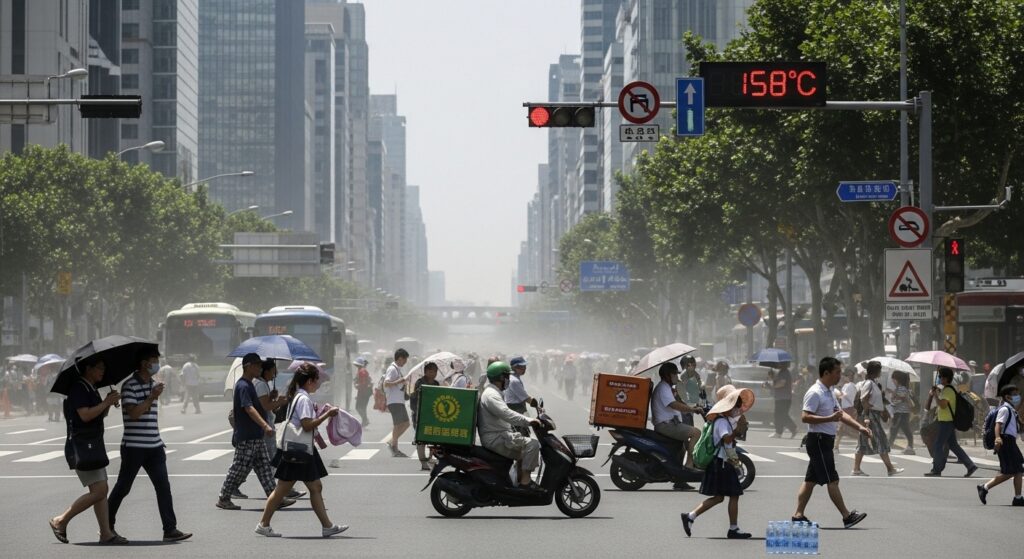
What makes this period especially unsettling is that the crisis is unfolding in layers. There is the heat that dominates headlines when thermometers surge past 40 degrees Celsius. But there is also the more persistent and, in many cases, more punishing heat that lingers overnight, denying people relief and preventing the body from recovering. There is dry heat that scorches crops and fuels wildfires. There is humid heat that makes even short periods outdoors dangerous. And there is urban heat, trapped by concrete, traffic and a lack of green space, which can turn entire neighborhoods into furnaces long after sunset.
The early months of 2026 have already offered a preview of that new reality. Parts of the Southern Hemisphere began the year under intense strain as high temperatures, drought and wind contributed to destructive fire conditions in places including Chile, Argentina and Australia. In Asia, meteorological agencies have continued to warn of unusually hot conditions, with large populations exposed before the traditional peak of the hot season. In the United States and parts of Europe, warmth has also raised concerns about water stress, early snowmelt and the cascading effects that can feed later disasters such as drought and wildfire.
For millions of people, the danger is not abstract. It is experienced at bus stops, in crowded apartments, on construction sites, in farm fields and in classrooms without adequate cooling. Heat can overwhelm the body with startling speed. Health authorities warn that exposure can lead to dehydration, heat exhaustion and heat stroke, while also worsening cardiovascular, respiratory, kidney and mental health conditions. Older people, children, pregnant women, people with chronic illness and those taking certain medications face particular risks. Yet the victims of extreme heat are often less visible than those of storms or floods. Heat kills quietly, frequently through complications that are recorded under other causes.
That invisibility has long made heat one of the most underestimated climate hazards. It rarely leaves behind dramatic images of collapsed bridges or submerged towns. Instead, it wears down the body, the power grid, transport systems and public patience. Hospitals face surges in demand. Electricity use rises as air conditioning units strain already fragile networks. Outdoor labor becomes more dangerous and, in some cases, impossible. Employers are being forced to rethink working hours, protective standards and what counts as safe conditions. For low-income workers in agriculture, construction, logistics and fisheries, the threat is particularly acute because the choice is often not between comfort and discomfort, but between income and illness.
The economic costs are becoming harder to ignore. Extreme heat slows productivity, damages crops, disrupts supply chains and can make cities less livable and less competitive. Factories must adapt their schedules. Schools shorten classes or close. Rail lines, roads and airport runways can buckle or degrade under severe temperatures. Water systems come under pressure at the same time that demand for electricity spikes. In poorer countries, where cooling access is limited and informal work is widespread, the burden falls heaviest on those with the fewest protections. Even in wealthy cities, the map of heat risk often follows the map of inequality, with poorer districts tending to have fewer trees, more asphalt and older buildings that trap warmth.
Scientists say none of this is happening in isolation. Human-driven climate change has increased the frequency and intensity of heatwaves since the mid-20th century, and each increment of additional warming raises the odds of more severe extremes. The planet’s average temperature matters not only because of records, but because it lifts the baseline from which every local heat event begins. A hot day today is often hotter than an equally hot day from decades ago would have been. That means the thresholds that people, crops, ecosystems and infrastructure once tolerated are being crossed more often.
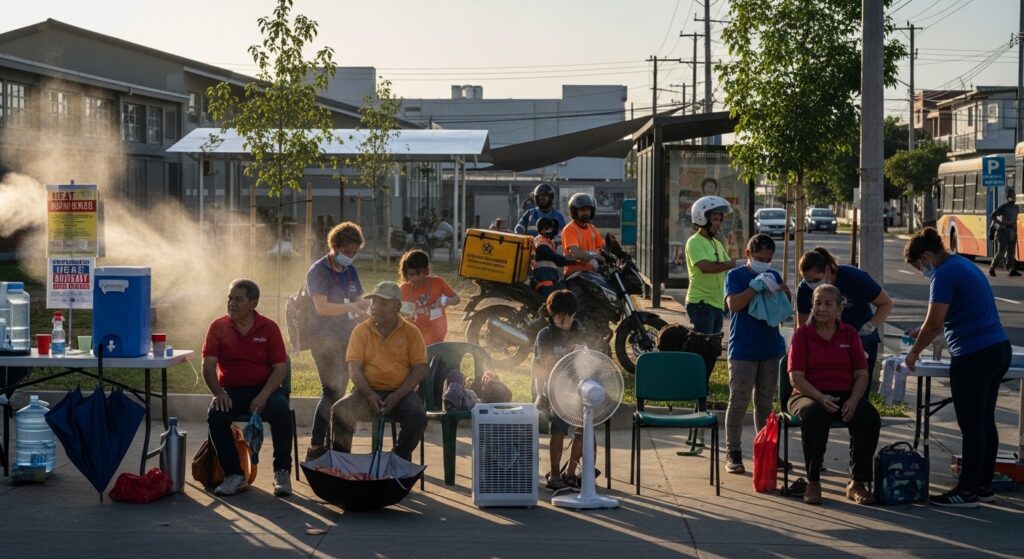
The human consequences are already reshaping policy. Around the world, officials are expanding heat action plans, early warning systems and public cooling measures. Some cities are opening cooling centers, planting more trees, installing reflective roofs and redesigning streets to create shade. Others are updating labor regulations, school guidance and hospital preparedness. Several countries are experimenting with mobile heat alerts, community outreach networks and neighborhood-based response systems to reach elderly people and other vulnerable residents before temperatures peak. These are practical steps, and in some places they are saving lives. But adaptation is uneven, and in many countries it remains too small for the scale of the threat.
The deeper problem is that heat exposes the fault lines already running through modern society. It shows which homes are poorly insulated, which workers have little bargaining power, which hospitals are overstretched and which cities were built without climate resilience in mind. It turns poverty into physical risk. It reveals how much daily life depends on affordable electricity and reliable water. And it forces uncomfortable questions about who gets protected first when temperatures become dangerous. A household with air conditioning, backup power and access to healthcare experiences a heatwave very differently from a family in a crowded settlement with a tin roof and irregular water supply.
There is also a growing recognition among researchers that the traditional language of survivability may need to be reconsidered. New studies suggest that under certain combinations of heat, humidity, age and sun exposure, conditions can become life-threatening earlier than many people once assumed. That does not mean large parts of the world are suddenly uninhabitable. But it does mean that public messaging built around temperature alone may no longer be enough. The real hazard often lies in the combination of heat, moisture, exposure time, nighttime conditions and the health status of the person enduring it.
For governments, the challenge now is not simply to respond when records are broken, but to prepare for heat as a recurring feature of national risk management. That requires investment in forecasting, urban design, public health systems, workplace protections and emergency communication. It also requires long-term efforts to reduce the greenhouse gas emissions driving the rise in global temperatures. Adaptation can lower the toll. It cannot fully outrun the physics of a warming planet.
The world has learned to treat heat as background noise, something to endure, complain about and then forget when the season changes. That habit is becoming dangerous. Extreme heat is no longer the backdrop to other crises. In many places, it is the crisis itself. It is shaping how people work, how cities function, how food is produced and how public health systems plan for the future. The hottest days still make the front pages, but the larger story is what happens in between: the accumulation of stress, the shrinking margin for error and the normalization of conditions that would once have been considered extraordinary.
For now, the world is not facing a single heatwave but something more consequential: the steady emergence of a hotter era in which extreme heat is more frequent, more unequal and more difficult to escape. The question is no longer whether societies can see it coming. The question is whether they can move fast enough to live through it.