The automaker says a defect in certain mild-hybrid vehicles built from mid-2023 to early 2026 could allow water into the engine compartment, triggering a broad multi-brand safety campaign.
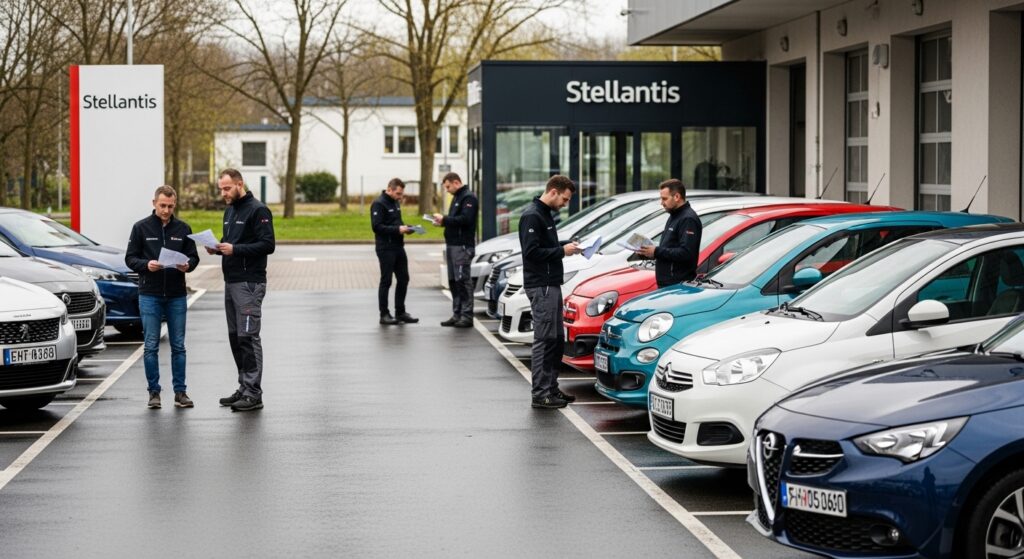
Stellantis has launched one of the largest automotive safety actions of the year, recalling about 700,000 vehicles worldwide after identifying a fault that can, in rare cases, lead to fire in the engine compartment. The campaign affects several of the group’s brands, including Peugeot, Citroën, Fiat, Jeep, Alfa Romeo, Lancia and others in different markets, underscoring how a single engineering issue can ripple quickly across a modern multi-brand automaker.
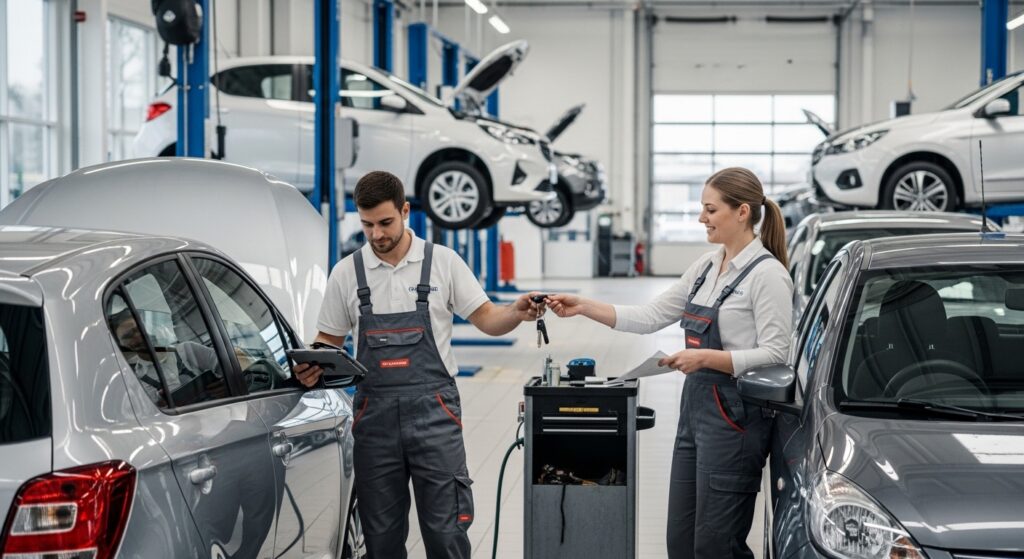
The recall became public after Germany’s Federal Motor Transport Authority, known as the KBA, issued notices covering vehicles produced between mid-2023 and early 2026. Stellantis then confirmed the wider global action, saying owners of affected vehicles would be contacted and asked to schedule a free repair with dealers. The company said the workshop intervention would take roughly 30 minutes, a relatively short fix for what is nevertheless a serious safety concern.
At the center of the problem is a packaging or clearance issue involving components in the engine bay of certain 1.2-litre mild-hybrid vehicles. According to reports tied to the recall campaign, inadequate clearance between the gasoline particulate filter pipe and a protective component associated with the belt starter-generator system can create conditions for water ingress. In wet conditions, that can increase the risk of overheating, electrical arcing or, in the most serious scenario, a fire under the hood.
The technical explanation matters because it shows how a problem does not need to be dramatic in design to become serious in use. In today’s vehicles, especially those built around compact hybrid systems, engine bays are tightly packaged. Parts from exhaust, electrical and starter-generator systems operate close together, often in increasingly crowded layouts created by the drive to cut emissions and improve fuel economy. In that environment, a small miscalculation in spacing or shielding can become a major safety issue when repeated across hundreds of thousands of vehicles.
What makes the Stellantis action notable is not only its size but its scope. The recall spans multiple brands and countries, reflecting the industrial logic of large car groups that share platforms, engines and hybrid systems across their lineups. A component arrangement that appears in one Peugeot or Citroën model may also be present, with limited variations, in vehicles sold under Fiat, Opel/Vauxhall, Jeep or Alfa Romeo badges. That manufacturing strategy reduces cost and speeds development, but when defects emerge, it also magnifies their reach.
In practical terms, that means the consequences of the recall are being felt unevenly across Europe. France has emerged as one of the largest national markets affected, with more than 200,000 vehicles included in the campaign. Britain has reported about 44,000 affected vehicles, while Germany’s recall tally is also significant. Several reports have highlighted common compact and small crossover models such as the Peugeot 208, Citroën C3 and Vauxhall or Opel Mokka among those touched by the action in certain markets, though the full list varies by country and brand.
For consumers, the immediate story is less about engineering and more about trust. Recalls are not unusual in the global auto industry, and many are resolved quickly. But for drivers, particularly those who bought new-generation mild-hybrid cars expecting lower running costs and improved efficiency, a fire-related defect is a deeply unsettling discovery. Even when the statistical risk remains low, the psychological effect is significant. Owners must now wonder whether their vehicle is safe in heavy rain, whether they should continue normal daily driving, and how quickly a dealer can provide the corrective work.
Stellantis has said it recorded 36 incidents connected to the issue worldwide, including 12 fires. Those numbers help explain why regulators and the company moved beyond quiet technical fixes and into a formal international recall. In the automotive sector, even a relatively small number of fire cases can trigger aggressive action because of the severity of the hazard, the difficulty of predicting which vehicles might fail next, and the reputational damage that follows any perception that a manufacturer reacted too slowly.
The company’s response, at least on paper, is straightforward: contact affected owners, perform the repair free of charge, and complete the service rapidly. That is the standard script for a modern recall. The more difficult question is execution. Large recall campaigns live or die in dealership workshops, parts logistics and customer communication. A 30-minute fix sounds manageable, but when hundreds of thousands of vehicles are involved, even simple interventions can strain service networks. Booking backlogs, incomplete owner databases and uneven communication from market to market often become the hidden second phase of a recall story.
That challenge may be especially acute for Stellantis because of the number of brands under its umbrella. The company must coordinate messaging across different national sales organizations, dealer groups and customer service systems, while also ensuring that technical instructions are consistent. Owners do not experience Stellantis as a single company; they experience Peugeot, Jeep, Citroën or Fiat. A recall of this scale therefore tests not just engineering quality but corporate coherence.
The episode also highlights a broader reality for the industry’s transition period. Carmakers are under pressure to lower emissions, electrify their fleets and keep prices within reach for mainstream buyers. Mild-hybrid systems have become an attractive compromise, offering better efficiency than traditional combustion engines without the cost and infrastructure requirements of full battery-electric vehicles. But the technology adds new layers of hardware and thermal management to already crowded vehicles. Each added component promises gains in efficiency, yet each also increases complexity and the number of possible failure points.
That does not mean hybrid technology is inherently unsafe. It does mean the margin for error becomes narrower as manufacturers push to industrialize new systems at high volume across many models. Recalls like this one are a reminder that automotive innovation is not measured only in range, software or emissions figures. It is also measured in the ability to build, test and validate components under real-world conditions such as rain, vibration, corrosion and repeated temperature shifts over time.
Regulators will also be watching closely. Europe has become increasingly assertive on automotive safety oversight, and fire-related cases are especially sensitive. Once a defect enters the public record, every step matters: how fast the company notified authorities, how clearly it informed drivers, whether dealers can carry out the remedy promptly, and whether the fix fully resolves the problem. In the age of social media and real-time consumer forums, delays that might once have remained local can now become cross-border reputational events within hours.
For Stellantis, the stakes extend beyond the immediate cost of repairs. Recalls carry direct financial burdens, but the bigger risk is erosion of confidence in products that sit at the center of the company’s volume business. Small hatchbacks and compact crossovers are not niche offerings. They are the vehicles through which many families first encounter a brand, and often the models that anchor market share in Europe. Any perception that a new hybrid generation is unreliable can do damage well beyond the workshop bill.
Still, there is an important distinction between a damaging defect and a damaging response. Consumers have shown repeatedly that they can tolerate recalls when companies move quickly, communicate clearly and repair vehicles without shifting cost or confusion onto owners. The real test will be whether Stellantis can turn a large but defined technical problem into a controlled service campaign rather than a prolonged confidence crisis.
For affected drivers, the next steps are simple even if the broader implications are not. Owners need to watch for official notification, check vehicle identification tools where available, and book the repair promptly if their car is included. For the industry, the lesson is equally clear. In an era of shared architectures and increasingly complex powertrains, small engineering oversights no longer stay small for long. They scale globally, cross brands instantly and become, in a matter of days, a test of corporate credibility.
The Stellantis recall is therefore more than a technical bulletin. It is a case study in how the modern auto business works: giant industrial platforms, highly shared components, compressed development cycles and a razor-thin tolerance for safety errors. The company now faces the task every automaker hopes to avoid but must be prepared to handle — fixing the vehicles quickly, reassuring customers convincingly and proving that the systems designed to catch risk can still work before a defect turns into a larger disaster.