
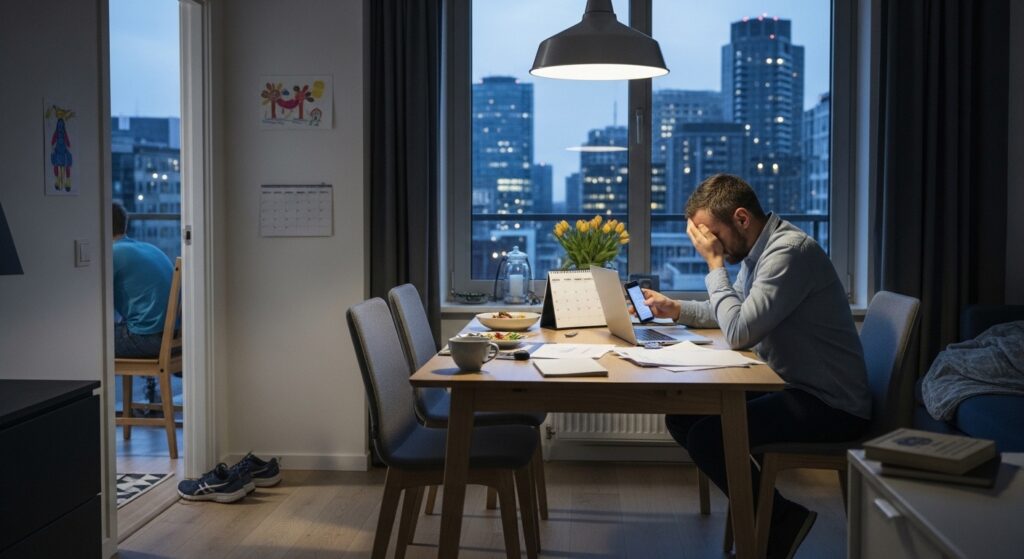
As workers across industries push back against exhaustion, blurred boundaries and the normalization of overwork, the idea of work-life balance is returning not as a lifestyle slogan but as a practical defense against burnout.
For years, work-life balance was often discussed in soft, almost decorative language, as if it were an optional benefit for people privileged enough to afford it. In many workplaces, the term was quietly dismissed as unrealistic, a phrase too vague to survive deadlines, rising living costs and the growing expectation that employees remain reachable at all times. Yet the longer modern work has stretched into evenings, weekends and supposedly private hours, the clearer it has become that balance is not a luxury concept at all. It is a health, productivity and social stability issue.
The reason is simple. Human attention, energy and emotional resilience are finite. Work can be meaningful, necessary and even deeply fulfilling, but when it expands without limit, the consequences rarely stay confined to the office. They spill into sleep, relationships, physical health, family life and the basic ability to recover. The World Health Organization recognizes burnout in ICD-11 as an occupational phenomenon resulting from chronic workplace stress that has not been successfully managed. WHO describes it through three dimensions: feelings of energy depletion or exhaustion, increased mental distance from one’s job or feelings of negativism or cynicism about work, and reduced professional efficacy. That definition matters because it moves the conversation away from personal weakness. Burnout is not simply about someone failing to “be resilient.” It is often the outcome of environments that consume more than they restore.
This is where the language of work-life balance becomes more precise than it first appears. At its best, it does not mean perfectly equal time split between office and home, nor does it imply a frictionless life without stress. It means a workable relationship between professional obligations and the rest of being human. It means having enough control, rest and psychological space to perform well without sacrificing health or identity in the process. In recent years, some institutions have preferred the phrase “work-life harmony,” arguing that modern schedules are too fluid for the old idea of balance. The American Psychological Association uses that language in its workplace well-being framework, emphasizing autonomy and flexibility. But whichever term is chosen, the underlying concern is the same: people need boundaries strong enough to prevent work from becoming total.
The urgency of that concern has only grown. The International Labour Organization says excessive hours of work remain a major challenge and stresses the need to protect workers’ health and safety by limiting working hours and ensuring adequate rest, weekly rest and paid annual leave. In one of the clearest warnings about what happens when that fails, a joint WHO-ILO study found that long working hours led to 745,000 deaths from stroke and ischemic heart disease in 2016. Those figures describe the outer edge of the problem, but millions more experience the quieter forms of damage long before that point: persistent fatigue, irritability, poor concentration, sleep disruption, strained relationships and the feeling of living in a permanent state of partial recovery.
What makes the current moment especially difficult is that work has become harder to leave behind even when people physically leave the workplace. Smartphones, messaging platforms and remote collaboration tools have made work more flexible, but they have also dissolved many of the older signals that a workday is over. A laptop on the kitchen table, unanswered messages at night, meetings that cross time zones and the social pressure to appear always available have all contributed to a culture in which boundaries must be actively defended rather than passively inherited. In that environment, burnout often arrives gradually. It does not always look dramatic. It can feel instead like emotional flatness, shortened patience, poorer sleep and the inability to enjoy time that was supposedly set aside for rest.
That is one reason the public conversation about work-life balance has become less sentimental and more hard-headed. Employers increasingly discover that exhausted workers are not simply unhappy; they are less engaged, less creative and often more likely to leave. The CDC notes that work-related stress can affect worker well-being, job performance, the care and services given to others and the well-being of loved ones outside of work. That final point is often overlooked. Work stress does not remain at work. It travels home, shaping family life and personal recovery in ways that organizations may never fully see but society still pays for.
Still, discussions of work-life balance can become shallow when they focus only on individual habits. Advice about better calendars, morning routines and meditation can be useful, but it becomes misleading if it implies that burnout is mainly a personal time-management failure. Often the real drivers are structural: understaffing, unrealistic workloads, unstable schedules, lack of control, low support, poor management and a culture that rewards constant availability. WHO’s occupational guidance on psychosocial risks points to factors such as time pressure, lack of control, long hours, shift work and lack of support as important risks for occupational stress, burnout and fatigue. A person can turn off notifications and still remain overwhelmed if the job itself is designed in a way that makes exhaustion normal.
That does not mean individuals are powerless. It means the most useful solutions tend to work on two levels at once. On the personal level, balance often starts with boundaries that are concrete rather than aspirational. Finishing work at a set time, protecting sleep, not carrying every conversation into the evening, taking leave that one has earned, and preserving at least some parts of the day that are not available for professional demand can make a meaningful difference. The CDC advises managing stress daily and notes that long-term stress can worsen health problems. Regular recovery is not a reward for finishing all responsibilities, because in most jobs responsibilities never fully end. Recovery has to be built in before the body forces the issue.
On the organizational level, the measures that matter are often less glamorous but more powerful. Reasonable workloads, predictable time off, psychologically safe management, flexibility with accountability, adequate staffing and a culture that does not punish people for having a life outside work are more effective than wellness slogans. APA’s workplace well-being framework treats work-life harmony as one of several essentials, alongside protection from harm, connection, mattering and opportunity for growth. That framing is important because it recognizes balance not as a private preference but as part of how healthy workplaces function.
The modern debate over work-life balance is also shaped by generational change. Younger workers, especially those who entered adulthood during years of economic uncertainty, pandemic disruption and digital saturation, are often less willing to equate overwork with virtue. They have seen that loyalty does not always produce security and that career ambition can coexist with a refusal to let work absorb everything else. This does not mean they care less about achievement. In many cases, it means they are rethinking what achievement is for. A promotion that comes at the price of chronic exhaustion no longer looks like uncomplicated success.
There is, however, a danger in making balance sound too easy or too individual. Not everyone has equal power to set boundaries. Workers in low-paid jobs, shift-based sectors, insecure contracts or understaffed care roles may have far less control over their time than professionals in flexible office settings. For them, work-life balance is not mainly a matter of personal discipline. It is closely tied to wages, labor standards, scheduling fairness and the right to rest. This is why the conversation cannot be separated from policy and workplace design. A culture that praises balance while structurally denying it to large parts of the workforce is not solving the problem; it is privatizing it.
Even so, the broader direction of the debate is unmistakable. Work-life balance is no longer being defended only by wellness advocates. It is being reinforced by occupational health evidence, labor institutions and a growing recognition that burnout is costly in human and organizational terms alike. People are learning, sometimes the hard way, that rest is not the opposite of productivity but one of its conditions. Sleep, relationships, exercise, unstructured time and emotional distance from work are not signs of low commitment. They are part of what makes sustainable commitment possible.
In the end, the strongest argument for work-life balance is not romantic. It is realistic. Most people will spend a large part of their lives working. The question is whether work remains one part of life or expands until it distorts the rest. Avoiding burnout does not require rejecting ambition or pretending that work should always feel easy. It requires acknowledging a more basic truth: a life organized entirely around output eventually weakens the very person expected to keep producing.
That is why the renewed demand for work-life balance matters. It reflects a refusal to accept exhaustion as professionalism. And in a culture that too often confuses constant availability with value, that refusal may be one of the healthiest corrections modern work has left.