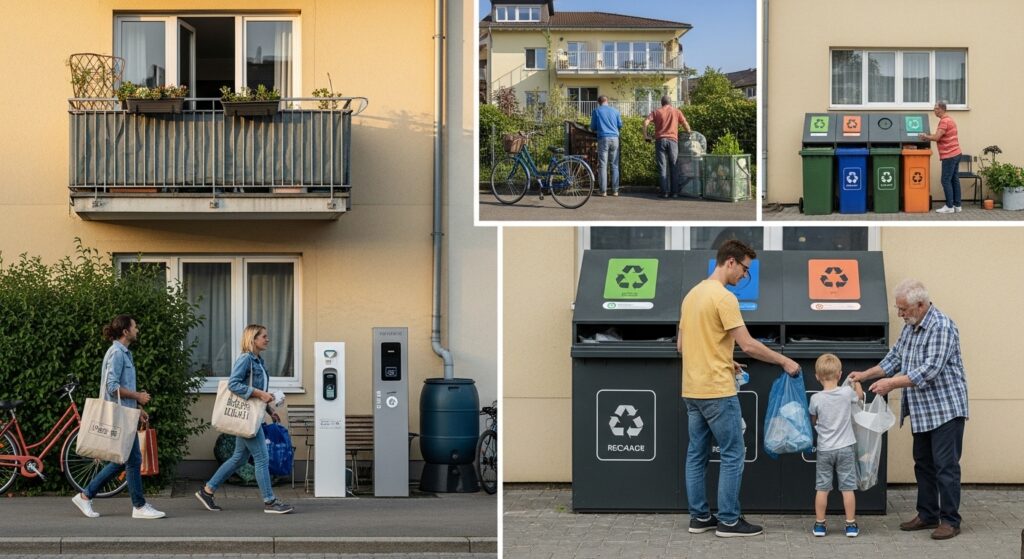
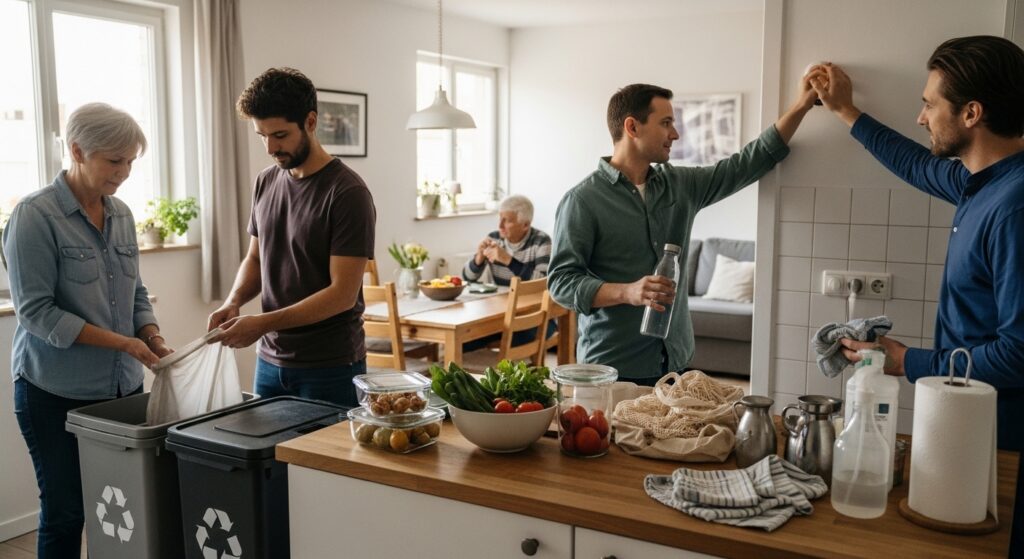
Reducing waste, saving electricity and water, and choosing environmentally friendly products are no longer niche lifestyle choices but practical daily actions shaping how households respond to climate pressure, rising utility costs and growing concern over pollution.
The idea of “green living” has often been marketed through images of solar-paneled homes, electric vehicles and expensive organic products. But in practice, the movement is increasingly defined by smaller, repeatable habits carried out in ordinary homes, apartments, schools and workplaces. Around the world, people are being encouraged to think less about grand gestures and more about what they throw away, how much energy they use, how they consume water and which products they bring into their daily lives. The shift is subtle but significant. Living sustainably is becoming less about symbolism and more about routine.
At the center of that change is waste. Modern consumer life produces an extraordinary amount of disposable material, from food packaging and plastic bags to single-use cups, delivery containers and short-lived household goods. For many families, the first visible step toward greener living is simply noticing how much trash accumulates in a week. That awareness has helped drive a growing emphasis on reducing waste before it is created, rather than relying only on recycling after the fact. Reusable bags, refillable bottles, durable food containers and repairable goods may appear modest on their own, but together they represent a broader cultural move away from convenience-based consumption.
Reducing waste also changes the way households think about food. A large share of domestic waste comes not from packaging alone but from food that is bought, forgotten and discarded. Better meal planning, more careful storage and creative use of leftovers can lower both household spending and environmental pressure. In this sense, green living is not only a moral appeal to protect the planet. It is also a practical strategy against inefficiency. Throwing away food means wasting the water, land, energy and labor used to produce it. Once that becomes visible, the household garbage bin begins to look less like an inevitable byproduct of life and more like a record of avoidable loss.
Electricity use is another major front in the turn toward greener daily habits. In many countries, energy demand continues to rise with urbanization, air-conditioning use, digital lifestyles and appliance-heavy homes. Yet a significant portion of household electricity consumption still comes from patterns that can be adjusted without major sacrifice. Lights left on in empty rooms, devices kept plugged in unnecessarily, inefficient cooling habits and outdated appliances all contribute to higher energy use. For households facing rising bills, the economic case for efficiency is immediate. For societies trying to reduce emissions, the cumulative effect of millions of small decisions is substantial.
What makes electricity-saving behavior politically and socially important is that it connects private action to public systems. A person turning off unused appliances does not solve climate change alone. But when such behavior is paired with better building standards, efficient transport, cleaner grids and improved urban design, it becomes part of a much larger transition. Green living therefore matters not because personal virtue can replace policy, but because policy works more effectively when household behavior moves in the same direction.
Water conservation is following a similar path. In many places, water has long been treated as abundant until drought, contamination or infrastructure stress exposes its fragility. Households are increasingly being asked to use less water through shorter showers, leak repairs, efficient fixtures, careful garden watering and more conscious everyday use. These steps can sound minor, yet water systems are under pressure in both developed and developing economies, and household conservation can help ease demand on treatment plants, reservoirs and local ecosystems. More importantly, it creates a mindset in which water is understood as a resource to be managed, not merely consumed.
The preference for environmentally friendly products is perhaps the most visible expression of green living, but it is also one of the most complicated. Consumers are now confronted with a flood of items marketed as natural, biodegradable, recyclable, low-carbon or sustainable. Some of these claims are meaningful. Others are vague or exaggerated. This has created a new challenge for environmentally conscious households: not simply whether to buy “green,” but how to judge which products genuinely reduce harm and which merely use the language of sustainability as a sales tool. In this sense, green living increasingly requires skepticism as well as good intentions.
Still, product choices do matter. Durable goods usually outperform disposable ones in both cost and environmental impact over time. Cleaning products with fewer hazardous chemicals can reduce indoor exposure and pollution. Locally made products may lower transport emissions in some cases, while recycled or refillable packaging can cut waste. Even so, many sustainability experts argue that the greenest purchase is often the one not made at all. That idea challenges the consumer logic that has shaped modern economies. Environmental responsibility is no longer framed only as buying better things, but also as buying less, using longer and replacing more slowly.
This shift has begun to reshape the meaning of status and aspiration. For years, abundance was often displayed through volume: more products, more upgrades, more convenience. Green living introduces a different ideal, one in which restraint, durability and efficiency are signs of intelligence rather than sacrifice. A repaired chair, a refill station, a home that wastes less electricity or a kitchen that produces less plastic may not look luxurious in the traditional sense, yet they increasingly signal awareness, discipline and care. That cultural change, while gradual, may prove as important as any technological breakthrough.
Critics, however, warn against placing too much burden on individual consumers. Not everyone can afford the upfront cost of efficient appliances, reusable products or higher-quality goods. Many low-income households live in buildings they cannot retrofit, use utilities they do not control and shop where prices are lowest rather than where sustainability claims are best. Green living can become exclusionary when it is presented as a premium identity rather than an accessible public good. The challenge for policymakers and businesses is therefore to make sustainable choices easier and cheaper, not just more fashionable.
That means infrastructure matters. Recycling systems must be reliable. Public transport must be available. Energy-efficient products must be affordable. Water-saving technology must reach ordinary homes, not just upscale developments. Regulation also matters, particularly in areas such as packaging, product standards, labeling and waste management. Households can reduce waste and save electricity, but they operate within systems that either support those goals or undermine them. Green living becomes far more realistic when the broader economy is designed to make wasteful habits less convenient than sustainable ones.
Even with those limits, the appeal of green living continues to grow because it offers something immediate in a time of large, abstract environmental threats. Climate change, biodiversity loss and pollution can feel too vast for individual action to matter. But sorting waste, carrying a reusable bottle, turning off a light, fixing a leaking tap or choosing a less harmful product gives people a tangible point of entry. These actions do not solve the environmental crisis on their own, yet they help translate global concern into local behavior.
In the end, green living is gaining traction not because it promises perfection, but because it turns sustainability into a daily practice. Reducing waste, saving electricity and water, and prioritizing environmentally friendly products are all forms of practical adjustment to a world under ecological strain. They ask households to live with more attention and less waste, without requiring that every person become an activist or every home become a model eco-house overnight. The broader lesson is simple: environmental responsibility is most durable when it is built into ordinary life. The future of green living may depend less on dramatic lifestyle reinvention than on millions of quiet decisions repeated every day.