From collaboration platforms and cybersecurity to broadband quality and AI, the next phase of remote work will be defined less by policy slogans than by the tools people use every day.
Remote work survived the emergency phase of the pandemic and evolved into something more durable, more selective and more complicated. In many sectors, it is no longer a temporary concession or a symbol of crisis-era improvisation. It is part of the architecture of modern work. But its long-term future is far from guaranteed. The real question is no longer whether remote work can exist. It can. The question is whether companies can build the technology to make it work well enough, securely enough and humanely enough to compete with the office.
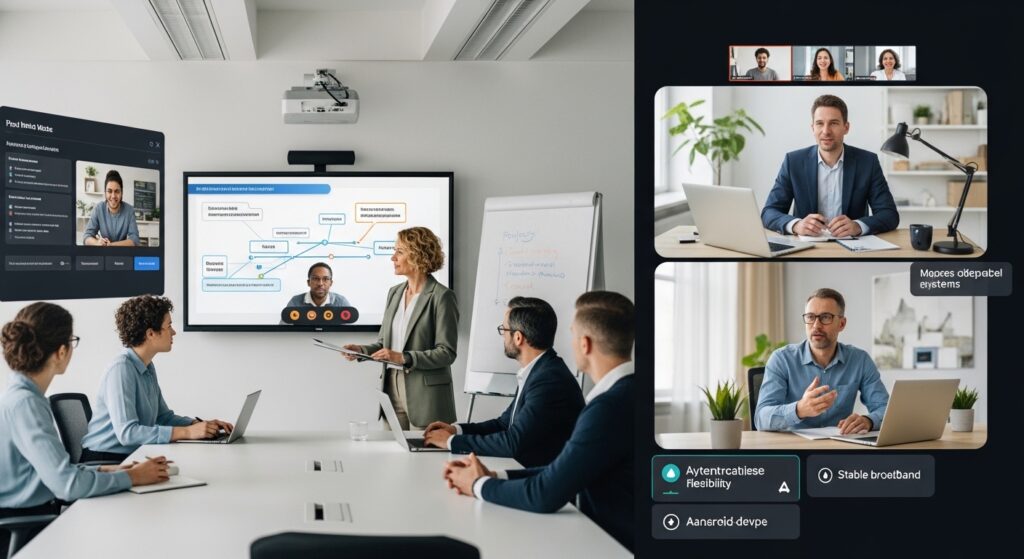
That challenge is now at the center of the remote-work debate. For several years, executives, employees and policymakers argued over where work should happen. Yet beneath those arguments sat a deeper issue: too much remote work still relies on a patchwork of tools that do not fully replicate the speed, clarity and trust of working together in person. Video meetings can be draining. Messaging apps can produce constant interruption. Shared documents improve coordination but can also create a feeling of endless, distributed work with no natural stopping point. When the tools are clumsy, remote work can feel isolating, fragmented and harder to manage. When the tools are strong, it can feel efficient, flexible and highly productive.
That means the future of remote work depends on technology not in the abstract, but in practical terms. Better remote work will require better collaboration systems, better cybersecurity, better identity management, better broadband access, better workflows for asynchronous communication and better ways to measure output without turning work into surveillance. It will also require a more disciplined use of artificial intelligence, which is increasingly being promoted as a solution to the overload that remote and hybrid workers often experience.
The persistence of remote work shows why this matters. Work from home has not vanished under return-to-office pressure. Instead, it has settled into a more stable pattern. In the United States, remote and hybrid arrangements remain especially common in knowledge-intensive industries such as information, finance and professional services. That stability is important because it suggests remote work is no longer a fringe experiment. It is an enduring part of white-collar labor markets. Employers may narrow flexibility in some sectors, but the broader model is still alive.
Even so, survival is not the same as success. Many workers and managers now understand the limits of first-generation remote work. The early years depended heavily on videoconferencing, chat apps and cloud documents. Those tools were indispensable, but they were often adopted quickly and layered on top of work habits designed for physical offices. The result was not always flexibility. Sometimes it was simply office behavior digitized and accelerated. Meetings multiplied. Notifications expanded. Work spread across time zones and into evenings. Employees became reachable almost constantly, yet not always more effective.
That is where the next wave of technology becomes decisive. The most important improvements may not be the flashiest. They are likely to come from tools that reduce friction. Better audio and video systems can make meetings less exhausting. Smarter meeting software can summarize action items and cut down on repetitive calls. More capable project platforms can help teams see progress without requiring status-check meetings at every turn. Shared workspaces that combine documents, messaging, scheduling and search in a coherent way can reduce the sense that employees are jumping between disconnected systems all day. In remote work, convenience is not cosmetic. It is infrastructure.
Artificial intelligence is being pushed into this environment as both assistant and remedy. The promise is obvious. If AI can draft notes, summarize discussions, organize tasks, surface relevant documents and automate routine administrative work, it may help remote workers spend less time navigating systems and more time actually doing their jobs. That could be especially important for distributed teams, where communication overhead is often higher than in co-located offices. The more time workers spend explaining, tracking and updating, the less time they spend producing.
But AI alone will not save remote work. In fact, if deployed poorly, it could make things worse. Employees already struggle with digital overload, and another layer of poorly integrated software may deepen the problem. AI that generates more alerts, more synthetic content and more pressure for constant responsiveness will not make remote work sustainable. Nor will AI-driven monitoring tools that treat workers as productivity risks rather than professionals. The technologies most likely to help are the ones that remove friction quietly and reliably, not the ones that create new forms of managerial anxiety.
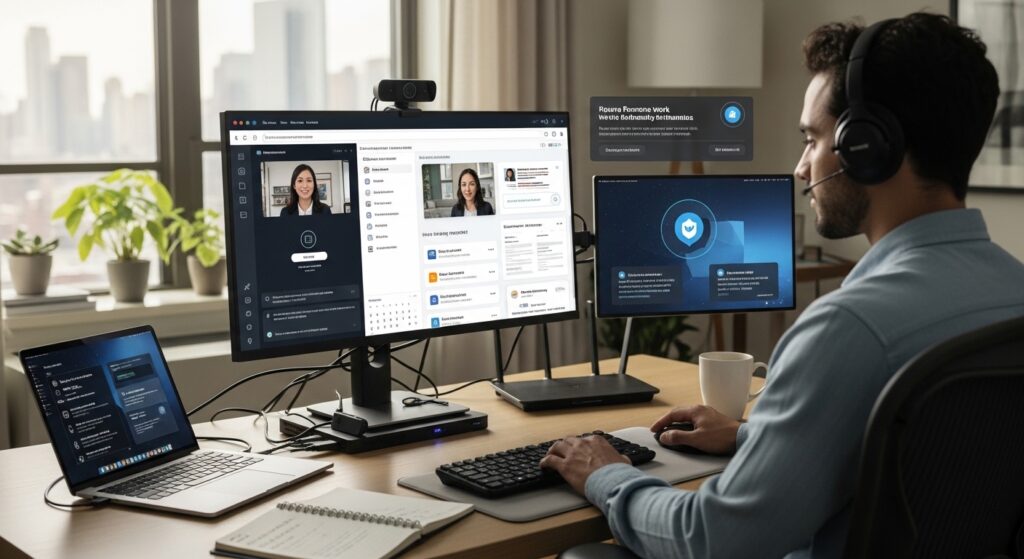
Security is another make-or-break issue. Remote work expanded the corporate perimeter, and that reality has not changed. Employees log in from home networks, shared spaces, personal devices and multiple locations. Each access point introduces risk. This is one reason cybersecurity agencies and standards bodies have continued to emphasize zero-trust principles, strong authentication, device security and carefully managed remote access. The lesson is simple: a remote-work strategy is only as strong as the system securing it. If employees cannot work safely from anywhere, then “work from anywhere” is not truly operational.
For companies, the stakes are not merely technical. Security failures can undermine confidence in remote work at the executive level. A breach tied to remote access can quickly reinforce the argument that in-person work is easier to control. That is why better remote-work technology must include invisible defenses as well as visible conveniences. The best systems do not just help employees collaborate. They help organizations trust that collaboration.
Connectivity also remains a critical fault line. Remote work assumes dependable internet, but dependable does not simply mean nominal access. It means sufficient speed, stable performance and acceptable latency under real conditions of use. A worker may technically have broadband and still struggle with dropped calls, lagging meetings, file-transfer delays or congestion when multiple household members are online. In that sense, the future of remote work depends partly on infrastructure beyond the employer’s walls. Home connectivity is now a workplace issue, even if it is delivered through consumer networks.
This is also where inequality enters the picture. Remote work has often been described as a great equalizer, opening opportunities across geography and reducing commute burdens. In some cases, it does exactly that. But those benefits are uneven when workers do not have the same devices, connectivity, workspace or technical support. A high-income employee with fiber internet, a private office and a company-managed laptop is not experiencing remote work the same way as someone relying on a crowded home environment, unstable service or smartphone-based internet access. If remote work is to remain a serious model rather than a privilege for the well-equipped, the technology gap has to narrow.
Then there is the human problem, which technology can support but not solve completely. Offices still offer advantages in mentorship, social learning, spontaneous coordination and relationship-building. Younger workers in particular may find it harder to absorb culture and build networks entirely through screens. Better technology can reduce that gap by improving knowledge sharing, onboarding and informal communication, but it cannot fully erase the value of physical presence. The future of remote work is therefore likely to remain hybrid in many organizations, not because companies are indecisive, but because hybrid models reflect a genuine attempt to combine flexibility with the social and developmental benefits of in-person time.
That is why the technology challenge is so specific. Companies do not need tools that merely allow remote work. They need tools that make remote work better than the improvised version many workers know today. They need platforms that support asynchronous updates instead of rewarding whoever responds fastest. They need systems that protect concentration rather than destroy it. They need digital workflows that help managers assess outcomes instead of policing keystrokes. And they need AI that enhances judgment, not substitutes for it blindly.
The winners in this next phase will probably be the organizations that treat remote-work technology as a strategic operating system rather than an employee perk. In those firms, collaboration software, cybersecurity architecture, device management, broadband support and AI tools will be designed together, not purchased in isolation. The goal will not be to recreate the office pixel by pixel. It will be to build a distinct model of work that is flexible, secure and sustainable on its own terms.
Remote work has already passed the test of possibility. It now faces the test of quality. Whether it expands, stabilizes or retreats will depend less on ideology than on execution. If technology continues to improve in ways that reduce friction, strengthen trust and respect how people actually work, remote work will remain a defining feature of the modern economy. If not, its future will narrow to those companies and workers best equipped to tolerate its shortcomings. The next chapter of remote work will not be decided by where the desk is. It will be decided by how well the technology works.