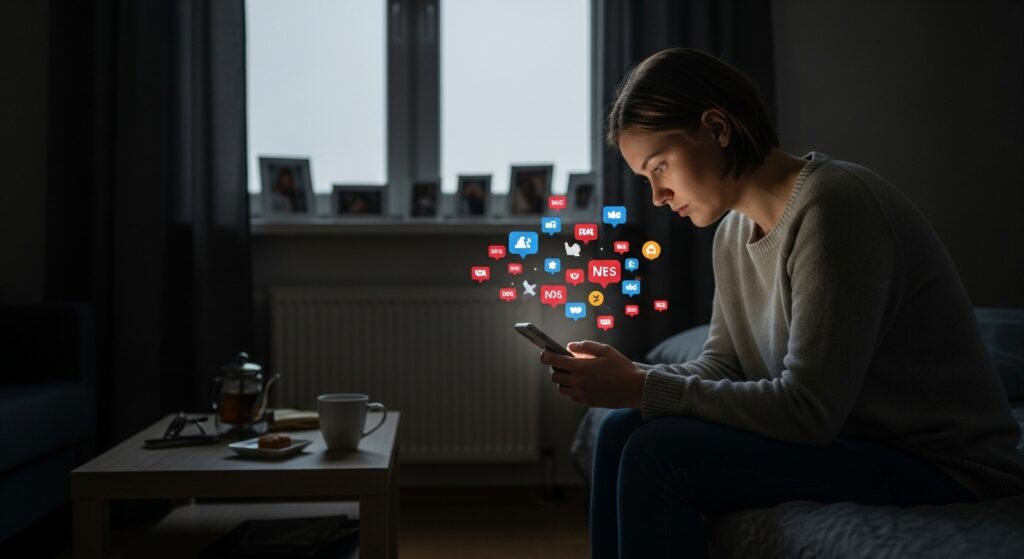
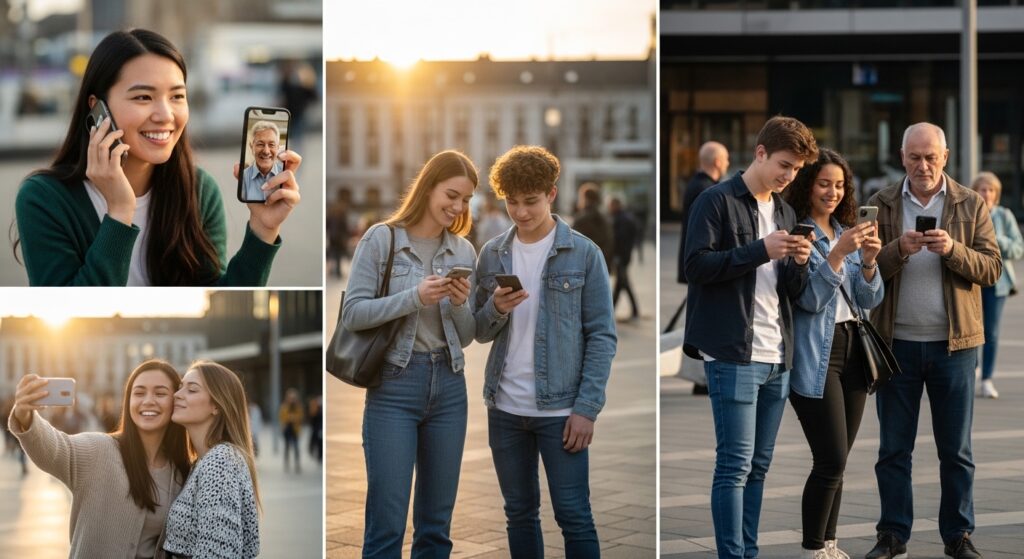
From instant connection across continents to rising loneliness, polarization and distrust, social media has become one of the defining forces shaping how modern society communicates, relates and divides.
When social media first entered daily life, it was widely celebrated as a revolutionary tool for connection. Platforms promised to shrink distances, strengthen communities and give ordinary people a voice once reserved for institutions and elites. In many ways, that promise was fulfilled. Families separated by migration could share daily moments in real time. Friends could maintain relationships across borders. Social causes could gather momentum with unprecedented speed. Isolated individuals could find communities built around identity, illness, grief, creativity or belief. Social media did not merely change communication; it transformed the very architecture of human interaction.
Yet after years of deep integration into everyday life, the question is no longer whether social media connects people, but what kind of connection it creates. The answer is increasingly complicated. Social media technology has undoubtedly brought people together in some ways, but it has also intensified division, weakened attention, amplified hostility and created forms of social comparison that leave many users feeling more alone than before. It is both a bridge and a wedge, often at the same time.
The strongest case for social media lies in its extraordinary ability to overcome physical distance. In previous generations, maintaining relationships over long distances required costly phone calls, delayed letters or occasional visits. Today, a parent working overseas can watch a child’s birthday through a livestream. University classmates scattered around the world can remain part of one another’s daily lives through messages, photos and shared group chats. During natural disasters, conflicts and public health crises, social media has often served as a lifeline, helping people locate loved ones, organize aid and distribute urgent information faster than traditional systems.
It has also expanded access to community for people who may struggle to find belonging offline. Teenagers questioning their identity, patients with rare diseases, new mothers facing postpartum stress, or immigrants adapting to unfamiliar cultures can find support networks online that may not exist in their immediate surroundings. For many people, these digital spaces are not superficial at all. They are vital emotional ecosystems where people feel seen, understood and less alone.
Social media has also democratized public conversation. A smartphone and an internet connection can allow witnesses to document injustice, citizens to challenge official narratives, and grassroots movements to gather support at scale. Political demonstrations, charitable campaigns and emergency relief efforts have all benefited from the speed and reach of digital platforms. In this sense, social media has created new forms of civic energy, allowing people who were previously unheard to enter the public sphere and influence events.
But the same systems that enable solidarity can also reward division. Social media platforms are designed to capture and hold attention, and conflict often performs better than calm discussion. Content that provokes anger, fear or outrage tends to spread faster than content that informs quietly or builds understanding. This dynamic can make social media less like a town square and more like a battlefield of emotion, where the loudest, sharpest and most provocative voices are pushed to the surface.
As a result, many users increasingly encounter not genuine dialogue but curated confrontation. Algorithms show people content similar to what they already engage with, reinforcing beliefs and narrowing perspective. Over time, this can create echo chambers in which users mainly hear views that confirm what they already think, while opposing opinions appear more extreme, irrational or threatening than they may actually be. In that environment, disagreement becomes harder to manage and empathy becomes easier to lose.
The impact on personal relationships can be just as troubling. Although people are more reachable than ever, reachability is not the same as closeness. Many users maintain large networks of contacts while experiencing a decline in deeper, slower and more demanding forms of friendship. Online interaction can create the appearance of social abundance while reducing opportunities for face-to-face presence, attentive listening and emotional nuance. A “like” can signal awareness, but not necessarily care. A comment can create visibility, but not intimacy.
This tension is especially visible among younger users, whose social lives are often deeply entangled with platform logic. Adolescents and young adults may measure belonging through followers, reactions and digital visibility. This can intensify social comparison, anxiety and the pressure to perform an idealized version of life. Instead of simply connecting with others, users may begin to curate themselves for constant judgment. In that environment, social media becomes less a tool for relationship and more a stage on which identity is continuously edited, ranked and consumed.
The mental health consequences of this shift have become harder to ignore. While social media can provide support and self-expression, excessive or emotionally charged use is often associated with stress, sleep disruption, insecurity and loneliness. One reason is that social media collapses multiple social worlds into a single, always-on stream. Users are exposed not only to friends and family, but to influencers, strangers, breaking news, public outrage, crisis footage and idealized lifestyles, often within minutes. The human mind did not evolve to process such a volume of social information without fatigue or distortion.
Another problem is that social media can weaken trust. False information, manipulated images, conspiracy theories and anonymous abuse can spread rapidly in environments where speed matters more than verification. As people struggle to distinguish credible sources from performative or deceptive content, public discourse becomes more fragmented and cynical. The result is not only confusion about facts, but suspicion toward institutions, media and even one another.
Still, it would be too simple to blame technology alone. Social media does not operate in a vacuum. It reflects and magnifies existing human tendencies: the desire to belong, the fear of exclusion, the attraction of outrage, the comfort of certainty and the temptation to judge quickly. The platforms shape behavior, but users, governments, educators and companies also shape the digital culture surrounding them. The real issue is not whether social media is inherently good or bad, but whether society can build norms, incentives and safeguards that encourage healthier forms of online interaction.
There are signs that such a shift is possible. Some users are becoming more intentional, choosing smaller communities over mass visibility, private groups over public performance, and meaningful exchanges over endless scrolling. Parents and schools are placing greater emphasis on digital literacy, teaching young people not only how to use platforms, but how platforms use them. Regulators in some countries are pressing technology companies to improve transparency, child safety and accountability. Even within the tech industry, there is growing recognition that maximizing engagement at any cost can produce deep social harm.
In the end, social media technology is doing both: bringing people together and pulling them apart. It connects across geography while dividing across ideology. It creates communities while commercializing attention. It empowers voices while rewarding outrage. It offers support while fueling comparison. Its effects are not uniform because human relationships are not uniform. The same platform can comfort one person, radicalize another, mobilize a movement and damage a friendship all in a single day.
The deeper question, then, is not what social media does to people, but what kind of social world people are willing to build through it. Technology can facilitate contact, but it cannot guarantee understanding. It can create networks, but not necessarily trust. It can accelerate communication, but not wisdom. Whether social media becomes more of a bridge or more of a barrier depends on choices made by designers, policymakers and users themselves.
For now, the evidence suggests that social media has not replaced human connection so much as reshaped it into something faster, wider, more visible and more volatile. It has given society remarkable new ways to gather, speak and witness. But it has also exposed how fragile connection becomes when it is filtered through algorithms built to monetize attention. Social media can bring people together, but unless it is used with greater care, restraint and responsibility, it can just as easily leave them more divided, distracted and alone.