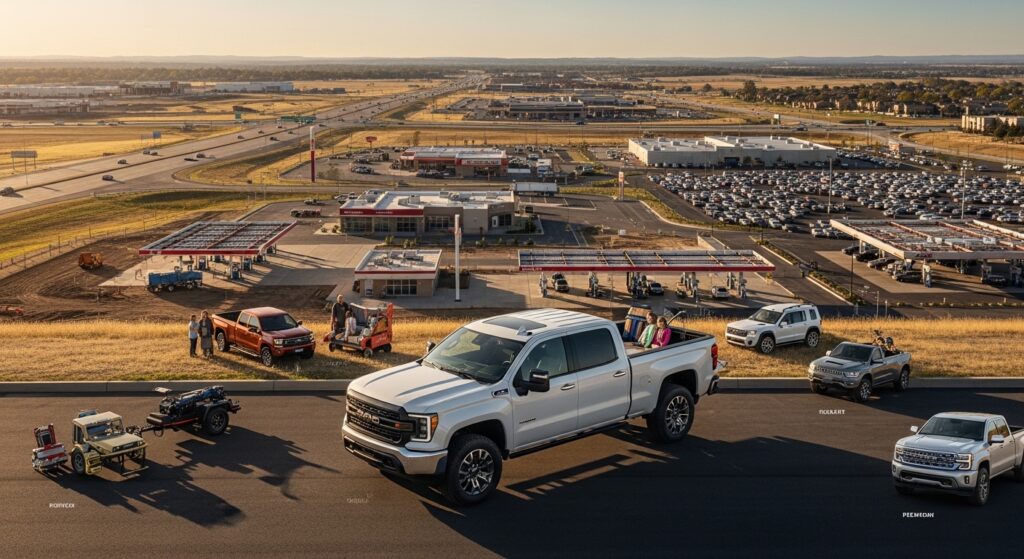
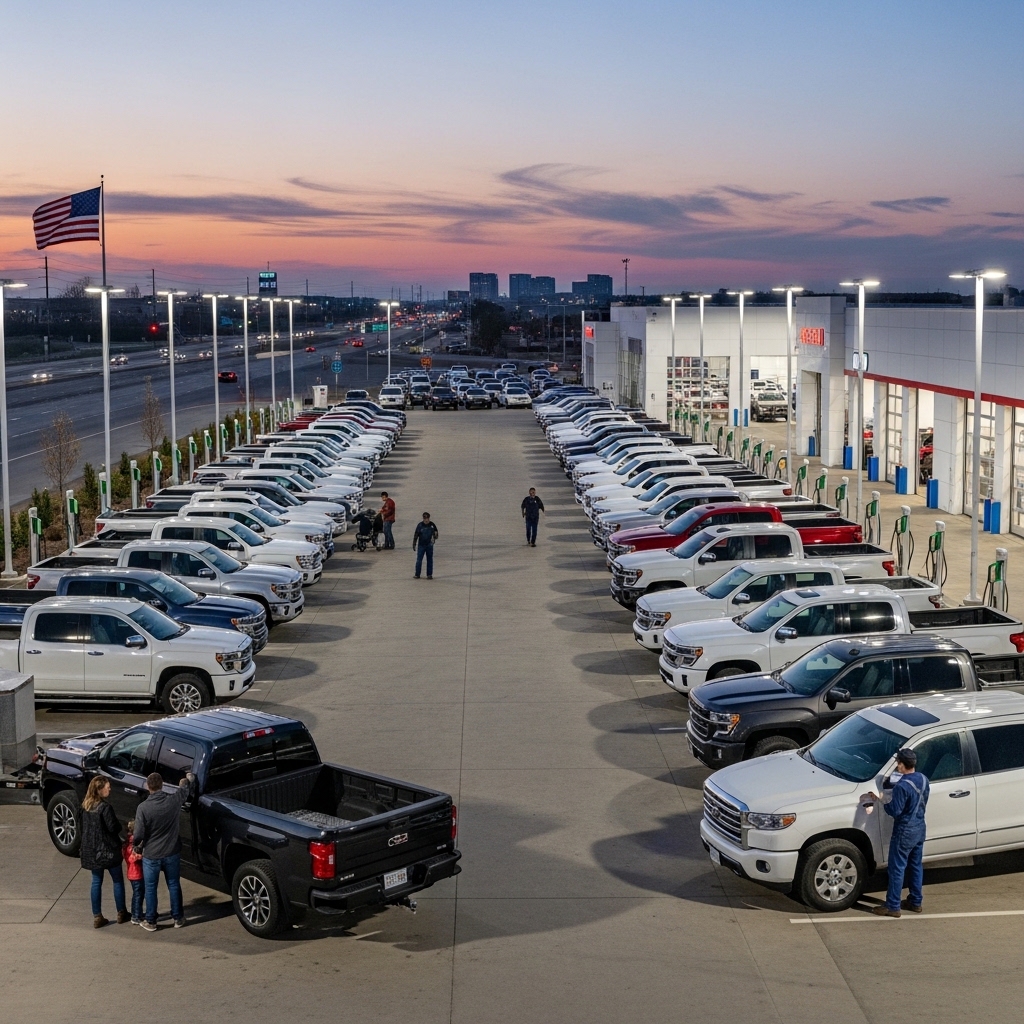
Even as crossovers, hybrids and electric vehicles expand across the industry, the American pickup remains a uniquely durable blend of work tool, family vehicle, lifestyle badge and profit engine.
The American auto market has changed dramatically over the past two decades. Sedans that once defined suburban driveways have steadily lost ground to crossovers and sport utility vehicles. Electric vehicles have forced manufacturers to rethink supply chains, software and battery strategy. Yet through all that change, the pickup truck has remained one of the most durable forces in U.S. car buying, resisting trends that have weakened other traditional vehicle segments.
That staying power is not the result of habit alone. Pickup trucks dominate because they occupy a rare position in American life: they are practical enough for work, spacious enough for family use, aspirational enough for lifestyle marketing and lucrative enough for automakers to keep refining them. In other words, trucks have survived not because the market failed to evolve, but because the truck itself evolved faster than many critics expected.
At the most basic level, pickups still answer real economic needs. For contractors, farmers, oilfield workers, landscapers, utility crews and small-business owners, the truck remains a tool before it is a symbol. It hauls equipment, tows trailers, handles rough ground and covers long distances without requiring a separate commercial vehicle. In large parts of the United States, especially outside dense coastal cities, those capabilities are not occasional luxuries. They are tied directly to income and daily logistics. A vehicle that can carry a family during the week and pull work duty on weekends offers a kind of efficiency that few other body styles can match.
But the truck’s hold on the market extends well beyond job sites. Over time, automakers transformed pickups from stripped-down workhorses into multipurpose consumer products. Modern full-size trucks are quieter, safer and far more comfortable than their predecessors. Crew cabs provide generous rear-seat space. Higher trims offer leather interiors, panoramic roofs, advanced towing cameras, driver-assistance systems and large digital displays that resemble luxury SUVs more than old farm trucks. For many households, the pickup no longer feels like a compromise between utility and comfort. It feels like a premium all-purpose vehicle with extra capability in reserve.
That reserve matters in the psychology of buying. Many consumers do not tow a heavy trailer every week or fill the bed with lumber every day. But they like knowing they could. The pickup sells possibility as much as necessity. It promises readiness for home projects, road trips, camping, boats, motorcycles, bad weather and sudden practical demands. In a country where personal mobility is closely tied to ideas of independence and self-sufficiency, that promise carries unusual power. Owning a truck can feel like buying capability in advance.
Geography also helps explain the segment’s resilience. The United States is not one auto market but many. In dense urban areas, parking costs, fuel prices and narrow streets make large pickups less convenient. But much of the country is suburban, exurban or rural, with longer commutes, larger roads, cheaper parking and stronger demand for towing, hauling and all-weather confidence. In those settings, the size of a full-size pickup can feel normal rather than excessive. Regional culture reinforces that normalization. In many parts of Texas, the Midwest, the Mountain West and the South, trucks are not niche vehicles. They are mainstream family transportation.
The economics of the industry deepen that dominance. Pickup trucks are among the most profitable products sold by major U.S. automakers. Their base versions can attract commercial buyers, while higher trims generate far richer margins through luxury features, appearance packages and specialized off-road variants. That gives manufacturers a powerful incentive to keep trucks at the center of their lineups and marketing budgets. When a vehicle category can serve fleet operators, suburban families and affluent buyers at the same time, it becomes difficult for carmakers to treat it as anything other than strategic core business.
That commercial logic has shaped product planning for years. Automakers have invested heavily in truck redesigns, powertrain options and trim proliferation because demand has justified it. Buyers can now choose between basic work models, long-range towing configurations, performance-oriented off-road versions, luxury grades and increasingly hybrid or electric variants. The pickup market is no longer one market. It is a layered ecosystem that captures very different customers under one body style. That breadth makes the segment unusually resilient when economic conditions shift. A slowdown in one slice of truck demand does not necessarily collapse the entire category.
Loyalty is another major factor. Truck buyers often stay with the same brand for years, sometimes generations. Part of that reflects habit, but much of it reflects ecosystem lock-in. Owners invest in accessories, know local dealers, trust familiar towing setups and build identity around a specific nameplate. In pickup culture, brand attachment can be stronger than in many passenger-car segments. That loyalty lowers switching rates and helps entrenched models preserve their status even as the broader market becomes more fragmented.
Policy and market structure have also played supporting roles. For decades, pickups benefited from regulatory and trade conditions that helped sustain domestic strength in light trucks. That did not create consumer demand by itself, but it did help shape the competitive landscape, limiting some foreign competition and allowing Detroit manufacturers to defend and deepen their truck franchises. Once those franchises became central to profits, product development followed, making the trucks more sophisticated and harder to dislodge.
The rise of SUVs and crossovers, rather than eliminating the truck, may actually have strengthened it at the top end of the market. As consumers grew more comfortable with taller vehicles and larger footprints, the pickup’s dimensions became less exceptional. At the same time, buyers who wanted SUV comfort but more utility found modern crew-cab pickups increasingly attractive. In effect, the truck benefited from the same cultural shift that hurt the sedan: Americans moved toward larger, more versatile vehicles, and the pickup was already built around that logic.
Even the transition to electrification has not yet broken the truck’s central role. Electric pickups generated early excitement, but large battery packs, high prices, towing-related range loss and charging concerns have made the segment harder to transform than some early forecasts suggested. Traditional gasoline and hybrid trucks still fit existing customer expectations more closely. That does not mean pickups will resist change forever. It means the path to electrifying America’s most popular and demanding vehicle category is more complicated than converting compact commuter cars.
None of this means pickup dominance is without costs or contradictions. Large trucks are expensive, fuel-hungry compared with smaller vehicles and difficult to maneuver in some urban settings. Safety advocates have also raised concerns about vehicle size, visibility and the risks that taller, more vertical front ends can pose to pedestrians. Those issues are likely to intensify as policymakers, insurers and cities continue debating how vehicle design affects public space and road safety. But criticism alone has not meaningfully weakened truck demand, in part because buyers continue to see the trade-offs as justified by utility, comfort and status.
That blend of function and identity is what makes the pickup unusually hard to dethrone. It is a work vehicle, but not only a work vehicle. It is a family car, but not only a family car. It is a cultural signal, a recreational platform and, for automakers, a financial pillar. Very few segments can perform all of those roles at once.
So long as the United States remains a country of long distances, dispersed development, strong contractor and small-business demand, and consumers who value versatility as much as efficiency, pickup trucks are likely to remain central to the market. They have endured not because America failed to modernize, but because the pickup became modern in its own distinctly American way.