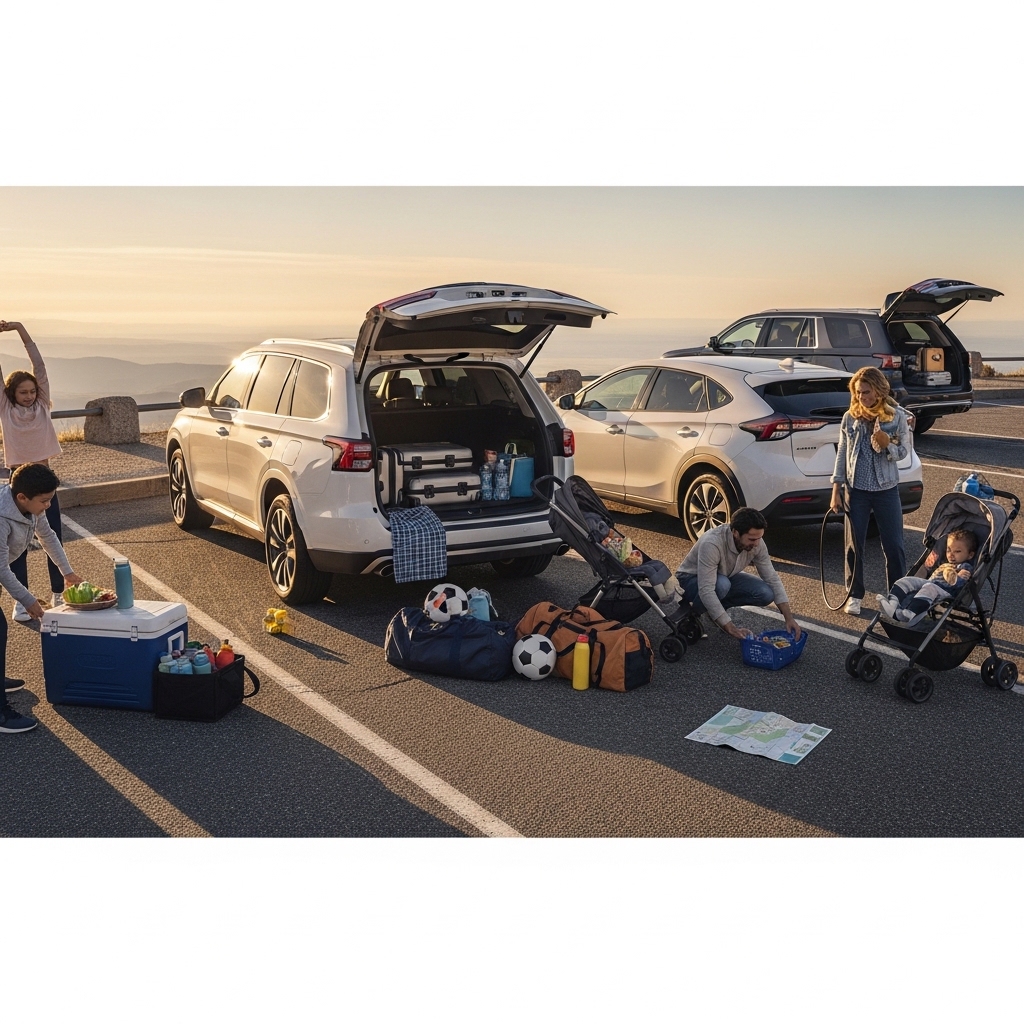
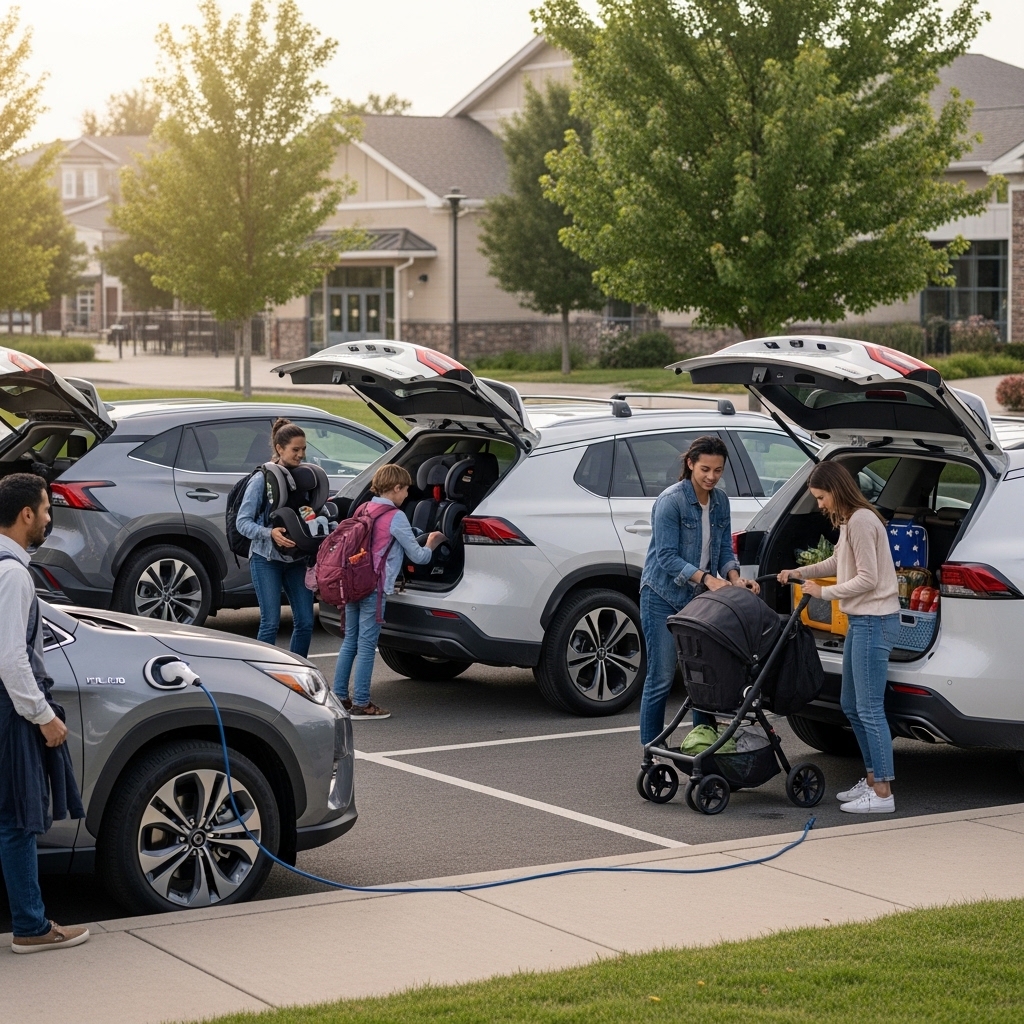
From compact hybrids that keep fuel bills in check to roomy three-row models built for school runs, road trips and child seats, the strongest family SUVs in the U.S. this year are the ones that balance safety, space, comfort and value without asking buyers to compromise too much on any single front.
For American families shopping in 2026, the SUV market offers more choice than ever, but also more confusion. Buyers are being asked to weigh traditional concerns such as passenger room, reliability, crash protection and cargo capacity against newer pressures that include fuel costs, hybrid technology, software-heavy interiors and higher sticker prices. The result is a market in which there is no single “best” family SUV for every household. Instead, there is a shrinking tolerance for weak spots. A family vehicle in this market has to do almost everything well.
That reality is reshaping the shortlist. This year’s strongest family SUVs are not simply the biggest, the most luxurious or the most rugged. They are the models that make everyday family life easier: easy-access second rows, useful third rows, wide cargo openings, strong safety scores, reasonable running costs and cabins that do not bury basic controls inside distracting touchscreen menus. In other words, the best family SUVs are the ones designed for repetition as much as adventure.
Among compact choices, the Honda CR-V Hybrid remains one of the safest and most balanced options for small families or buyers who do not need a third row. It is not flashy, and that is part of its appeal. The CR-V Hybrid has built a reputation around comfort, packaging and ease of use, and in its latest form it continues to stand out as the kind of vehicle that asks little of its owner. It is sized for crowded parking lots and suburban garages, yet large enough for strollers, sports gear and a week’s worth of groceries. For households with one or two children, it hits a particularly important sweet spot: it feels substantial without becoming cumbersome.
The Subaru Forester Hybrid also deserves serious attention this year, especially for families in colder states or regions where all-weather confidence matters. Subaru’s family appeal has long rested on two pillars: approachable utility and standard all-wheel-drive capability. The Forester keeps both. Its boxy shape helps maximize headroom and outward visibility, which remains one of the most underrated traits in family transportation. Parents often care less about dramatic styling than about the ability to see clearly in traffic, pull into a school pickup line without stress and strap children into car seats without contortion. The Forester’s appeal lies in exactly that sort of real-world practicality.
For buyers who want a compact-to-midsize crossover with extra flexibility, the Hyundai Santa Fe Hybrid is one of the year’s most intriguing choices. Its upright design and unconventional shape have divided opinion, but families may care more about the useful packaging than the styling debate. The Santa Fe Hybrid offers an increasingly valuable formula in the American market: hybrid efficiency combined with available three-row seating in a footprint that is still easier to manage than a large SUV. That matters for parents who want occasional third-row capability for carpools or visiting relatives without stepping all the way up to a larger and more expensive vehicle.
The real battleground, however, remains the three-row family SUV segment, where the demands are toughest and the stakes are highest. These vehicles are expected to carry children, grandparents, luggage, pets, sports equipment and vacation cargo while still feeling civilized on a daily commute. In this class, the Hyundai Palisade Hybrid enters the conversation this year as one of the most complete new contenders. It combines the upscale, near-premium feel that helped make the Palisade name popular with the kind of fuel efficiency that family budgets increasingly demand. That combination matters at a time when many households want the room and calm ride of a large SUV but are wary of the long-term cost of feeding a heavy gasoline-only model.
The Toyota Grand Highlander also remains one of the strongest answers for larger families, especially those who genuinely use all three rows. Too many midsize three-row SUVs offer a third row that is best understood as emergency seating. The Grand Highlander was designed more honestly. It feels like a vehicle made with the assumption that people will actually fill it. That means more usable adult-friendly space in the back, a larger cargo hold when the seats are up, and a general sense that Toyota understood the gap between marketing language and family reality. For American buyers who spend weekends hauling children and belongings across long distances, that matters more than a dramatic dashboard.
Then there is the Kia Telluride, still one of the defining benchmarks of the American family SUV class, and newly refreshed for this year in a next-generation form. The Telluride’s success has never depended on one headline number alone. Instead, it has come from its broad competence: generous passenger room, thoughtful trim strategy, calm road manners and a design that feels more expensive than its badge might suggest. For families, it continues to represent a persuasive middle ground between mainstream pricing and premium-adjacent execution. Its arrival with hybrid power also reflects where the family SUV market is moving. Buyers still want size and comfort, but they increasingly expect better efficiency and a lower fuel bill in return.
The Mazda CX-90 Plug-in Hybrid, meanwhile, occupies a different corner of the family market. It is less purely utilitarian than some rivals, but for households that want family usefulness without giving up a more refined driving experience, it has a strong case. Mazda has positioned the CX-90 as a more premium and more driver-focused alternative to the mainstream three-row crowd, and the plug-in hybrid version gives it added relevance this year. For suburban families with home charging, short weekday commutes and occasional longer trips, a plug-in hybrid can offer a useful bridge between conventional gasoline ownership and a full battery-electric lifestyle. It will not be the default choice for every family, but for the right one, it may be the smartest compromise.
The Honda Pilot also remains a contender for buyers who place simplicity and usability above trendiness. It is one of those vehicles whose virtues reveal themselves over time rather than in a showroom glance. The Pilot’s family-minded interior layout, strong V-6 power and practical seating flexibility continue to make it a dependable choice for households that want a more traditional formula. In a market increasingly crowded with bold styling and tech-heavy experimentation, there is still a place for a vehicle that simply feels robust, familiar and easy to live with.
What unites the best family SUVs this year is not a shared drivetrain or badge. It is a shared discipline. The leading models understand that family buyers notice everything. They notice whether the third row is actually usable. They notice whether the second row slides easily. They notice whether cupholders are where they should be, whether cargo space remains meaningful with all seats occupied, whether road noise rises on the highway, and whether a touchscreen makes simple tasks harder instead of easier. These details, more than horsepower figures or off-road imagery, determine whether a family SUV succeeds.
Safety continues to sit at the center of the decision. For many American buyers, that means not just airbags and crash-test language, but also the effectiveness of modern driver-assistance systems. Automatic emergency braking, pedestrian detection, lane-keeping support and rear-seat reminders are no longer niche features. They are becoming baseline expectations in a family vehicle. The best SUVs this year are the ones that treat those systems as part of the vehicle’s core mission rather than as expensive extras.
The market is also being shaped by affordability, and that may be the hardest challenge of all. Family SUVs have improved dramatically over the past decade, but many have also become more expensive. Hybrids and plug-in hybrids can help reduce fuel spending, but they often require a higher upfront investment. That is why value matters as much as ever. The strongest family SUVs are not necessarily cheap; they are the ones that justify their price by being good at many things at once.
This year, then, the best SUVs for American families are best understood in tiers. The Honda CR-V Hybrid and Subaru Forester Hybrid stand out for smaller households seeking efficiency and safety. The Hyundai Santa Fe Hybrid offers flexibility for buyers who want a smaller footprint with occasional third-row usefulness. The Hyundai Palisade Hybrid, Toyota Grand Highlander and Kia Telluride define the most competitive end of the three-row market. The Mazda CX-90 Plug-in Hybrid gives more design-conscious families an electrified alternative with premium leanings, while the Honda Pilot remains a durable and sensible choice for those who prefer proven simplicity.
For American families, the winning SUV this year is less about image than fit. The best one is the vehicle that handles the school week, the grocery run, the family vacation and the unexpected schedule change without drama. In a crowded market, that kind of competence is what still matters most.