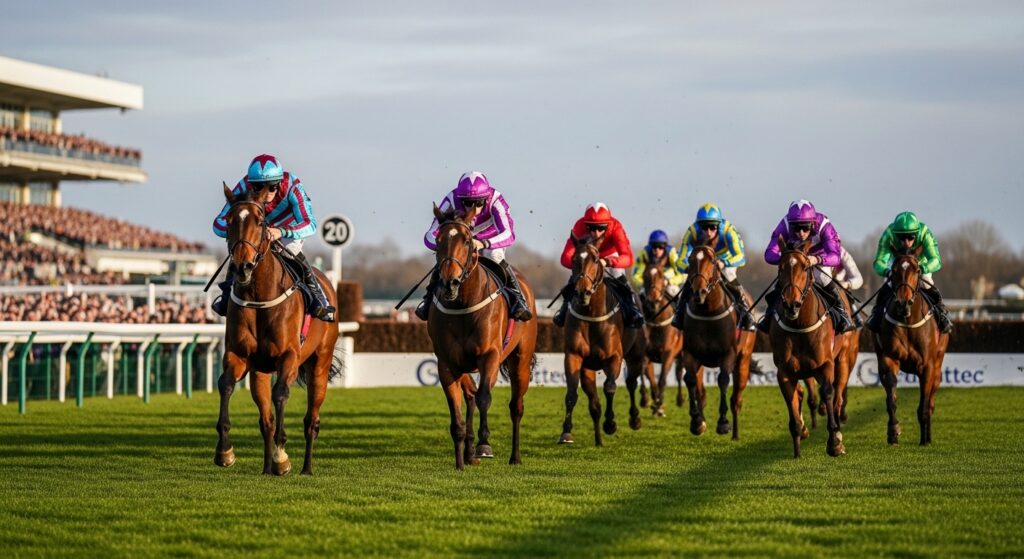
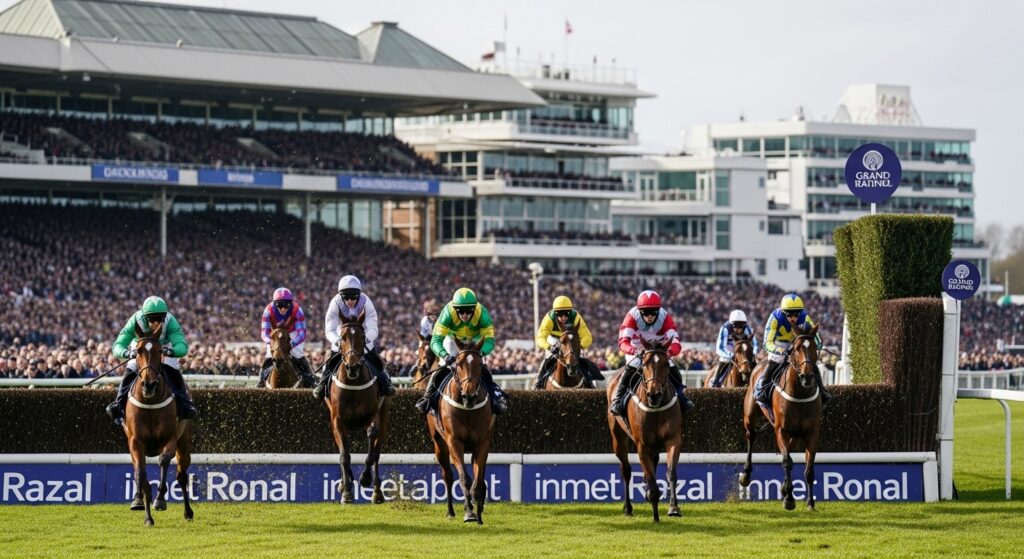
With a former champion returning, a defending winner ruled out late, and a deep roster led by powerhouse Irish stables, the 2026 Grand National has arrived with the kind of depth and intrigue that turns racing’s most famous steeplechase into a global spectacle.
LIVERPOOL, England — The Grand National has long sold itself on unpredictability, but the 2026 edition is generating unusual excitement for another reason: not simply because it is chaotic, historic and impossible to fully script, but because its field appears unusually rich in recognizable names, proven staying chasers and major stable firepower.
By the time the runners were finalized for Saturday’s race at Aintree, the buildup had already acquired the feel of a championship event rather than merely a handicap chase. Former winner I Am Maximus was back in the lineup with a chance to reclaim the title he won in 2024. Around him stood a cast packed with graded performers, emerging stayers and horses backed by some of the sport’s most influential owners and trainers. The phrase repeatedly heard around the festival was simple: this is a “monster field.”
That impression has been shaped partly by the concentration of talent from Ireland, where leading operations have continued to target Aintree as one of jump racing’s defining prizes. Willie Mullins, whose dominance of the spring festivals has become one of the sport’s defining storylines, again arrived with formidable strength in numbers. JP McManus, the influential owner whose green-and-gold colors are among the best known in National Hunt racing, also had a powerful hand to play. Together, they helped create the sense that this year’s Grand National is not just another running of a famous race, but a collision of elite resources, proven stamina and hard-earned experience.
The intrigue deepened when Nick Rockett, last year’s winner, was ruled out in the final stretch of preparations. His withdrawal removed one obvious headline but sharpened several others. Instead of a neat title defense narrative, attention swung toward whether I Am Maximus could become the horse that reasserts himself at the summit, toward whether another Mullins-trained runner could emerge from the pack, and toward whether an English-trained challenger might finally disrupt the Irish grip on a race increasingly shaped by cross-channel power.
I Am Maximus sits at the center of much of that conversation for obvious reasons. He is not merely another fancied runner but a horse already embedded in Grand National memory. His 2024 victory gave trainer Willie Mullins and jockey Paul Townend one of the sport’s most resonant successes, and his return naturally invites comparison with past greats who managed to remain competitive in a race that can expose even the smallest weakness. In a field crowded with live contenders, he still carries the aura of a horse that has already solved Aintree’s most difficult puzzle.
Yet one of the reasons the 2026 race has generated so much noise is that this is not a one-horse story. Iroko has been discussed in many previews as a major contender, helped by a profile that suggests the race’s demands could suit him well. Grangeclare West has drawn support as another runner capable of making a serious impact if he settles into rhythm. Jagwar has been highlighted as one of the more compelling home-trained hopes, a horse whose progression has made him attractive to those looking for an English answer to Ireland’s recent control. Monty’s Star, Panic Attack, Perceval Legallois and others have added layers to a field that feels deeper than the market alone can explain.
That depth is part of what keeps the Grand National culturally distinctive even in a more data-driven, professionalized racing age. The event remains one of the few races in which casual viewers, seasoned handicappers, stable insiders and once-a-year punters all feel they can make a plausible case. Some focus on class, others on stamina, others on jumping fluency, ground conditions, weight or experience over extreme trips. This year, almost every angle seems to produce a different shortlist, reinforcing the impression that the 2026 lineup is loaded not just with quantity but with credible winning narratives.
Aintree itself has also changed in recent years, and the 2026 race arrives within that modernized landscape. Safety reforms have altered aspects of the race, including the maximum field size, which has been reduced to 34, and procedural changes designed to lessen risk at the start and over the fences. Those adjustments have not removed the Grand National’s identity; the race remains a searching test of balance, stamina and courage. But they have changed how trainers and analysts discuss the contest. The emphasis now is less on raw survival than on whether a horse possesses the pace, composure and endurance to adapt to a test that remains unique even after reform.
Those discussions have gained renewed relevance at this year’s meeting because welfare remains impossible to separate from the Grand National story. The festival was overshadowed on Friday by the fatal injury suffered by Gold Dancer in the Mildmay Novices’ Chase, a reminder that even as the sport pushes safety reforms and points to improvements, scrutiny never recedes. For racing’s defenders, the challenge is to show that the event can preserve its drama and heritage while continuing to evolve. For critics, every incident renews harder questions about what level of risk should remain acceptable. The 2026 Grand National therefore unfolds under the twin pressures of celebration and examination, with every leap over Aintree’s famous obstacles carrying sporting meaning and broader symbolic weight.
That tension is part of why the race continues to command attention well beyond racing’s core audience. Organizers have also found success in broadening the event’s cultural reach. This year’s meeting drew fresh notice for attracting younger crowds, with social media, especially short-form video platforms, helping market the festival as both a sporting and social occasion. Ladies’ Day sold out for the first time in years, and the racecourse again blended fashion, festival atmosphere and elite competition. Purists may prefer to talk only about staying power and handicapping, but the modern Grand National is also an event business, a media product and a barometer of whether horse racing can still break through in a crowded entertainment market.
What makes 2026 especially compelling, however, is that the sporting case is strong enough to cut through the noise. This is a field with storylines that do not need embellishment. A former champion seeks to prove his class again. A powerful Irish contingent tries to extend a period of influence that has reshaped British jump racing’s biggest stage. English-trained hopes search for a breakthrough in a race where national pride still matters, even in an increasingly international sport. Owners with enormous investment and emotional commitment line up alongside trainers trying to place the right horse in the right race at the right moment. The result is a Grand National that feels simultaneously traditional and sharply contemporary.
For Aintree, that is almost the ideal formula. The race remains rooted in history, but it cannot live on nostalgia alone. It needs names the public can recognize, rivalries the media can frame, and enough uncertainty to justify the annual claim that anything can happen. The 2026 edition appears to have all three. It has a proven star in I Am Maximus, strategic depth from top yards, late drama through withdrawals and reshuffled expectations, and a chasing pack full of horses whose profiles suggest they are far more than decorative support acts.
That does not guarantee a classic finish. Grand Nationals have a habit of mocking consensus, and the race can turn brutally on one mistake, one awkward landing, one traffic problem or one emptying stride. But the sense of anticipation surrounding this year’s field is easy to understand. In an era when top horses are often protected, spaced carefully and campaigned with restraint, Aintree still assembles a lineup willing to attempt something grand, difficult and unpredictable in full public view.
That is why Grand National 2026 has generated such a surge of attention. It is not only the fame of the race, or the emotion of the occasion, or the scale of the crowd. It is the feeling that this year’s lineup contains enough class, depth and narrative weight to make the sport’s most famous contest feel newly alive again. At Aintree, that is more than hype. It is the promise of a stage big enough for legends, challengers and chaos to meet at once.