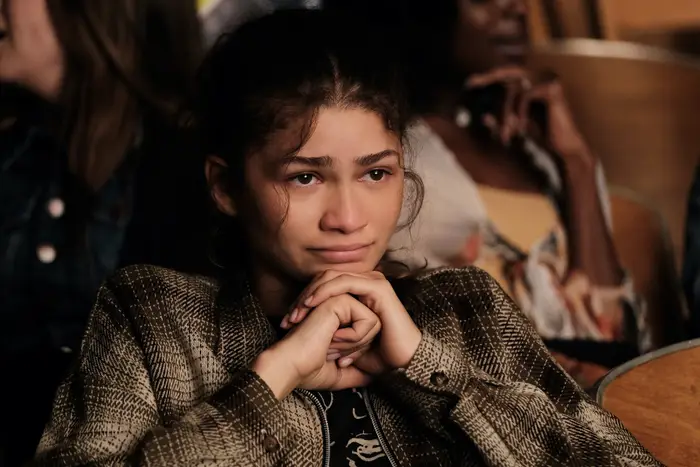

With HBO’s long-delayed third season set to debut this week, “Euphoria” is returning not just as a hit series but as a Hollywood power center that helped elevate Zendaya, Jacob Elordi and Sydney Sweeney into the top tier of modern stardom.
Few television dramas of the last decade have left a footprint quite like “Euphoria.” When the HBO series first arrived in 2019, it was immediately discussed for its visual style, emotional extremity and divisive portrait of adolescence. But over time, its impact grew beyond the arguments over content or tone. “Euphoria” became one of those rare shows that did more than dominate conversation during its run. It altered careers, reconfigured celebrity and turned much of its young cast into defining faces of a new screen generation.
That is why the return of season three is drawing attention well beyond the show’s core fan base. After a gap that stretched more than four years since season two concluded in February 2022, the series is back with the kind of anticipation normally reserved for prestige franchise television. HBO has confirmed that the eight-episode third season will debut on April 12, 2026, with new episodes released weekly. The delay, long enough to fuel doubts about whether the show would ever fully return, has only intensified the sense that this is more than another seasonal premiere. It is a test of whether one of television’s most influential youth dramas can reclaim its place after years in which its cast became far bigger, busier and more famous than the series that first launched them.
The Associated Press framed that point directly in recent coverage, arguing that “Euphoria,” returning for a third season, helped launch a generation of new stars. That reading is difficult to dispute. Zendaya entered the series already known from Disney Channel roots and blockbuster franchises, but “Euphoria” transformed her into something more formidable: an actor with critical authority. Her performance as Rue Bennett, a teenager struggling with addiction, won her two Emmy Awards and redefined her public image from former child star to one of the most closely watched performers in Hollywood. In the years since, she has moved with unusual ease between commercial scale and artistic credibility, starring in major films while remaining central to the identity of “Euphoria.”
Jacob Elordi’s ascent followed a different arc but was no less striking. Before “Euphoria,” he was known primarily through teen-oriented streaming fare. After it, he emerged as a far more serious screen presence, landing roles in films such as “Priscilla,” “Saltburn” and Guillermo del Toro’s “Frankenstein.” Sydney Sweeney, meanwhile, used the series as a springboard into one of the busiest and most strategically ambitious careers of her generation, building an increasingly broad résumé across drama, satire, horror, romance and producing. In industry terms, “Euphoria” has functioned almost like an accelerator: not simply exposing talent, but pushing it into higher-value categories of celebrity.
That star-making reputation is part of why season three returns under unusual conditions. Most television series rely on continuity. “Euphoria” returns after a long absence during which the cast’s market value changed dramatically. The actors are no longer emerging talents waiting for a breakout. They are now marquee names whose schedules, reputations and audience expectations are much larger than they were when the show last aired. In practical terms, that alters the show’s status. “Euphoria” is no longer merely the engine of its cast’s fame. It is now also a platform trying to reunite stars who have since become brands in their own right.
HBO is clearly leaning into that event quality. Warner Bros. Discovery’s press materials describe “Euphoria” as one of the most watched series in HBO’s history, with the first two seasons earning 25 Emmy nominations and nine wins. The company has also publicized the technical ambition of the new season, highlighting that it was shot on new Kodak motion picture film stock in 35mm and 65mm. That detail may sound niche, but it fits the identity “Euphoria” has always cultivated: a series determined to be discussed not only for plot and performance but for image, mood and form. Even by prestige television standards, it wants to feel authored.
The question facing season three is whether the show can still command culture in the same way. The television landscape is more crowded, audiences more fragmented and the shock value that once surrounded “Euphoria” less singular than it was in 2019. Streaming-era viewers have since absorbed a flood of youth-centered, aesthetically aggressive dramas. At the same time, some of the original conditions that made “Euphoria” feel explosive have changed. The cast is older. The audience is older. HBO’s own official description signals that the characters are moving into a wider world beyond high school. That evolution may prove necessary. A series about adolescence can only remain frozen in adolescence for so long.
Yet that may also be where the show’s continued relevance lies. “Euphoria” has never been most influential simply because it depicted teenage life in sensational terms. Its larger effect came from the way it merged prestige-TV craft, social-media aesthetics and youth-market star power into one package. It was a show built for clips, fashion analysis, meme circulation, think pieces and awards attention all at once. In that sense, it arrived at exactly the right cultural moment. It was television designed to behave like an event across platforms.
Its return therefore matters not only as a programming milestone but as a broader entertainment signal. If season three lands, HBO regains one of its strongest cross-generational cultural properties at a time when prestige television is increasingly judged by whether it can still create collective attention in a fractured media economy. If it falters, the result may reinforce a different conclusion: that in the streaming age, even major shows can lose momentum when gaps become too long and stars outgrow the worlds that made them famous.
There are already signs that HBO believes the appetite remains strong. The company has promoted the return aggressively, including a special fan screening tied to Coachella, an unusually lifestyle-oriented activation for a television drama. That move underlines how “Euphoria” is being sold not just as a narrative continuation but as a cultural happening. The series still carries associations with fashion, music, beauty culture and youth celebrity that few dramas can match. It is not merely watched; it is styled, quoted and circulated.
That may be the show’s deepest legacy. “Euphoria” blurred the line between scripted television and fame machinery. It gave viewers a drama, but it also created a gallery of faces that the entertainment business quickly recognized as commercially powerful. Zendaya became an awards magnet and global fashion figure. Elordi became a prestige-film leading man. Sweeney became both star and producer, navigating studio projects and auteur-driven material with equal fluency. Around them, performers such as Hunter Schafer, Alexa Demie, Maude Apatow and Colman Domingo also saw their profiles rise, while the series’ cast history remains inseparable from the loss of Angus Cloud, whose death in 2023 added a lasting note of sorrow to the show’s off-screen story.
All of that gives season three a different emotional texture from an ordinary return. It is not simply resuming a story. It is returning after time, grief, delay and industry transformation. It arrives in a Hollywood that has shifted economically and culturally since the show last aired, and it comes back carrying the weight of what its cast has since become.
That is why “Euphoria” remains a focal point in entertainment even before a new episode has aired. The show is no longer just a series about youth turmoil. It is a case study in how television can manufacture modern stardom, shape the image economy and then attempt to reassemble itself after its own success changes everything around it.
For HBO, the hope is clear: that “Euphoria” can once again become the kind of series people feel they have to talk about the next morning. For the industry, the fascination is slightly different. It is watching to see whether one of television’s most powerful star factories can still produce the same electricity after its alumni have already conquered the wider screen world.