Higher prices, elevated borrowing costs, better-built vehicles and uncertainty over what to buy next are all helping extend the life of the American car.
For generations, the American auto market was built around replacement. A car was financed, traded in, upgraded and replaced on a rhythm that suited both households and automakers. The cycle was never perfectly predictable, but it was familiar. New model years arrived with fresh styling and dealership incentives, and millions of drivers decided that the old car had done its job. That rhythm has slowed.
American drivers are now keeping their vehicles longer than ever, and the change is no longer a short-term response to pandemic disruptions. It is becoming a structural feature of the market. In 2025, the average age of vehicles on U.S. roads rose to 12.8 years, according to S&P Global Mobility, the latest sign that the nation’s fleet is continuing to age even after new-vehicle supply recovered from the shortages that defined the early part of the decade.
The reasons are both practical and psychological. Cars have become dramatically more expensive to replace. Financing remains costly enough to make even willing buyers hesitate. Used vehicles, once the easier fallback for households priced out of the new market, have also stayed unusually expensive. At the same time, modern vehicles are simply lasting longer. Better engineering, improved manufacturing quality, stronger corrosion protection and more advanced diagnostics have made it possible for cars and trucks to remain roadworthy well past the point when older generations of vehicles would have been retired.
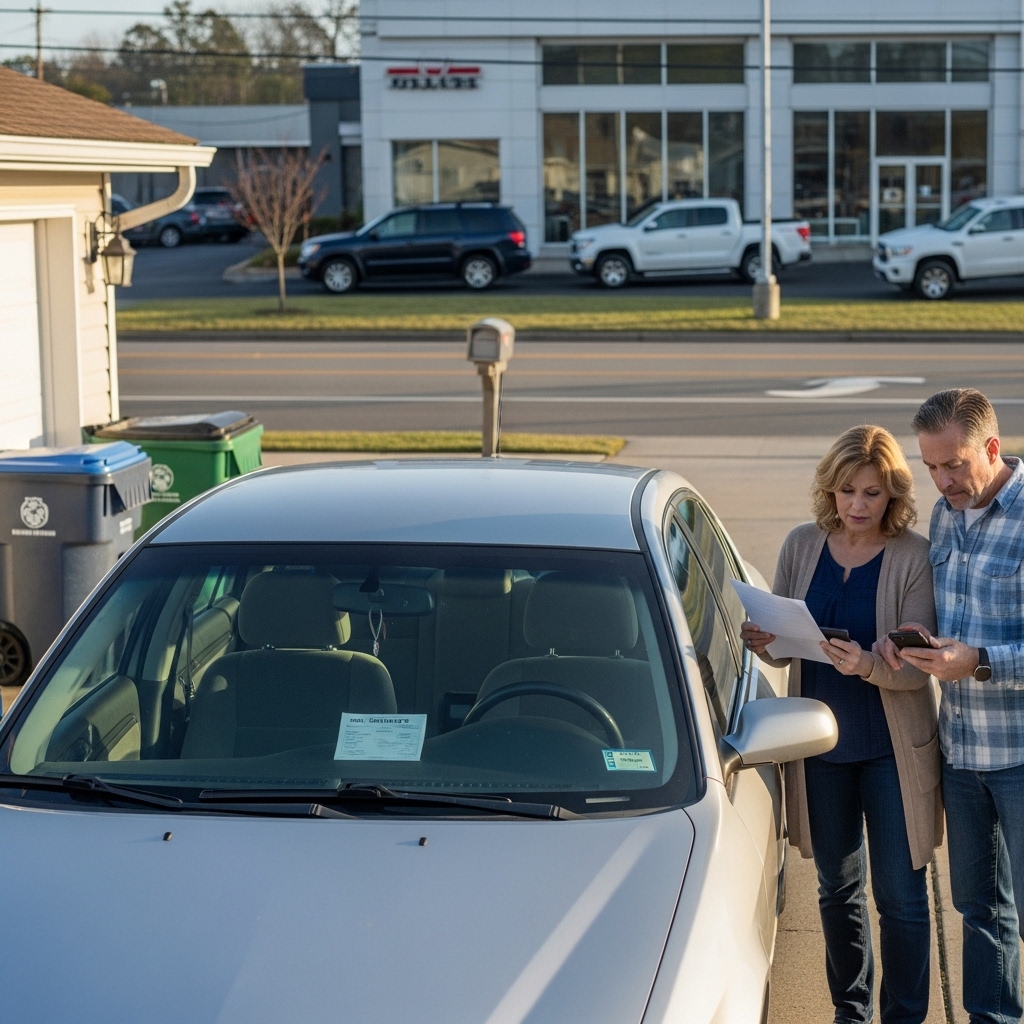
That combination has changed the calculation in driveways across the country. For many households, the question is no longer whether their current vehicle is old. It is whether replacing it makes financial sense.
The economics are hard to ignore. Kelley Blue Book reported that the average transaction price of a new vehicle in the United States moved above $50,000 in September 2025 for the first time. Even where incentives exist, that headline number sends a clear signal to buyers: the new-car market increasingly caters to households with stronger incomes, better credit and more room for a monthly payment that can rival a mortgage or rent bill. Experian said average new-vehicle monthly payments reached $767 in the fourth quarter of 2025, while used-vehicle payments averaged $537. For many families, those are not routine purchases. They are major budget decisions.
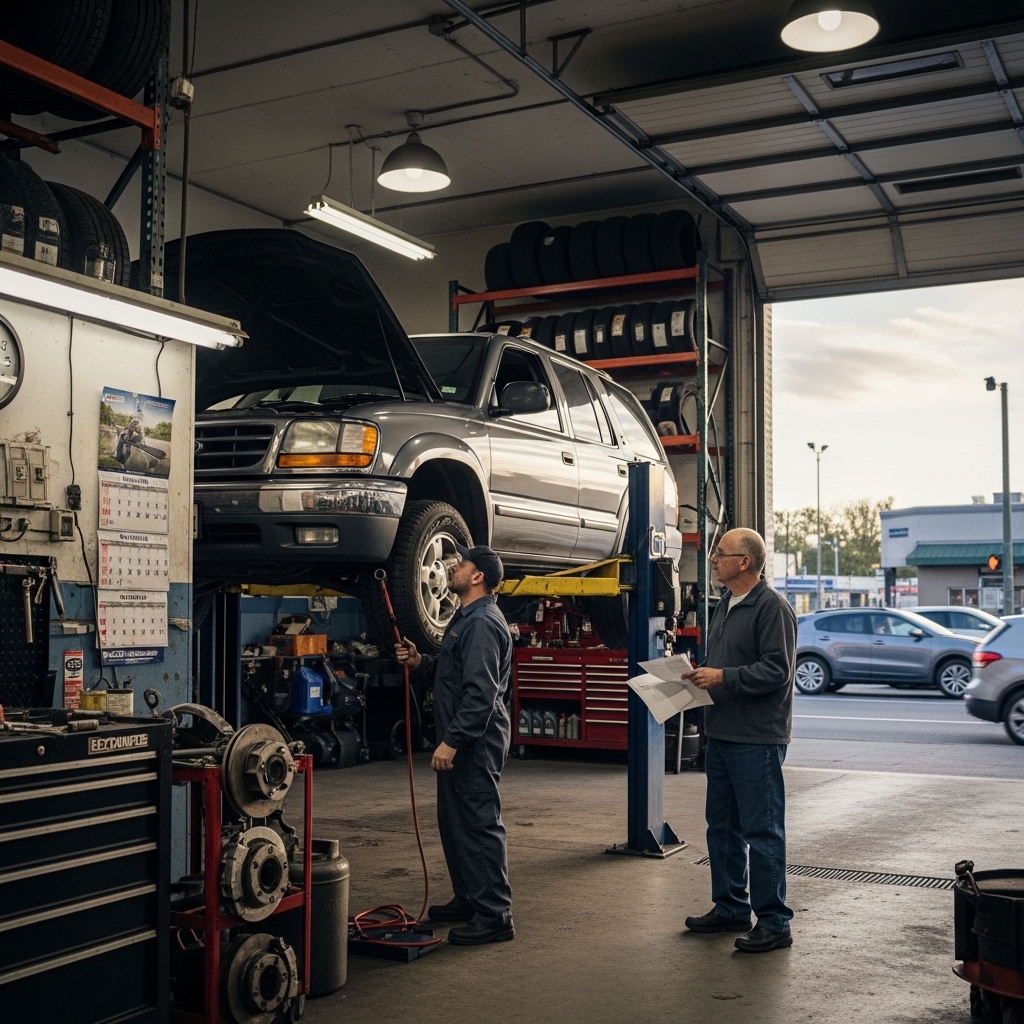
The result is a form of consumer triage. A driver facing a transmission repair, a suspension overhaul or a set of tires may wince at the bill, but then compare it with the cost of replacing the vehicle and decide to keep it. The repair may feel painful in isolation. In comparison with a new loan, a higher insurance premium and a fresh round of registration, taxes and depreciation, it can look rational. This is one reason the aftermarket business has remained robust as the national fleet gets older.
Repair costs themselves have also become part of the story. Maintenance and repair prices have continued to rise, and insurance costs have become a major strain for households already coping with broader inflation. But these rising ownership costs do not automatically push consumers into the showroom. Often they do the opposite. When the cost of nearly everything connected to driving is higher, many consumers become more cautious about taking on an even larger obligation.
There is also the lingering legacy of the supply shock that followed the pandemic. Even though vehicle production and inventories improved, the disruption changed consumer habits. New vehicles remained scarce for long enough that millions of Americans learned to defer replacement, stretch maintenance schedules more carefully and treat the car they already owned as something to preserve rather than quickly swap out. In the used market, that pressure never fully disappeared. Cox Automotive’s Manheim Used Vehicle Value Index showed wholesale used-vehicle prices in March 2026 up 6.2 percent from a year earlier, a sign that affordability pressures are still pushing demand into the pre-owned market even as supply remains tight.
The aging of the fleet also reflects a deeper truth about the vehicles themselves: they are more durable than they used to be. The average American vehicle is not just older because people are trapped with it. In many cases, it is older because it can still do the job. Engines routinely cross mileage thresholds that once signaled the end of a car’s useful life. Pickups and sport utility vehicles, which dominate the U.S. market, are often built with a longevity that encourages owners to hold them longer, particularly when they are used for work or family travel. Owners may not love every repair bill, but many have confidence that a well-maintained vehicle still has years left.
Technology has made that durability easier to manage, even as it has made vehicles more complex. Warning systems can detect problems earlier. Independent mechanics have more diagnostic tools than they did a generation ago. Parts availability for popular models remains strong. Online communities and repair videos have also made it easier for owners to understand what is wrong with their cars and what a fair repair should cost. In that sense, the modern vehicle is paradoxical: harder to build, more software-heavy and more expensive to replace, yet often easier to keep alive because information about maintenance is more accessible.
Another force keeping Americans in older vehicles is uncertainty about the next purchase. The market is in the middle of a technological transition, and not every buyer wants to move at the same pace. Electric vehicles are becoming more common, but many drivers still have questions about charging, battery life, resale values and whether the local infrastructure fits their routines. Hybrids appeal to some buyers as a middle path, but supply and pricing can still be obstacles. Gasoline vehicles remain familiar, yet buyers know they may be purchasing into a market that is slowly changing direction. When consumers are unsure what technology will best suit them over the next five or seven years, one common response is to wait.
That waiting instinct is especially strong in suburban and rural America, where a vehicle is not discretionary. It is essential. A household that depends on a pickup, a three-row SUV or a commuter sedan cannot easily experiment with the wrong purchase. If the current vehicle still starts every morning and the repair history is manageable, keeping it becomes the safest decision. Reliability, not novelty, becomes the value that matters most.
There is also a cultural element to the shift. The old assumption that a newer car automatically signals progress has weakened. In an era of high prices and economic unease, keeping a paid-off vehicle can look disciplined rather than outdated. Some consumers who once would have traded up every few years now treat a long ownership cycle as a sign of financial maturity. Others remain attached to vehicles they know well and trust more than unfamiliar replacements loaded with touchscreens, subscriptions and driver-assistance systems they did not ask for.
Automakers face an uncomfortable implication in all of this. The American market still buys millions of new vehicles, but the replacement cycle is extending in ways that challenge the industry’s traditional model. S&P Global Mobility said new-vehicle registrations rebounded above 16 million in 2024, yet that recovery still was not enough to stop the national fleet from getting older. The math is simple: more vehicles are surviving, fewer are being scrapped quickly, and buyers are increasingly selective about when they re-enter the market.
For dealers and manufacturers, that means the future may depend less on assuming frequent turnover and more on convincing owners that the leap into a new vehicle is worth it. Price alone makes that difficult. So does financing. So does the growing competence of the vehicle already sitting in the driveway.
For consumers, however, the trend is a quiet statement of adaptation. Americans are keeping their cars longer not because one single force is pushing them there, but because several are working in the same direction at once. New cars cost more. Loans still sting. Used cars are not cheap enough to feel like easy substitutes. Existing vehicles are better built. And the future of the car itself, especially in the shift toward electrification and software-defined features, still feels unsettled to many buyers.
The result is a nation driving older vehicles by choice, necessity and caution all at once. The American car is no longer just a consumer good on a fixed replacement schedule. It is an asset that households are stretching, maintaining and re-evaluating in real time. In that calculation, longevity is no longer a sign of delay. It has become the market’s new normal.