
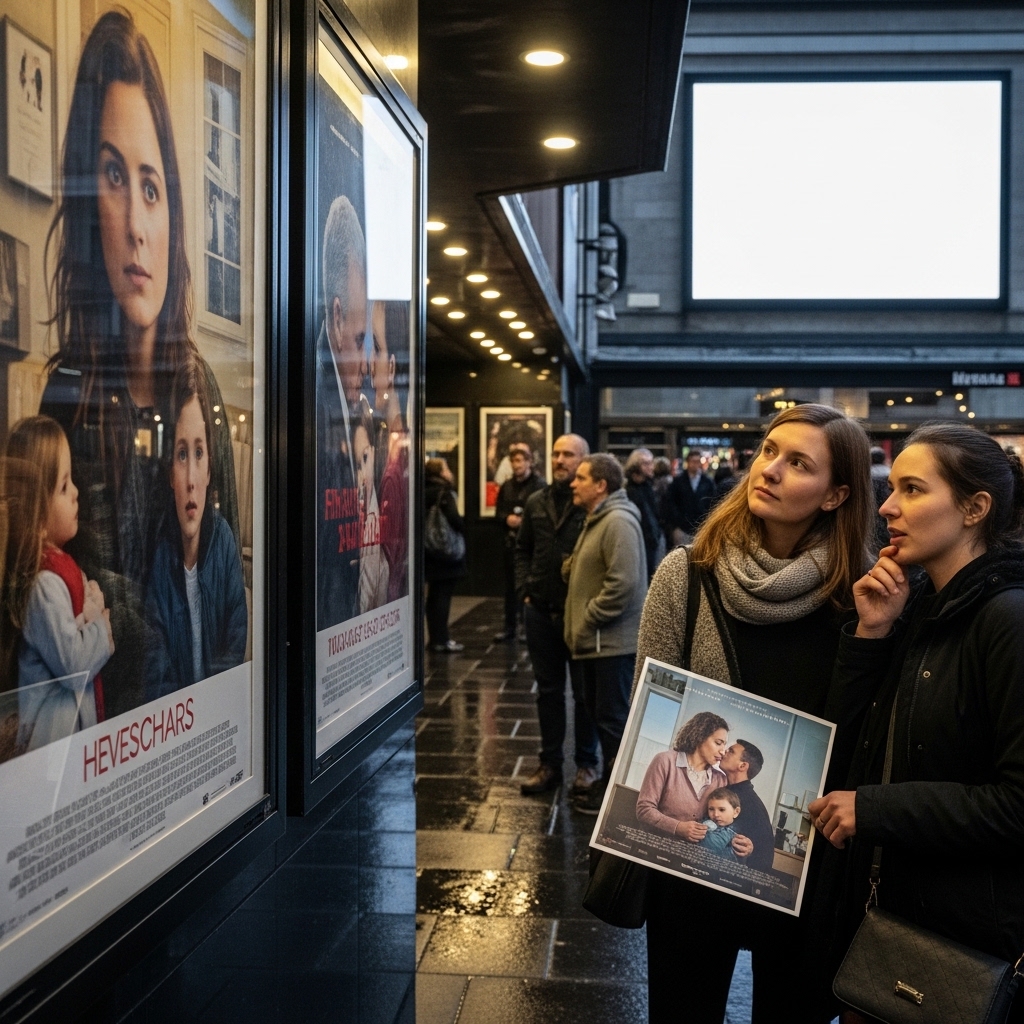
After years of capes, multiverses and digital spectacle, moviegoers are showing renewed interest in intimate stories about families, work, love, grief and ordinary life.
For more than a decade, the modern movie theater was ruled by the extraordinary. Cities were destroyed, timelines collapsed, heroes returned from the dead and audiences were trained to wait for the next chapter, the next crossover and the next post-credit scene. Superhero films did not merely dominate box offices; they reshaped the way studios planned, marketed and financed cinema. To many viewers, the multiplex became a place where the impossible was expected.
Now, a quieter question is moving through the film industry: what if audiences want the possible again?
The answer is not simple. Superhero movies are not dead, and it would be careless to declare the end of a genre that has survived for generations in comics, television and film. The right character, the right story and the right emotional hook can still fill theaters. But the old assumption that a cape, a shared universe and a familiar logo could guarantee global enthusiasm has weakened. Audiences have become more selective, more skeptical and, in many cases, more hungry for stories that resemble their own lives.
This is the context behind the renewed attention to everyday cinema: dramas, romances, family stories, workplace comedies, coming-of-age films, domestic mysteries, small-town portraits and character-led stories that do not require viewers to study a fictional universe before buying a ticket. These films may not always dominate opening weekends, but they are increasingly central to the cultural conversation. They travel through word of mouth, streaming discovery, awards seasons and social media clips that emphasize emotion rather than spectacle.
The fatigue is not necessarily with superheroes themselves. It is with excess. Over the past several years, audiences have faced a flood of interconnected films and television series that often demanded loyalty as much as curiosity. For dedicated fans, that depth can be rewarding. For casual viewers, it can become homework. The joy of discovery is weakened when a film feels less like a complete story than a corporate bridge between installments.
That fatigue has been visible at the box office. Some comic-book films still perform well, but the genre’s reliability has declined. In 2025, industry observers noted that no comic-book movie reached the once-familiar benchmark of 700 million dollars worldwide, a striking signal after years when superhero releases regularly occupied the top of global rankings. The numbers do not prove that audiences have rejected the genre entirely. They prove something more important for Hollywood: scale alone is no longer enough.
Meanwhile, everyday stories have gained symbolic power. A film about an immigrant family, a grieving father, a lonely teacher, a complicated marriage or a struggling young artist can now feel almost radical in a marketplace built around spectacle. These stories offer something that visual effects cannot easily manufacture: recognition. Viewers see a kitchen table, a hospital room, a bus ride, a first apartment, an argument between siblings or a quiet moment after work, and they understand the stakes immediately.
Part of the shift reflects life after years of global disruption. The pandemic changed how people watched movies and what they expected from them. Streaming made entertainment abundant but also disposable. When audiences decide to leave home, pay for tickets and sit in a theater, many want a reason deeper than visual noise. Some still want escape, but others want connection. They want to laugh with strangers, cry in the dark or feel that a film has named something they could not express.
This helps explain why films grounded in ordinary emotion can break through even without massive budgets. A love story can become an event if viewers believe in the characters. A family drama can travel internationally if its conflicts feel universal. A comedy about social embarrassment can feel more alive than a battle between digital armies if the timing, writing and performances are sharp. In an era of visual inflation, the human face has become special again.
The return of everyday cinema is also connected to generational taste. Younger audiences are not necessarily rejecting fantasy or franchises; they grew up with them. But they are also fluent in irony, authenticity and emotional exposure. They can detect when a film is manufactured only to extend intellectual property. They respond strongly to stories that feel specific: a culture, a neighborhood, a friendship, a family wound, a private anxiety. Social media has made them powerful amplifiers of small moments. A single scene, line of dialogue or performance can become a reason to watch.
Studios are watching this closely, though the economics remain difficult. Mid-budget dramas and comedies once formed the backbone of Hollywood. Many of those films moved to streaming as theatrical distributors became more dependent on global tentpoles. The result was a distorted marketplace: enormous blockbusters on one side, tiny independent films on the other, and fewer adult dramas in the middle. The renewed appetite for grounded stories does not automatically solve that problem. Theaters still need films that can attract broad audiences, and studios still worry about marketing costs.
But the opportunity is real. Everyday films do not need to replace superheroes to matter. They need to rebuild trust with viewers who want variety. A healthy cinema culture cannot survive on one genre alone. It needs spectacle, horror, comedy, animation, romance, documentary, political drama, family stories and experimental work. The danger of superhero dominance was never only that it produced too many capes. It was that it narrowed the imagination of what a mainstream movie could be.
For actors, the shift offers a different kind of showcase. Superhero films often require charisma within rigid structures: costumes, green screens, mythology and brand management. Everyday cinema depends more heavily on gesture, silence, chemistry and contradiction. A performance can unfold in small changes of expression. A character can be heroic without saving the world. They may simply apologize, forgive, leave a bad job, return home, care for a parent or choose honesty over comfort.
For directors and writers, the renewed interest in ordinary life is a reminder that scale can be emotional rather than physical. A dinner conversation can be as suspenseful as a chase scene if the audience understands what is at risk. A breakup can feel apocalyptic to the people living through it. A mother waiting for a phone call, a teenager hiding a secret, a worker facing dismissal or an elderly man losing independence can carry profound dramatic force. The world does not need to end for the story to matter.
This is not a call for smaller films to become bland or safe. The best everyday cinema is not merely realistic; it is observant. It notices how people avoid saying what they mean, how money shapes relationships, how cities isolate and connect, how families repeat old wounds, how love can be tender and selfish at once. It turns ordinary settings into places of revelation. Its power comes from accuracy.
There is also an international dimension. Outside Hollywood, many film industries have long balanced spectacle with domestic dramas, social comedies and relationship-driven stories. Korean, Japanese, Indian, European, Iranian and Latin American cinemas have repeatedly shown that local specificity can become global when the emotions are clear. As audiences become more comfortable with subtitles and streaming introduces them to different storytelling traditions, the definition of mainstream taste is widening.
The superhero genre can learn from this moment rather than fear it. Its strongest films have always worked when the human story mattered as much as the costume. Loss, responsibility, identity, loneliness and moral choice are not small themes. The problem begins when characters become delivery systems for franchise architecture. If superhero films become more emotionally complete and less dependent on endless escalation, audiences may return with enthusiasm.
For now, the industry is entering a period of correction. The audience is not rejecting wonder. It is rejecting emptiness. It is not tired of imagination. It is tired of being asked to care about worlds that feel less real with each explosion. Everyday cinema is rising because it offers a different promise: not that viewers will see something bigger than life, but that they may see life more clearly.
That may be the most important cinematic trend of the moment. After years of multiverses, viewers are rediscovering the universe of the kitchen, the bedroom, the office, the street corner and the family car. These are not small places when filmed with intelligence and empathy. They are where people fall in love, disappoint each other, survive, change and begin again.
The future of film will still include heroes. But the hero of the next chapter may not wear armor or fly above a burning skyline. It may be a daughter caring for her father, a couple trying to stay together, a worker refusing humiliation, a lonely person reaching for connection or a young adult trying to build a life in an expensive city. In a noisy entertainment economy, the ordinary has become cinematic again.