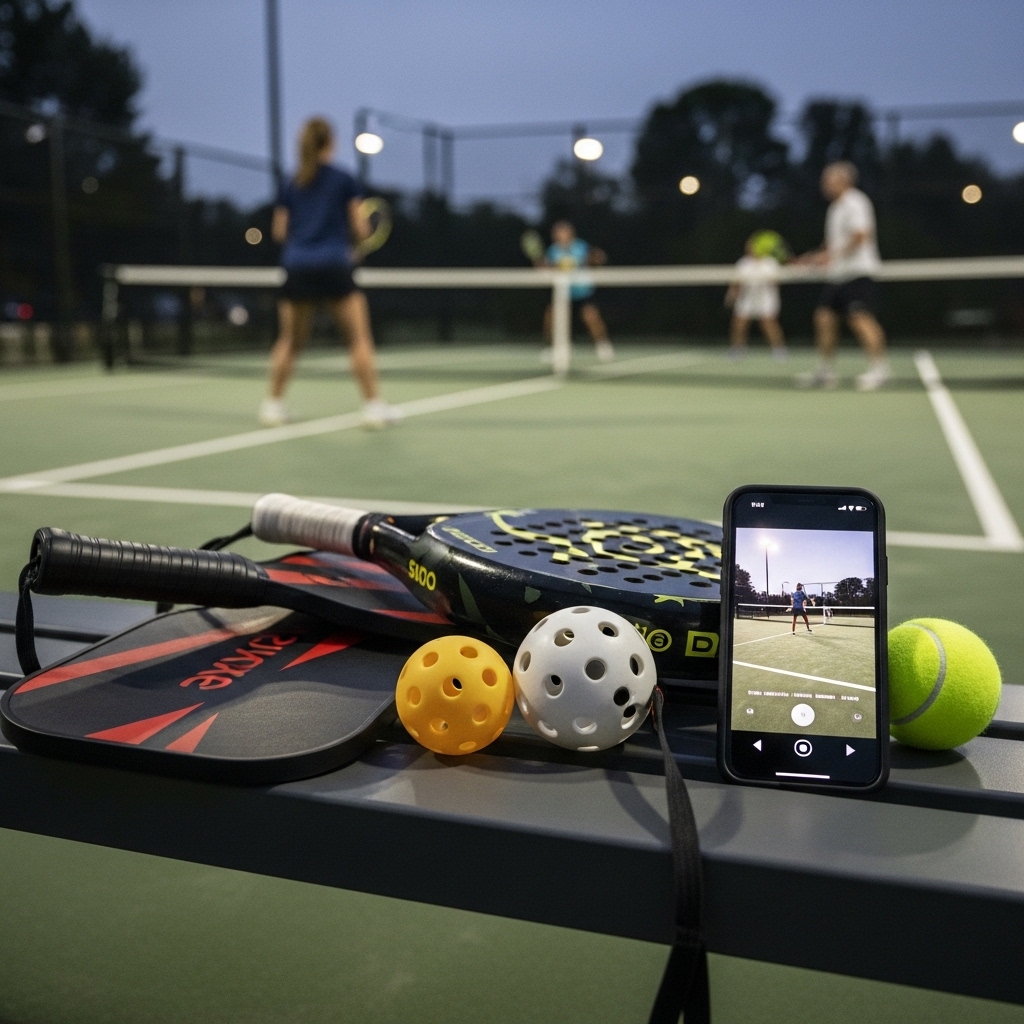
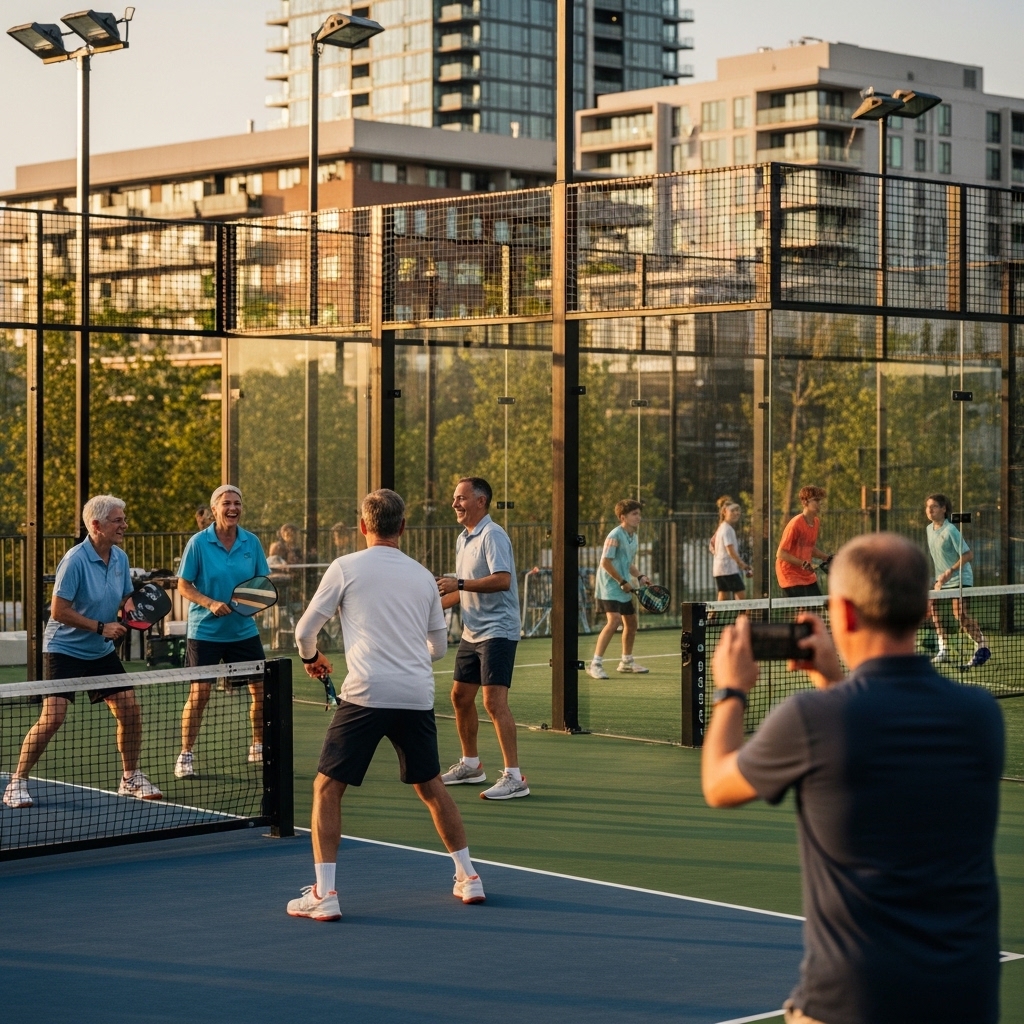
A new generation of social racket sports is reshaping recreation, turning low-barrier games into viral content, lifestyle communities and fast-growing businesses.
The fastest-growing sports of the decade do not always look like revolutions. Sometimes they look like four friends on a small court, laughing between points, filming short clips for social media and leaving with plans to play again next week. Pickleball and padel have become symbols of a wider shift in global recreation: people increasingly want sports that are easy to start, social by design, visually engaging and shareable online.
Their rise is not accidental. Both sports sit at the intersection of fitness, entertainment and community. Pickleball, with its plastic ball, paddle and compact court, has exploded in the United States. Padel, played with walls, rackets and a tennis-like scoring system, has surged across Europe, Latin America, the Middle East and parts of Asia. They are different games, with different histories and cultures, but they share a powerful formula: low entry difficulty, fast rallies, doubles formats, compact spaces and a natural fit for short-form video.
That formula matters in a world where traditional sports participation faces competition from streaming, gaming, long workdays and urban constraints. Many people still want physical activity, but they do not always want the intimidation of full-size tennis, the physical collision of football, the technical demands of golf or the time commitment of organized leagues. Pickleball and padel offer something simpler: show up, learn the basics quickly, play with others and improve without needing years of training.
Pickleball’s growth has been especially striking in the United States. The Sports & Fitness Industry Association reported that pickleball remained the fastest-growing sport in the country for a fourth consecutive year, with 19.8 million Americans playing in 2024, up 45.8 percent from 2023 and more than 300 percent over three years. Some industry summaries now estimate participation above 24 million in 2025, reflecting the sport’s spread from retirement communities into schools, public parks, private clubs and corporate wellness programs.
Padel has followed a different map. Born in Mexico and popularized in Spain and Argentina, it has become a major recreational sport in Europe and is expanding quickly in the United Kingdom, France, Italy, the Gulf states and the United States. Industry reports from Playtomic and PwC describe padel as a sport moving from niche enthusiasm to mainstream infrastructure, with investors building clubs, booking platforms and coaching networks around it. In Britain, operators have begun converting five-a-side football space into padel courts, a sign that the sport is not only attracting players but reshaping real estate decisions.
The appeal begins with accessibility. A beginner can have a real pickleball rally within minutes. Padel is more technical, but the walls keep the ball alive, producing longer points and reducing the frustration of constant missed shots. Both sports reward touch, placement and anticipation as much as pure athleticism. That makes them attractive across ages, genders and fitness levels. A former tennis player can enjoy them, but so can a person who has not played competitive sport since school.
Their social structure is equally important. Doubles is the default in both sports, which means players talk, rotate partners and form groups quickly. The court itself is small enough to create conversation and visible emotion. A point may end with a clever angle, a desperate recovery, a laugh or a harmless collision of egos. These moments translate well into social media clips because they are short, understandable and human.
The phrase “easy to viral” may sound like marketing slang, but it describes a real design advantage. Pickleball and padel are camera-friendly. The courts are compact, the action is continuous, and rallies can be captured from one angle. Unlike marathon running or cycling, the most entertaining moments happen in a confined frame. Unlike tennis, where a beginner’s rally may collapse after one shot, these sports often produce playable exchanges early. A casual player can generate a clip that looks fun, dramatic and achievable.
This is why the sports have become lifestyle content as much as athletic activity. Social feeds show morning padel games before work, rooftop courts in cities, celebrity pickleball matches, club nights with music, branded apparel and friends celebrating ordinary points as if they were tournament winners. The result is a feedback loop: people see a sport that looks accessible and social, try it, post about it, and bring more people in.
Businesses have noticed. Pickleball courts are being added to municipal parks, hotels, apartment complexes, cruise ships and private clubs. Padel clubs often combine courts with cafés, lounges and app-based booking systems, making the sport feel closer to boutique fitness than old-style recreation. Equipment brands, real estate investors and event organizers see both games as platforms for community spending, not just athletic participation.
That commercial momentum comes with tension. Public tennis players in some American cities have complained about courts being converted to pickleball. Neighbors have objected to the sharp sound of pickleball paddles and balls. Padel, which requires glass walls and purpose-built courts, can be expensive to install and may skew toward affluent urban consumers. What begins as a democratic sport can quickly become a premium social product if access depends on private clubs and high booking fees.
There are also health concerns. Pickleball’s friendly image can hide injury risks, particularly among older players returning to sport after years of lower activity. Medical reviews and epidemiological studies have found rising pickleball-related orthopedic injuries, including sprains, strains and fractures. The issue is not that the sport is unusually dangerous, but that its ease can encourage people to play hard before they are conditioned for quick stops, twists and lunges. Padel has similar risks around knees, ankles, shoulders and lower backs, especially when new players chase balls off the glass without proper technique.
Still, the public health argument remains largely positive. At a time when many countries are trying to get people moving, sports that attract beginners and older adults have real value. The best exercise is often the one people repeat. Pickleball and padel succeed because they turn fitness into a social appointment rather than a solitary obligation. Players are not only burning calories; they are joining a group.
Their popularity also reveals something deeper about modern sport. The old hierarchy placed elite performance at the top and recreational play below it. These new racket sports reverse some of that logic. Most players will never care about professional rankings. They care about booking a court, playing with friends, improving slightly and having something enjoyable to share. Professional leagues may grow, but the engine of the movement is amateur participation.
That does not mean the boom will continue forever at the same speed. Some markets may become saturated. Poorly located clubs may fail. Novelty may fade. The sports will have to move beyond hype into sustainable ecosystems: affordable courts, good coaching, injury prevention, fair access and inclusive communities. Viral appeal can launch a sport, but it cannot maintain one by itself.
The more likely outcome is not a bubble bursting, but a sorting process. Pickleball will remain especially strong where public infrastructure and community programming make it easy to play. Padel will grow fastest where investors can build dense club networks and where consumers are willing to pay for a premium social-sport experience. Other easy-entry sports may follow the same model, from teqball to beach tennis and small-sided football formats.
What pickleball and padel have proven is that the future of recreation does not need to be extreme, exclusive or complicated. It can be compact, social, photogenic and forgiving. The next global sports trend may not be the hardest game to master, but the one people can try after work, enjoy on the first day and post before dinner.
In that sense, these sports are not just games. They are a response to the way people now live: busy, connected, health-conscious, socially driven and constantly searching for experiences that feel both active and shareable.