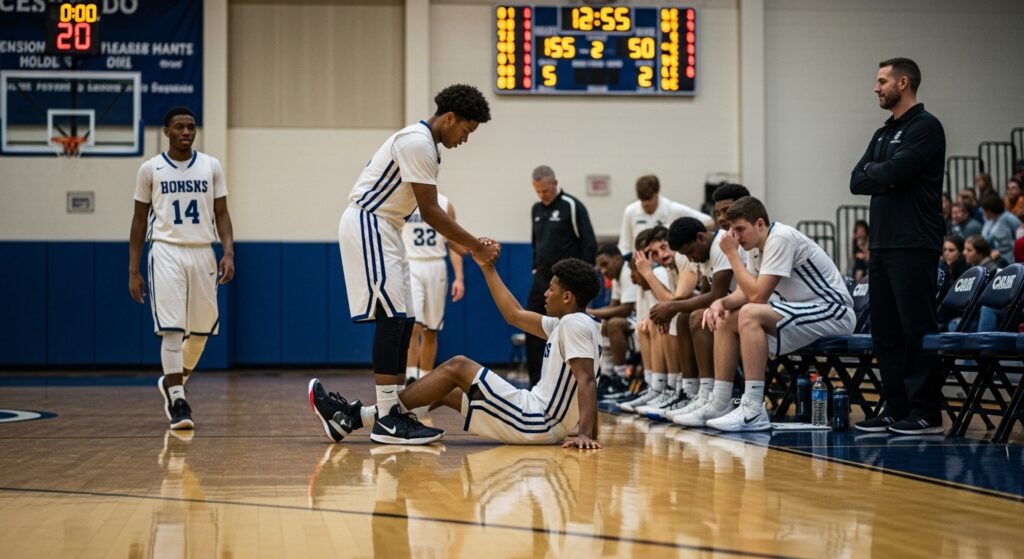
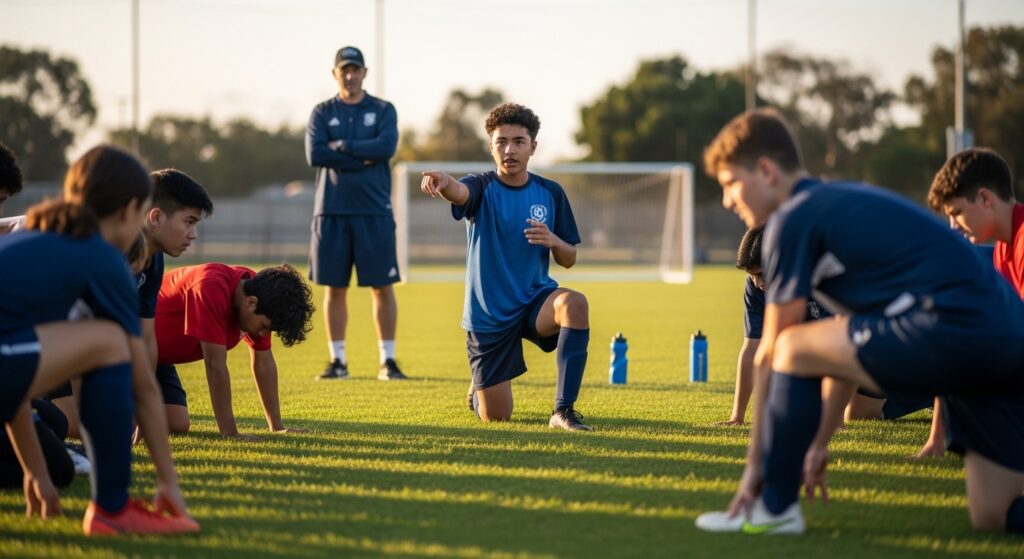
From the locker room to the boardroom, team sports often serve as an early training ground for communication, accountability, resilience, and decision-making under pressure.
Long before leadership is taught in corporate seminars or management textbooks, it is often learned on playing fields, in gymnasiums, and inside locker rooms. Team sports, whether played at the youth, school, amateur, or elite level, create an environment where leadership is not an abstract concept but a daily practice. Athletes are asked to cooperate, adapt, compete, and respond to both victory and failure in real time. In doing so, they absorb lessons that often endure far beyond the final whistle.
The leadership value of team sports begins with a simple reality: no player succeeds alone. Even in games shaped by standout individual talent, results depend on coordination, trust, and the ability to function within a shared system. A basketball point guard may direct the tempo, but success still relies on teammates setting screens, making cuts, and defending together. A football captain may deliver a pregame speech, but leadership is also expressed through quieter actions, from tracking back on defense to encouraging a struggling teammate. In team sports, leadership is rarely confined to one title or one person.
That dynamic teaches one of leadership’s most essential lessons: influence matters more than authority. Young athletes quickly learn that being the loudest voice does not necessarily make someone a leader. The players who earn respect are often those who stay composed under pressure, meet standards consistently, and help others improve. Teammates notice who works hard in practice, who takes responsibility after mistakes, and who remains dependable when the game becomes difficult. In that sense, sports provide an early education in credibility, the foundation on which real leadership is built.
Communication is another central skill developed in team environments. Effective teams depend on constant exchange, much of it immediate and practical. Players call out defensive assignments, signal changes in strategy, and provide encouragement or warning in the middle of fast-moving situations. Over time, they learn that communication is not only about speaking clearly, but also about listening, reading nonverbal cues, and understanding timing. A leader in sports must know when to energize a group, when to simplify a message, and when to remain silent and let performance speak for itself.
Team sports also sharpen decision-making under pressure, a quality closely tied to leadership in every field. Games compress time and raise stakes. Athletes must evaluate shifting circumstances, adjust to opponents, and act despite uncertainty. A volleyball setter decides in an instant which hitter gives the team the best chance to score. A soccer midfielder must judge whether to retain possession, switch play, or attempt a risky pass that could change the match. These decisions, repeated over months and years, help athletes become more comfortable with responsibility. They learn that hesitation has consequences, but so does recklessness. Leadership often lies in balancing confidence with judgment.
Just as important, team sports teach accountability in a way that is difficult to ignore. Success and failure are visible. Effort can be measured. Preparation, discipline, and consistency affect not only the individual but the group. When one player misses a training session, arrives late, or neglects a role, teammates feel the impact. This creates an environment where accountability becomes social as well as personal. Athletes learn that leadership means showing up prepared because others depend on it. They also learn to own mistakes publicly, correct them quickly, and move forward without excuses.
Failure, in fact, may be one of the most powerful leadership teachers in sports. Few teams go undefeated, and even great athletes endure poor performances, injuries, and disappointment. The structure of sport forces participants to confront setbacks directly. There is usually another practice, another match, another opportunity to respond. This repetition helps build resilience, one of the defining qualities of effective leaders. It teaches athletes that adversity is not an interruption of progress but part of it. Leaders are not those who avoid setbacks altogether, but those who can absorb them, steady others, and continue with purpose.
The emotional dimension of team sports is equally significant. Leadership requires self-control, empathy, and the ability to manage group morale. In competitive environments, emotions can swing quickly from excitement to frustration, from confidence to doubt. Athletes who learn to regulate those emotions gain an important advantage. They begin to understand that their mood and behavior affect the wider team. A panicked reaction can spread just as quickly as calm confidence. In this way, sports cultivate emotional intelligence, often without naming it as such.
Another lesson emerges through role acceptance. Not every athlete is the star scorer or team captain. Some contribute through defense, energy, tactical discipline, or support from the bench. Yet these roles are often critical to team success. Learning to value contribution over status is a deeply important leadership principle. Strong teams depend on people who understand their responsibilities and execute them with commitment. Athletes who embrace that reality often become better leaders because they appreciate the full ecosystem of performance, not just the most visible parts.
Coaches, of course, play an important role in shaping how leadership develops. The best coaches do more than design drills or tactics. They create standards, model behavior, and distribute responsibility. They encourage athletes to solve problems, hold peers accountable, and speak up in constructive ways. In these environments, leadership becomes a shared culture rather than a slogan. Poor coaching can undermine that process by rewarding only talent or obedience, but effective coaching helps athletes connect discipline with trust and confidence with service.
The lessons of team sports often translate naturally into life beyond competition. In workplaces, employees who played team sports frequently recognize familiar patterns: the need to collaborate, adapt under pressure, and prioritize collective goals over personal recognition. In schools and communities, former athletes often draw on habits shaped by training schedules, shared sacrifice, and performance review. They understand that preparation matters, that morale affects outcomes, and that leadership may require stepping forward in one moment and supporting others in the next.
Still, sports do not automatically produce good leaders. Much depends on the culture surrounding the team. If a program glorifies winning at all costs, tolerates bullying, or excuses poor behavior from talented players, the lessons learned may be distorted. Team sports build leadership most effectively when they emphasize respect, discipline, inclusion, and responsibility. Leadership rooted in sports is most valuable when it is connected not just to competitiveness, but to character.
That distinction matters because modern leadership is increasingly judged not only by results, but by how those results are achieved. Team sports can reinforce that understanding. Players discover that trust cannot be demanded; it must be earned. They see that confidence without humility can divide a group, while effort without communication can still fall short. They learn that the strongest teams often have multiple leaders, each contributing in different ways depending on the moment. One athlete may lead through words, another through consistency, another through composure when the pressure peaks.
In the end, the enduring power of team sports lies in their ability to turn leadership into habit. They place people in situations where collaboration is necessary, standards are visible, and consequences are immediate. They reward preparation, expose selfishness, and test character under strain. For children and adults alike, these experiences can become a lasting blueprint for how to work with others and guide a group through challenge.
That is why the influence of team sports extends far beyond trophies or final scores. Their greatest legacy may not be the championships they produce, but the people they shape: individuals who know how to listen, respond, support, decide, and persevere when others are counting on them. In a world that continues to prize effective leadership across every profession, the team arena remains one of its most practical and powerful classrooms.