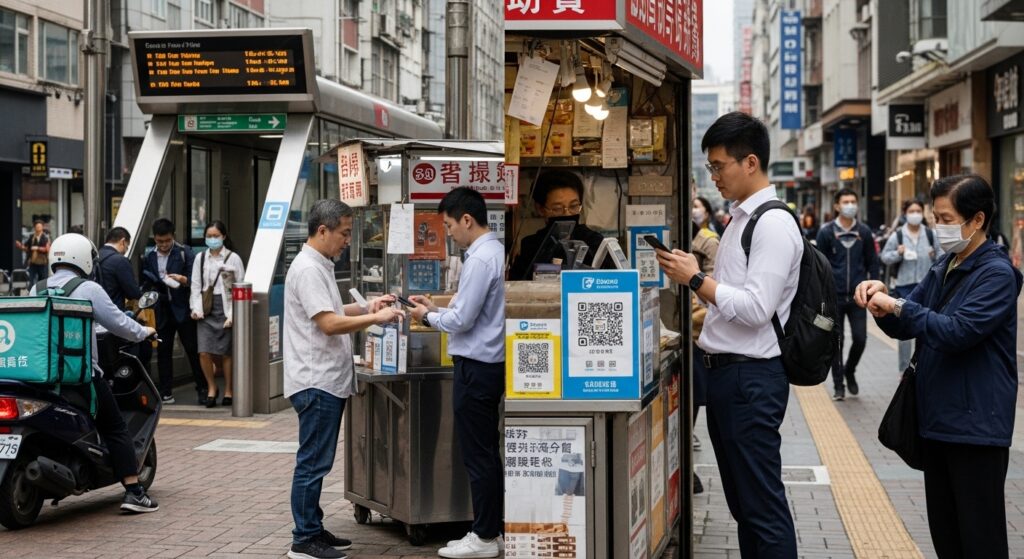
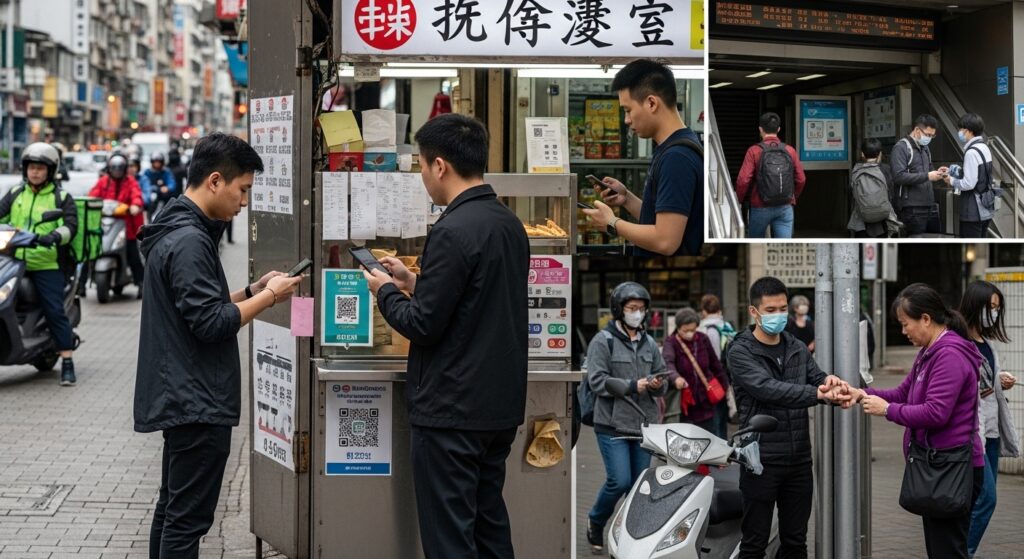
From corner shops and commuter trains to tax payments and cross-border commerce, digital transactions are moving deeper into everyday life, even as regulators warn that speed, convenience and inclusion do not always advance at the same pace.
The cashless economy is no longer a futuristic slogan. In many parts of the world, it is becoming the default setting of daily commerce. A generation ago, electronic payments were often associated with large purchases, banked consumers and formal retail. Today, the shift is far broader. Small merchants display QR codes beside paper menus. Commuters tap phones at subway gates. Families split restaurant bills through instant bank transfers. Governments distribute benefits, collect taxes and monitor transactions through increasingly digitized systems. What was once a parallel payments channel has become, in many markets, the main artery of economic life.
The latest figures underline how quickly the transition has accelerated. Industry and central-bank data suggest that the move away from notes and coins is no longer driven only by cards. Mobile wallets, account-to-account transfers and instant-payment systems are increasingly shaping how people pay both online and in person. The growth has been pushed by smartphones, cheaper data, wider acceptance infrastructure, faster settlement, and the powerful network effects that appear once consumers and merchants trust the same rails. The result is not merely a decline in cash use, but the emergence of an ecosystem in which payment, identity, credit and consumer data are becoming tightly linked.
Nowhere is that transformation more visible than in large emerging markets, where digital payments have leapt over older stages of financial infrastructure. In India, the rapid rise of the Unified Payments Interface, or UPI, has turned instant transfers into a mass-market habit rather than a niche banking service. Street vendors, taxi drivers, pharmacies and school canteens now accept digital payments with a simplicity that would have been difficult to imagine at scale a decade ago. The model has appealed to policymakers because it combines speed with interoperability, allowing banks, apps and merchants to plug into a common framework. It has also appealed to consumers because it reduces friction to almost nothing. A phone number, QR code or contact name is often enough to complete a transaction.
But the cashless boom is not an emerging-market story alone. In Britain, cards, mobile wallets and faster bank transfers have continued to displace cash in everyday purchases. In the euro area, cash still plays an important role at the point of sale, but electronic methods continue to gain ground and consumers increasingly expect merchants to offer digital options as a matter of routine. In Nordic countries, where digital adoption has long been high, the debate has already shifted beyond convenience toward resilience: how should a society function if telecommunications networks fail, cyberattacks disrupt payments or a crisis leaves some consumers unable to access digital tools?
That question captures the central tension of the cashless age. For merchants, the advantages are obvious. Digital payments can reduce the cost and risk of handling cash, shrink queues, simplify bookkeeping and create cleaner transaction records. For governments, they promise greater transparency, better tax compliance, less leakage in public transfers and stronger tools against corruption and illicit finance. For banks and fintech firms, the rewards are even larger. Payments are no longer just a utility. They are a gateway to customer relationships, lending, advertising, loyalty programs and data-driven services. Every payment can become the start of another commercial interaction.
Consumers, too, have embraced the change for reasons that go beyond fashion. Digital payments are faster, easier to track and more adaptable to modern life. They fit naturally into e-commerce, subscriptions, food delivery, ride-hailing and the broader app economy. For younger users especially, the distinction between a bank account, a messaging app and a wallet is fading. Paying has become a background function embedded in the digital environment rather than a separate act involving a physical exchange.
That momentum helps explain why the cashless shift has continued even after the pandemic era, when contactless payments first received a powerful public-health push. Merchants invested in terminals and QR systems. Consumers learned new habits. Banks expanded app-based services. Governments became more comfortable promoting digital rails as part of broader modernization programs. Once those behaviors hardened into routine, there was little reason to reverse them.
Yet the spread of cashless payments has exposed fault lines that are becoming harder to ignore. The first is exclusion. A society can move toward digital payments faster than all citizens can move with it. Older people, migrants, low-income households, rural residents and people with disabilities do not always face the same barriers, but many of them rely on the continued availability of cash for budgeting, privacy, control or simple accessibility. To a policymaker, a payments system may look more efficient when it becomes digital. To a household on an unstable income, cash may still feel safer because it is visible, finite and harder to overspend.
Privacy is another unresolved issue. Digital payments create trails, and those trails have value. They can help detect fraud and support compliance, but they can also deepen concerns about surveillance, profiling and commercial use of personal spending data. In Europe, these concerns are playing directly into debates over the digital euro and the future design of public digital money. Citizens may accept convenience, but many are reluctant to surrender anonymity entirely.
Security, meanwhile, may be the defining challenge of the next phase. The same frictionless systems that consumers admire are also attractive to fraudsters. Instant payments leave less time to stop mistakes or deception. Authorized push-payment fraud, in which users are manipulated into sending money themselves, has become a major concern in several markets. Central banks and regulators are now wrestling with a difficult trade-off: how to preserve the speed that made digital payments so popular while reintroducing enough friction to reduce losses and restore trust. In practice, that could mean stronger authentication, delay mechanisms for higher-risk transfers, better scam detection and greater user control over transaction settings.
This is why the future increasingly looks less like a simple march to a cash-free world and more like a negotiation over what kind of cashless society is acceptable. Sweden, long seen as a pioneer of digital payments, is now debating protections for cash use in essential purchases, partly because resilience has become a national concern. In Britain, lawmakers have scrutinized the social costs of declining cash acceptance. In the euro area, central bankers continue to stress that even as consumers adopt more digital tools, many still want the option to pay in cash. The message from regulators is consistent: digital progress is real, but so is the public interest in backup systems and freedom of choice.
The commercial sector is adjusting as well. Retailers increasingly want to offer every major payment method, not because they are ideologically committed to any one of them, but because payment choice affects conversion, loyalty and margin. Open banking, instant transfers and wallet-based payments are changing fee structures and competitive dynamics. Traditional card dominance is being challenged in some markets by account-to-account systems that promise lower costs. The battle is no longer only cash versus card. It is card versus bank transfer, global networks versus domestic rails, and private platforms versus public infrastructure.
What comes next will likely vary by country, but the broad direction is clear. More transactions will become invisible in the sense that consumers will hardly notice the act of paying. More systems will operate in real time. More merchants will accept mobile-first transactions without dedicated hardware. More governments will seek to anchor digital payments in national infrastructure. At the same time, the pressure to preserve resilience, competition, privacy and inclusion will intensify.
For now, the cashless society is still expanding because it aligns with the habits of a networked economy. It saves time, lowers friction and fits the way modern consumers live. But its long-term legitimacy will depend on something more than speed. The countries that manage the transition best may not be the ones that eliminate cash the fastest, but the ones that build payment systems people trust in moments of convenience and in moments of stress. The explosion of cashless commerce is real. So is the growing realization that the future of money must be not only digital, but dependable.