
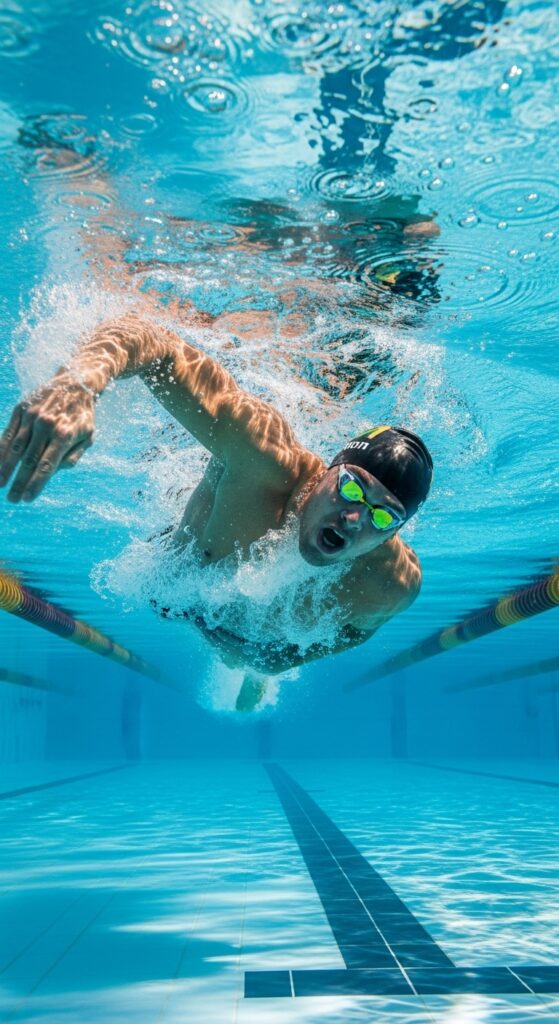
Swimming is one of the most complete and beneficial activities in the world. It is a sport, a survival skill, a form of exercise, and for many people, a source of joy and peace. Unlike many other physical activities, swimming combines fitness, technique, mental control, and safety in a unique way. It can be practiced by children, adults, professional athletes, and even elderly people. Whether performed in a pool, a lake, a river, or the ocean, swimming offers both challenge and freedom. It is not only a competitive sport but also a lifelong skill that can improve health, build character, and increase confidence.
At first glance, swimming may appear simple. A person enters the water and moves from one point to another using the arms and legs. However, anyone who has trained seriously in swimming knows that it is far more complex than it seems. Proper swimming requires balance, breathing control, body position, rhythm, endurance, and technical precision. Success in the water depends not only on strength but also on efficiency. A swimmer who wastes energy with poor movement will tire quickly, while one with refined technique can move smoothly and powerfully through the water.
One of the most important features of swimming is that it works the entire body. Nearly every major muscle group is involved. The arms pull, the legs kick, the shoulders rotate, the back stabilizes, and the core keeps the body aligned. At the same time, the heart and lungs are continuously challenged, making swimming an excellent cardiovascular activity. Because the body is supported by water, swimming is also low-impact compared with sports such as running or football. This means that it places less stress on the joints while still providing a demanding workout. For this reason, many people choose swimming not only for athletic development but also for rehabilitation and long-term health.
Swimming is also unique because it requires a close relationship between the body and breathing. In most sports, breathing happens naturally in the background. In swimming, breathing must be timed carefully with movement. A swimmer cannot simply inhale whenever they want. Instead, each breath must be controlled and coordinated with strokes, turns, and body position. This makes swimming both physically and mentally demanding. Beginners often struggle not because they are weak, but because they have not yet learned how to remain calm and breathe effectively in the water. Once this skill is developed, swimming becomes smoother, more efficient, and far more enjoyable.
There are several main styles of swimming, each with its own techniques and demands. Freestyle, often considered the fastest and most efficient stroke, is commonly used in races and training. It relies on alternating arm movements, flutter kicks, and side breathing. Backstroke is performed on the back and demands strong coordination and awareness of direction. Breaststroke is slower but highly technical, requiring precise timing between the arms, legs, and breath. Butterfly is perhaps the most physically demanding stroke, known for its powerful, wave-like motion and intense use of the upper body and core. Each stroke develops different qualities, and mastering them requires patience, repetition, and discipline.
The competitive side of swimming is both impressive and demanding. Professional swimmers train for hours each day, often beginning at a very young age. Their routines include not only time in the pool but also dry-land strength training, flexibility work, nutrition planning, and mental preparation. Races may last only seconds or a few minutes, yet they are built on years of sacrifice and practice. In elite competition, the difference between victory and defeat can be extremely small. A poor start, a slow turn, or one extra breath can decide the result. This level of precision makes swimming one of the most disciplined sports in the world.
Despite its competitive intensity, swimming is not only for elite athletes. It is one of the few activities that can truly serve people throughout every stage of life. Children learn swimming as a safety skill and a fun form of exercise. Teenagers may develop it as a sport or a healthy habit. Adults often use swimming to stay fit, reduce stress, or recover from injuries. Older people may continue swimming because it keeps them active without placing too much strain on the body. This versatility gives swimming a rare and lasting value. It is not a sport that belongs only to the young or exceptionally talented. It belongs to anyone willing to enter the water and learn.
Another reason swimming is so important is its connection to safety. Unlike many sports, swimming has a direct relationship with survival. Knowing how to float, tread water, and move safely through water can save lives. In a world where many people live near rivers, lakes, beaches, or swimming pools, this skill is essential. Teaching children to swim is therefore not only a matter of recreation but also one of responsibility. A confident swimmer is not simply someone who can win a race, but someone who can remain calm and capable in a potentially dangerous environment.
Swimming also develops mental strength. Water can be calming, but it can also be intimidating. For beginners, fear is common. Some fear sinking, some fear losing control, and others fear deep water. Learning to swim often means learning to manage that fear. Step by step, the swimmer becomes more familiar with the water and gains trust in their own body. This process builds confidence in a powerful way. Overcoming fear in the pool can teach a broader lesson: progress often begins when people face discomfort with patience and courage.
For experienced swimmers, mental discipline remains just as important. Long training sessions can be repetitive and exhausting. Swimmers often spend hours moving back and forth across the same lanes, focusing on tiny improvements in technique and endurance. This requires concentration and resilience. There is no place to hide in the water. Every weakness becomes visible: poor timing, inefficient breathing, weak kicks, or lack of stamina. Improvement comes only through consistent effort. In this way, swimming teaches honesty. The water gives immediate feedback, and success must be earned through real work.
Another remarkable quality of swimming is the sense of freedom it offers. Many swimmers describe the experience of moving through water as peaceful and almost meditative. The noise of the outside world becomes quieter. Movement becomes rhythmic. Attention narrows to breath, stroke, and sensation. For some, this creates a deep sense of calm. Even intense training can feel mentally refreshing because swimming demands presence. It pulls the mind away from distractions and into the moment. In a busy and stressful world, this quality makes swimming especially valuable.
Swimming also has a strong educational role. It teaches not only physical skills but also habits that apply to everyday life. Swimmers learn punctuality because training often starts early. They learn discipline because progress requires regular practice. They learn goal-setting by working toward faster times, better technique, or greater endurance. They learn patience because improvement may be slow. They also learn humility, since even talented swimmers must respect the difficulty of the sport. These lessons can shape a person far beyond the pool.
Team spirit exists in swimming as well, even though many races are individual. Swimmers train together, encourage one another, and represent schools, clubs, or countries. Relay races especially show the importance of trust and collective effort. A swimmer may compete alone in one event and then fight for teammates in another. This balance between individual responsibility and group identity gives swimming an interesting character. It rewards personal excellence, but it also creates strong communities based on shared effort and mutual support.
The history of swimming reflects its importance across time and culture. Human beings have swum for survival, transport, and recreation for thousands of years. Over time, swimming evolved into an organized sport with formal techniques, competitions, and international events. Modern technology has improved pool design, training methods, race analysis, and even swimsuit materials. Yet the essence of swimming remains unchanged. It is still a contest between the human body and the resistance of water, between effort and efficiency, between fear and confidence.
International swimming competitions have helped raise the sport’s global profile. Major events bring together athletes from many nations, each representing years of dedication and national pride. These competitions inspire younger generations and show the beauty of human performance at its highest level. They also reveal how demanding swimming truly is. Spectators may see only a short race, but behind that performance lies a long history of preparation, discipline, and sacrifice. Watching elite swimmers can deepen appreciation for the sport, but it can also inspire ordinary people to enter the water and improve themselves.
Swimming is also one of the best activities for health. It helps strengthen the heart, improve lung capacity, burn calories, and increase muscular endurance. It can improve posture and flexibility while reducing stress and supporting mental well-being. Because water supports body weight, swimming is often recommended for people recovering from injury or managing certain physical limitations. In many ways, swimming is a rare example of an activity that is both demanding and gentle at the same time. It can push the body hard while still protecting it from the repeated impact found in many land-based sports.
However, swimming is not without challenges. Access to safe facilities can be limited in some communities. Training can be expensive when coaching, pool fees, and equipment are involved. Competitive swimming especially requires time, structure, and family support. There are also physical and mental pressures at high levels of the sport, including fatigue, burnout, and performance anxiety. These realities should not be ignored. Still, they do not reduce the value of swimming. Instead, they show the importance of making the sport safer, more accessible, and more supportive for everyone.
One of the most encouraging developments in modern sports is the growing recognition of swimming for all people, not just champions. Public health campaigns, school programs, and community classes increasingly emphasize that swimming is a basic life skill as well as a healthy activity. This wider understanding matters. A society that teaches swimming invests not only in sport, but also in safety, health, and confidence. The more people who can swim, the stronger and safer communities become.
Swimming also encourages respect for nature, especially when practiced in open water. Lakes, rivers, and oceans offer a different experience from pools. They can be beautiful and rewarding, but they also require caution and awareness. Open-water swimmers must understand currents, weather, temperature, and safety rules. This creates a deeper appreciation for the natural environment and reminds swimmers that water is both supportive and powerful. It can provide freedom, but it must always be respected.
For many people, the most beautiful thing about swimming is the quiet sense of achievement it brings. Improvement is often measured in small steps: feeling less afraid in deep water, completing an extra lap, learning a new stroke, or swimming a little faster than before. These moments may seem modest, but they carry real meaning. They show progress, courage, and commitment. In swimming, success is not only about medals. It is also about mastering oneself.
In conclusion, swimming is far more than a physical activity. It is a sport that develops strength, endurance, technique, and mental discipline. It is a life skill that promotes safety and confidence. It is a form of exercise that supports health across all ages. It is also a source of peace, personal growth, and community. Few activities combine so many benefits in such a powerful way.
That is why swimming continues to hold an important place in human life. It teaches people how to move, how to breathe, how to endure, and how to trust themselves. It challenges the body while calming the mind. It offers competition for those who seek excellence and comfort for those who seek balance. Whether in a crowded pool or open water under the sky, swimming remains one of the most valuable and meaningful activities a person can learn. It is not simply about staying afloat. It is about growing stronger, calmer, and more capable with every stroke.
