
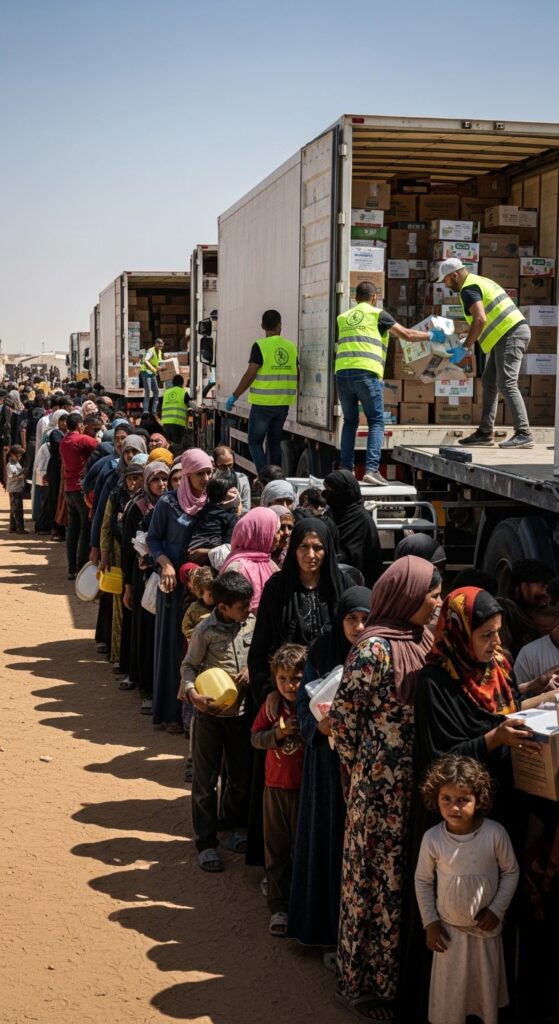
Aid agencies warn that conflicts, displacement and climate disasters are expanding faster than the world’s capacity to respond.
The humanitarian system is facing one of its most difficult years in recent memory. Conflicts are lasting longer, climate disasters are becoming more frequent, and funding is failing to match the scale of need. Aid workers are being asked to do more with less while civilians bear the heaviest cost.
The World Health Organization says hundreds of millions of people need humanitarian assistance in 2026, with health systems under severe pressure in fragile and conflict-affected settings. The agency has appealed for urgent funding to sustain life-saving services, warning that shrinking resources are forcing difficult choices about where help can continue.
The crisis is not confined to one region. Sudan, Gaza, Ukraine, Yemen, South Sudan and other emergencies continue to place civilians at risk. Displacement has become both a symptom and a driver of instability. Families forced from their homes often lose access to work, school, medicine, clean water and legal protection.
Health care is especially vulnerable in conflict. Hospitals can be damaged, staff displaced and medical supplies cut off. Vaccination programs are interrupted. Pregnant women may be unable to reach safe care. Patients with diabetes, cancer or kidney disease can suffer when routine treatment collapses.
Aid agencies also face security threats. Convoys may be blocked, looted or attacked. Bureaucratic restrictions can delay supplies. In some places, humanitarian workers must negotiate access across front lines while trying to maintain neutrality. The work is dangerous, expensive and politically sensitive.
Funding shortfalls force painful prioritization. Agencies may have to choose between food assistance, emergency shelter, vaccination, trauma care or clean water. Programs that prevent future suffering are often cut first because immediate survival takes priority. That can deepen long-term damage.
The pressure is also felt in host communities. Countries that receive large numbers of refugees often struggle to provide schools, clinics, housing and jobs. When international support weakens, local tensions can rise. Humanitarian aid therefore serves not only individuals but regional stability.
Climate change is making the system more fragile. Floods, droughts, heat waves and storms can strike communities already weakened by conflict or poverty. A drought can drive hunger. A flood can spread disease. A heat wave can overwhelm clinics. These shocks interact rather than arrive separately.
Technology can help. Satellite imagery, mobile cash transfers and digital registration systems allow agencies to target support more efficiently. But technology cannot replace political access, funding and respect for humanitarian law. A digital system is useless if aid workers cannot reach people safely.
The deeper question is whether the world is normalizing emergency. If crises persist for years, they stop being treated as exceptional. Donor fatigue grows. Media attention fades. But for families living in camps, damaged cities or drought-hit villages, the emergency remains daily.
Humanitarian agencies cannot solve the political causes of war or the economic forces behind poverty. They can save lives, reduce suffering and preserve dignity. But without diplomacy, development investment and sustained funding, they will remain trapped in a cycle of response without recovery.
The measure of global leadership in 2026 may not be only what governments say in summits, but whether food, medicine and protection reach people who have lost almost everything.”””
