
AI tools are entering hospitals, laboratories and clinics, offering earlier detection and administrative relief while forcing health systems to confront bias, privacy and accountability.
Artificial intelligence is moving quickly into health care, where the stakes are unusually high. A tool that recommends a movie can be wrong with little consequence. A tool that helps read a scan, prioritize patients or suggest treatment enters a world where errors can change lives.
The promise is substantial. AI systems can analyze medical images, scan records for warning signs, support drug discovery, translate clinical information and reduce paperwork. In crowded hospitals, they may help identify patients who need urgent care. In remote areas, they may assist workers who lack specialist support. For doctors overwhelmed by administrative tasks, AI could return time to patient care.
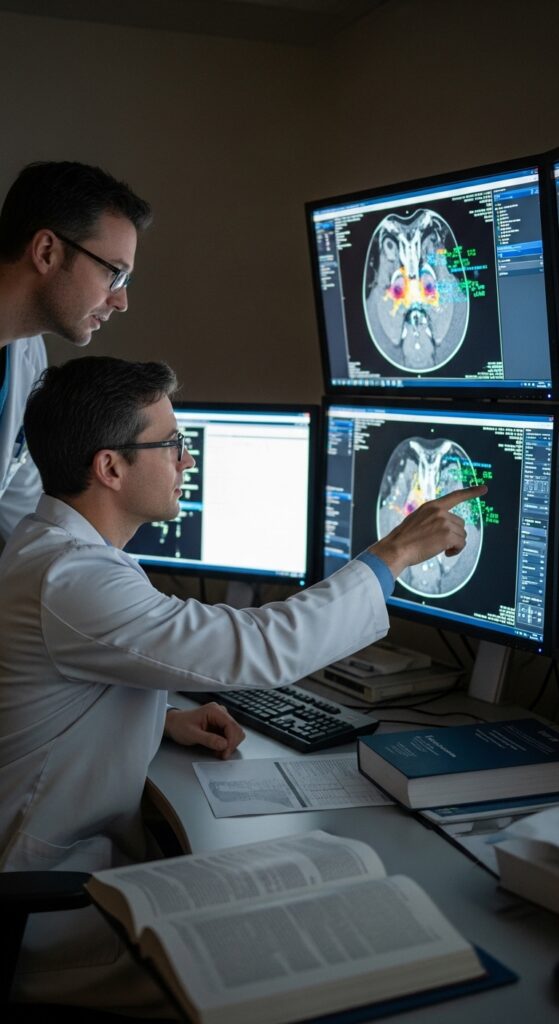
Radiology has become one of the most visible areas of AI development. Algorithms can be trained to detect patterns in X-rays, CT scans and MRIs. In some cases, they may flag abnormalities that require closer review. But experts stress that AI should support, not replace, trained clinicians. Medical images are part of a broader clinical story that includes symptoms, history and judgment.
AI may also help public health. It can analyze outbreak signals, predict disease trends and identify gaps in vaccination or treatment. During emergencies, faster data analysis can support better decisions. But predictions are only as good as the data behind them. Weak surveillance systems produce weak models.
Bias is a major concern. If an AI system is trained mainly on data from one population, it may perform poorly for others. Skin disease tools trained on lighter skin may miss conditions in darker skin. Risk models built from unequal health systems may reproduce existing disparities. In health care, biased technology can deepen injustice under the appearance of objectivity.
Privacy is another challenge. Medical data is among the most sensitive information a person can share. AI development often requires large datasets, raising questions about consent, security and commercial use. Patients may not know whether their records are being used to train systems. Health institutions must protect data while still enabling useful research.
Accountability is unresolved. If an AI-assisted recommendation leads to harm, responsibility may be shared among clinicians, hospitals, software developers and regulators. Clear rules are needed so that innovation does not create confusion after mistakes. Doctors must understand when to trust a tool and when to challenge it.
Regulation is trying to catch up. Health authorities are evaluating how AI tools should be tested, approved and monitored after deployment. Unlike a traditional medical device, an AI system may change over time as it is updated. That makes ongoing oversight essential.
There is also a risk of distraction. AI can attract investment and attention while basic health needs remain unmet. A clinic without enough nurses, medicines or electricity will not be transformed by an algorithm alone. Technology can strengthen systems, but it cannot substitute for them.
Patients may respond with both hope and unease. Some will welcome tools that speed diagnosis or reduce errors. Others may fear that machines are replacing human attention. The best use of AI will likely be invisible to many patients: shorter waits, better alerts, fewer missed results and less paperwork.
The future of AI in medicine should not be judged by novelty. It should be judged by whether it improves outcomes, reduces inequality and supports human care. Health care is not only a data problem. It is a relationship built on trust.
AI can help medicine move faster. The challenge is making sure it also makes medicine safer, fairer and more humane.”””
