Global manufacturers recalibrate strategies in April 2026 as softening EV demand and charging bottlenecks force a resurgence of hybrid and internal combustion platforms
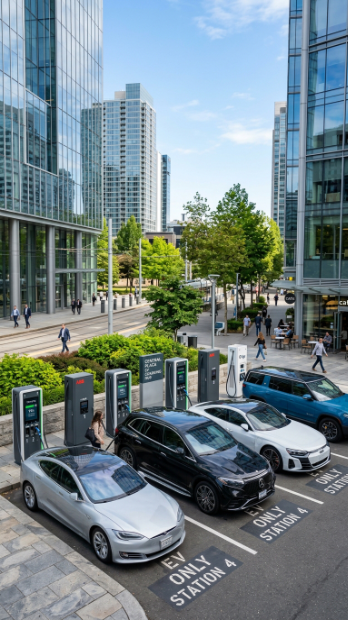
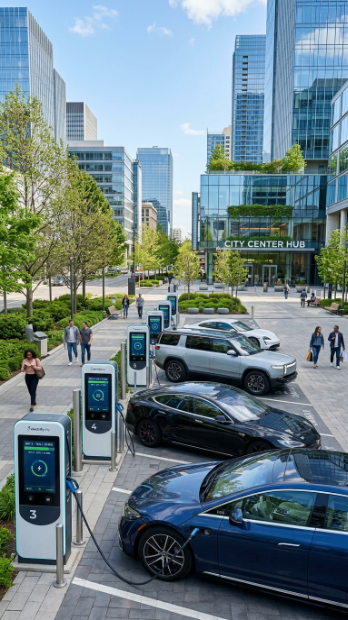
The global automotive industry has reached a definitive and complex inflection point in April 2026 marked by a stark contrast between the visionary goals of the early decade and the pragmatic friction of the present day. What was once heralded as an unstoppable and swift march toward total electrification has encountered a series of significant headwinds including fluctuating consumer demand the expiration of key federal incentives and a charging infrastructure that has struggled to match the pace of vehicle production. Across the industrial heartlands of Germany the United States and Japan major automakers are undergoing a period of intense soul searching. Volkswagen has recently made headlines by halting production of its flagship ID point four electric SUV in North America citing a shift in consumer preference toward more affordable and versatile internal combustion models. This decision is not an isolated incident but rather a symptom of a broader market correction where the high cost of battery technology and lingering range anxiety are causing a notable cooling in the pure electric vehicle segment. As a result the industry is witnessing a strategic pivot back toward hybrid powertrains and highly efficient traditional engines as manufacturers scramble to maintain profitability while navigating a landscape of shifting regulatory mandates and economic volatility.
The primary catalyst for this current reassessment is the realization that the transition to sustainable mobility is not a linear progression but a fragmented and regionalized struggle. In the United States the gap between electric vehicle prices and traditional alternatives remains a significant barrier for the average consumer with battery powered models often carrying a premium of fifteen to twenty percent. While battery pack costs have declined they have not yet reached the critical threshold of price parity that would trigger mass market adoption. Furthermore the expiration of generous tax credits in several major markets has removed a vital crutch for the industry exposing the raw economic challenges of producing high volume zero emission vehicles. This has led to a surge in the popularity of hybrid electric vehicles which currently offer a more compelling total cost of ownership for many households. Hybrids provide the fuel savings and reduced emissions that modern consumers desire without the logistical complications of long charging times and the sparse availability of fast chargers in rural or underdeveloped regions. Industry analysts suggest that we are entering a era where the hybrid engine is no longer just a bridge technology but a long term staple of the global fleet.
Technological innovation continues at a rapid pace but the focus has shifted from pure battery range to software defined vehicle capabilities and artificial intelligence. The modern automobile is increasingly viewed as a rolling computer where the value lies in the digital experience rather than the mechanical components. Major players are investing billions in developing proprietary operating systems that allow for seamless over the air updates enhancing everything from energy management to autonomous safety features. However this digital transformation brings its own set of challenges including a global semiconductor market that remains prone to supply chain shocks and a growing concern over data privacy and cybersecurity. The integration of artificial intelligence into the cockpit has promised a more personalized and safer driving environment yet the regulatory framework governing autonomous driving remains a patchwork of inconsistent rules that vary from state to state and country to country. This regulatory uncertainty has slowed the deployment of truly self driving cars forcing manufacturers to focus on refined driver assistance systems that require constant human supervision.
Geopolitical tensions are also playing a decisive role in shaping the automotive landscape of 2026. The dominance of the Chinese supply chain in battery materials and mineral processing has prompted a wave of protectionist policies in Western markets. The United States and the European Union have introduced various tariffs and local content requirements designed to decouple their automotive industries from foreign dependencies. While these measures are intended to foster domestic innovation and secure national security interests they have also led to increased production costs and a more fragmented global market. Manufacturers are now forced to build localized supply chains which is an immensely capital intensive and time consuming process. This realignment is particularly evident in the battery sector where new gigafactories are being constructed across North America and Europe to produce lithium iron phosphate and solid state cells. The race for mineral security has turned automakers into miners and chemical processors as they seek to lock in long term contracts for lithium cobalt and nickel to avoid the price spikes that derailed production schedules in previous years.
In the midst of this electrification friction the internal combustion engine is proving to have more staying power than many predicted five years ago. High performance and luxury brands are leading a quiet revolution in synthetic e fuels and hydrogen combustion as a way to preserve the mechanical soul and sound of their products while still adhering to carbon neutrality targets. These carbon neutral fuels can potentially be used in existing engines providing a lifeline for the hundreds of millions of traditional vehicles already on the road. Hydrogen in particular is gaining significant momentum in the heavy duty and commercial sectors where the weight and charging requirements of batteries are often prohibitive for long haul logistics. Major projects in the Asia Pacific region are expanding the hydrogen refueling network focusing on high traffic freight corridors and urban bus fleets. This suggests that the future of mobility will not be a winner take all scenario for batteries but a diverse ecosystem of propulsion technologies tailored to specific use cases and geographic realities.
As the industry looks toward the late 2020s the focus has moved from aggressive growth at any cost to sustainable and profitable operations. The recent wave of layoffs and cost cutting measures at several major automotive technology firms reflects a new era of fiscal discipline. Companies are no longer being rewarded by investors for simply having an electric vehicle roadmap they are now being judged on their ability to generate cash flow in a high interest rate environment. This has led to a consolidation of players with smaller startups either being absorbed by legacy giants or fading away as venture capital dries up. The survivors are those who have mastered the art of flexibility capable of scaling production of electric hybrid or traditional vehicles in response to real time market signals. The consumer of 2026 is more informed and more demanding than ever before seeking vehicles that offer a seamless blend of sustainability high tech features and traditional reliability.
Ultimately the automotive industry is navigating a period of profound restructuring that will define the movement of people and goods for the next century. The transition away from fossil fuels is still the overarching goal but the path is being redrawn with a greater emphasis on infrastructure resilience and economic accessibility. The silent hum of an electric motor and the rhythmic pulse of a hybrid engine now coexist on the worlds highways reflecting a society in transition. Whether it is through the deployment of massive solar powered charging hubs or the refinement of zero emission fuels the pursuit of mobility remains a central pillar of human innovation. The challenges of April 2026 are not a sign of failure but a necessary correction that is forcing the industry to build a more robust and diverse foundation for the future. The car remains a symbol of freedom and as the technology under the hood continues to evolve the essence of the open road remains as powerful as ever.