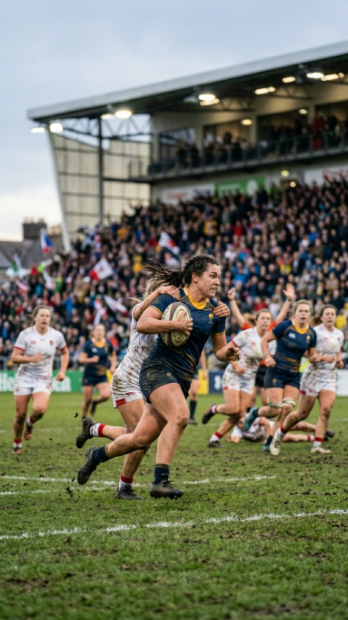
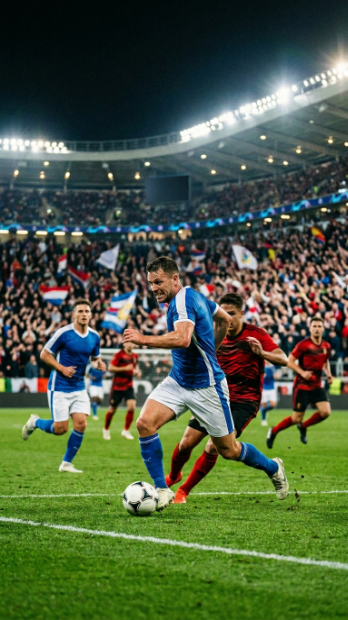
Sport has always occupied a special place in public life. It is often associated with competition, championships, records, and moments of victory that capture the attention of millions. But the true importance of sport reaches far beyond the scoreboard. It shapes daily habits, builds discipline, creates community, and offers a shared language that connects people across age, culture, and background. Whether it takes place in a packed stadium, a neighborhood court, a school field, or a public park, sport remains one of the most visible and powerful expressions of human energy, resilience, and ambition.
In modern life, sport matters not only because of elite athletes and major tournaments, but also because it reflects how people live, move, and connect with one another. For some, sport is entertainment. For others, it is identity, routine, aspiration, or even emotional release. A football match can unite an entire city. A morning run can help one person clear the mind before work. A child joining a local team may learn confidence, cooperation, and persistence long before thinking about winning. This wide reach is what makes sport such a meaningful subject. It is not limited to professional competition. It is woven into everyday life.
One reason sport continues to hold public attention is that it combines physical ability with human drama. Every match or race carries uncertainty. Preparation matters, but so do pressure, timing, momentum, and mental strength. Viewers are drawn not only to the result, but to the story unfolding within the contest. A comeback, an upset, a missed chance, or a final-minute decision can leave a lasting impression because sport reveals something deeply human: the struggle between effort and outcome. It reminds audiences that talent alone is never enough. Performance is shaped by preparation, patience, and the ability to respond under pressure.
This emotional dimension helps explain why sport remains relevant even in a media environment filled with constant information. It offers a form of attention that feels immediate and shared. People watch together, react together, and remember moments together. A major sporting event can become part of collective memory in a way few other experiences can. At the same time, sport also thrives in smaller and quieter settings. A local school competition, a weekend community game, or a family gathering around a televised final all carry meaning because they create connection. Sport often brings people into the same emotional space, even when their everyday lives are very different.
Yet the value of sport is not only social or cultural. It also plays a major role in personal development. Participation in sport teaches lessons that often extend well beyond physical activity. It can show people how to manage setbacks, how to work toward gradual improvement, and how to stay committed when progress is not immediate. Training routines are built on repetition, and repetition builds discipline. Athletes learn that outcomes are rarely instant. Improvement comes from doing small things well over time. This is one of the most practical and lasting lessons sport offers, especially for young people.
Team sports add another layer to that education. They require cooperation, communication, and trust. A strong team is not simply a collection of talented individuals. It is a group that understands roles, adapts to challenge, and works toward a shared objective. This is why team sport can be such an effective teacher of responsibility. Players quickly learn that individual decisions affect others. Effort, focus, and attitude are not private matters when the result depends on collective performance. In this sense, sport becomes a practical school of character, shaping behavior through experience rather than instruction alone.
Individual sports, meanwhile, highlight another side of development: self-reliance. In running, tennis, swimming, martial arts, cycling, or athletics, the athlete often faces the demands of performance more directly. There is less room to hide behind others. Success depends heavily on internal discipline, concentration, and the ability to stay calm under personal pressure. These sports can teach patience in a very direct way. Progress may be measured in seconds, technique, or endurance, and improvement often comes slowly. That process can build a strong sense of accountability, because the athlete sees clearly how preparation affects performance.
In recent years, sport has also gained renewed attention as part of a healthier and more balanced lifestyle. More people recognize that movement is not only for competition. Recreational sport, walking groups, cycling clubs, running communities, amateur leagues, and fitness-based sports have become increasingly visible in cities and towns around the world. This shift reflects a broader understanding that sport can contribute to well-being, routine, and quality of life. Not everyone wants to compete at a high level, but many people want the energy, structure, and sense of progress that sport can bring. In this way, sport becomes more inclusive. It is not reserved for elite performance. It becomes a practical part of daily life.
The role of sport in youth development is particularly important. For children and teenagers, sport can provide structure during formative years. It can encourage active habits, improve social skills, and offer a constructive environment for learning about effort and fairness. A young player may not remember every score, but they often remember the coach who encouraged them, the teammate who supported them, or the lesson learned after losing. These experiences help shape confidence and emotional maturity. Sport gives young people a place to test themselves, to fail safely, and to return stronger. That cycle is valuable far beyond the field of play.
At the same time, modern sport is not without challenges. Commercial pressure, unrealistic expectations, overtraining, online criticism, and the constant demand for performance can all affect athletes at every level. For professionals, sport can be a high-pressure industry as much as a passion. For younger participants, the pressure to excel too early can reduce enjoyment and create burnout. This is why conversations around sport today increasingly include mental resilience, recovery, balance, and athlete well-being. A healthier sports culture is one that values not only achievement, but sustainability. Performance matters, but so does the person behind it.
Media has also changed the way sport is experienced. Fans no longer follow events only through live broadcasts or newspaper summaries. They engage through highlights, analysis, interviews, statistics, commentary, and real-time reactions across multiple platforms. This has made sport more accessible and more immediate. It has also made public discussion around sport more intense. Every decision, performance, and mistake can be examined instantly. While this creates excitement and deeper engagement, it also increases pressure on athletes and officials. The modern sports environment is faster, louder, and more connected than before.
Even so, the enduring appeal of sport lies in something simple. It offers a clear stage for effort, uncertainty, and response. There are rules, limits, goals, and consequences. In a complex world, that clarity is part of the attraction. People are drawn to contests where action matters, preparation has visible results, and outcomes are earned in real time. Sport does not always deliver fairness, and it rarely guarantees comfort, but it reveals commitment in a way that is easy to understand. That is why even those who do not play still care deeply. They recognize something truthful in competition: the test of character under pressure.
Sport also reflects broader changes in society. It can highlight conversations about equality, access, youth opportunity, public health, education, and national pride. Investment in sports facilities, school programs, and community spaces often reveals what a society values. A thriving sports culture usually depends not just on star athletes, but on public support, safe spaces to play, qualified coaching, and the belief that participation matters. When these conditions exist, sport becomes more than entertainment. It becomes part of civic life.
For readers, the appeal of sports journalism comes from this mix of action and meaning. A good sports article does more than report a result. It explains why a performance mattered, what a moment revealed, and how an event fits into a larger story. It captures not only what happened, but what it felt like and why people cared. Sport invites this kind of storytelling because every game contains both facts and emotion. Scores matter, but so do momentum, atmosphere, and resilience.
In the end, sport remains one of the clearest expressions of movement, ambition, and shared experience in modern life. It brings people together, tests individuals honestly, and offers lessons that extend well beyond competition. It can entertain, inspire, and challenge all at once. Whether played professionally or casually, watched by millions or by a small local crowd, sport continues to matter because it reflects something fundamental about people: the desire to strive, to improve, and to belong to something larger than oneself