
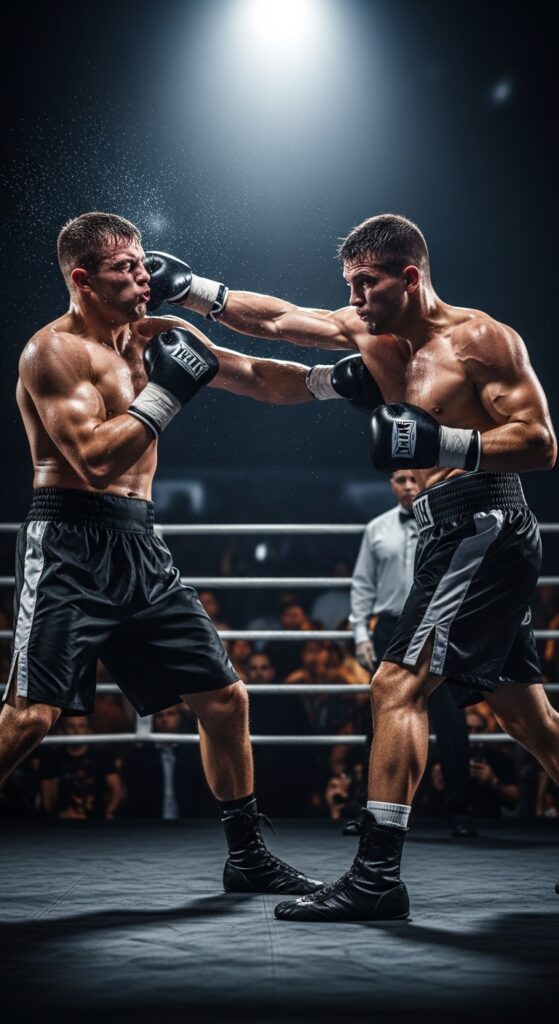
Boxing is one of the oldest, toughest, and most respected sports in the world. At first glance, it may seem simple: two fighters enter a ring and try to defeat each other using speed, strength, timing, and skill. Yet boxing is far more than a physical contest. It is a sport of discipline, mental strength, strategy, and character. Behind every punch is preparation. Behind every victory is sacrifice. And behind every boxer is a story of struggle, ambition, and resilience.
For many people, boxing represents the purest form of competition. There are no large teams to hide behind, no substitutes to take responsibility, and no shortcuts once the bell rings. A boxer stands alone in the ring with training, courage, and instinct as their greatest weapons. This intense one-on-one nature makes boxing uniquely dramatic. It reveals not only athletic ability but also emotional control, mental focus, and the willingness to face fear directly. In boxing, success depends not only on how hard a person can hit, but also on how well they can think, adapt, and endure under pressure.
One reason boxing continues to attract global attention is its honesty. In many sports, mistakes can be covered by teammates or corrected over time. In boxing, every weakness is exposed. Poor defense, weak conditioning, hesitation, or lack of concentration can quickly lead to defeat. The sport demands total commitment because the consequences of being unprepared are immediate. This is why boxing is so widely respected, even by people who do not follow it closely. It asks for courage in its clearest form: the courage to enter the ring, to take risks, to remain calm under attack, and to continue fighting when the body is tired and the mind is under pressure.
However, boxing is not merely about aggression. In fact, one of the greatest misunderstandings about boxing is the belief that it is only about violence. At a deeper level, boxing is a highly technical and strategic sport. Great boxers are not simply strong fighters; they are intelligent athletes. They study distance, angles, rhythm, and timing. They learn when to attack, when to defend, and when to wait. Footwork is often as important as punching power. A small movement of the head or a step to the side can change the outcome of an exchange. Defense, counterpunching, and ring awareness are just as valuable as offensive skill. In this way, boxing is often compared to chess, but played at high speed and under physical danger.
The technical side of boxing is what makes it so fascinating. The jab, for example, may appear to be a simple punch, yet it is one of the most important tools in the sport. It can measure distance, control the pace, interrupt an opponent’s rhythm, and create openings for stronger punches. Hooks, uppercuts, crosses, slips, blocks, feints, and pivots all serve specific purposes. A skilled boxer combines these elements into a complete system. The beauty of boxing lies in how efficiently it turns movement into meaning. Nothing is wasted. Every action has a purpose, and every mistake can be costly.
Training in boxing is famously demanding. A successful boxer must build endurance, strength, speed, balance, and sharp reflexes. Roadwork, skipping rope, shadowboxing, pad work, heavy bag training, sparring, and conditioning are all part of the process. These sessions are not only physically exhausting but mentally tiring as well. Repetition is essential. A boxer may practice the same movement thousands of times so that it becomes natural in a real fight. This is where discipline becomes central. Boxing rewards those who are willing to work in silence, improve slowly, and stay committed even when progress feels difficult.
Physical strength alone is never enough in boxing. Mental toughness is equally important, and in many cases even more decisive. A boxer must remain calm while under attack, think clearly while tired, and recover emotionally after setbacks. Fear is natural in boxing, but successful fighters learn to manage it rather than deny it. They must trust their training, control their breathing, and stay focused under extreme pressure. This mental dimension is one reason boxing is so admired. The ring becomes a place where human will is tested in a direct and public way.
Boxing also teaches valuable lessons that extend far beyond sport. It teaches self-control because reckless anger usually leads to mistakes. It teaches patience because timing matters more than wild effort. It teaches humility because every boxer, no matter how talented, must respect the difficulty of the sport. It teaches resilience because loss, pain, and failure are all part of the journey. Many boxers speak of the ring not just as a place of competition, but as a place of education. Through boxing, they learn who they are under pressure and what they are capable of overcoming.
Historically, boxing has held a powerful place in society. It has existed in various forms for thousands of years, evolving from ancient combat traditions into a modern sport with official rules, weight classes, championships, and international recognition. Over time, boxing became more organized and more widely followed, gaining a reputation as a sport where individuals from difficult backgrounds could transform their lives through discipline and talent. Some of the most famous athletes in history emerged from boxing, not only because of their performances in the ring but because of what they came to represent outside it: determination, pride, resistance, and social mobility.
This connection between boxing and personal struggle is one of the reasons the sport remains so emotionally powerful. Many boxers come from modest or difficult circumstances. For them, boxing is not only a sport but also a path toward dignity, purpose, and opportunity. The gym becomes a place of structure and belonging. Coaches often serve not only as trainers but also as mentors and father figures. The discipline of boxing can help young people avoid destructive environments, build confidence, and develop a sense of direction. In many communities, boxing gyms are more than training spaces; they are places of transformation.
At the same time, boxing has always carried controversy. Because it is a combat sport, concerns about safety are unavoidable. Injuries, especially head trauma, have led many people to question the cost of competition. These concerns are serious and should not be dismissed. Boxing requires regulation, medical supervision, proper coaching, and strong safety standards to protect athletes as much as possible. The risks of the sport are real, and any honest discussion of boxing must acknowledge them. Yet for supporters of the sport, the answer is not to ignore boxing’s dangers, but to improve the way it is taught, organized, and supervised. Respect for boxing includes respect for the boxer’s health and long-term well-being.
Despite these concerns, boxing continues to thrive because it offers something rare: a direct confrontation with difficulty. It is a sport in which excuses disappear. Preparation matters. Character matters. Decisions matter. When a boxer enters the ring, they are forced to rely on what they have built through training and discipline. This is why boxing is often seen as a metaphor for life. People speak of “fighting through adversity” or “getting back up” because boxing provides such a clear image of perseverance. The boxer who rises after being knocked down becomes a symbol of resilience that people understand immediately, even if they have never watched a full match.
The competitive structure of boxing also adds to its appeal. Weight classes exist to create fairness and allow athletes of different body sizes to compete at high levels. Amateur boxing and professional boxing each have distinct cultures and priorities. Amateur boxing often emphasizes speed, volume, technique, and point scoring, while professional boxing tends to place greater value on endurance, power, ring control, and the ability to handle longer contests. This variety gives boxing a rich identity. It can be fast and tactical, explosive and dramatic, technical and emotional — often all at once.
Another reason boxing holds such cultural power is that it creates unforgettable moments. A dramatic comeback, a perfectly timed knockout, a brilliant defensive performance, or a championship victory after years of struggle can become part of sporting history. Boxing produces stories that go beyond statistics. Fans remember not only who won, but how they won, what they overcame, and what the fight represented. Because the sport is so personal and physically demanding, each great performance carries emotional weight. It feels earned in a way that few spectacles can match.
Women’s boxing has also grown significantly and deserves recognition. For many years, female boxers had fewer opportunities, less visibility, and less respect than male fighters. Yet through persistence, skill, and excellence, women’s boxing has gained broader acceptance and increasing popularity. Female athletes have shown that boxing is not defined by gender, but by courage, preparation, and talent. Their success has expanded the sport and inspired many younger athletes to enter the gym with confidence. The rise of women’s boxing is one of the most positive developments in the modern history of the sport.
Boxing also has important benefits outside competition. Many people train in boxing without ever entering the ring. Fitness boxing has become popular because it improves cardiovascular health, coordination, balance, and self-confidence. Hitting pads or bags can be physically demanding and mentally satisfying. More importantly, boxing training teaches discipline and focus. It can help people manage stress, improve self-image, and build a stronger connection between mind and body. Even without fighting, the practice of boxing can be deeply valuable.
The psychological dimension of boxing is especially interesting. Unlike many activities where people perform in comfort, boxing teaches individuals to function under pressure. It sharpens awareness and demands control. A boxer cannot afford panic. They must breathe, think, and respond. Over time, this develops emotional resilience. The person who trains seriously in boxing often becomes more composed in other parts of life. Challenges may still feel difficult, but they no longer feel impossible. The gym teaches that progress comes through repetition, discomfort, and persistence.
There is also an undeniable beauty in boxing when practiced at the highest level. Although it is a combat sport, its best moments are often graceful rather than brutal. A skilled boxer moving with balance and precision can seem almost artistic. The rhythm of footwork, the timing of combinations, the intelligence of defense, and the elegance of a well-placed counterpunch all show that boxing is more than force. It is controlled movement under pressure. It is the art of making split-second decisions with total commitment.
The future of boxing will depend on its ability to preserve this beauty while taking safety and integrity seriously. The sport must continue improving medical standards, training practices, officiating, and support systems for athletes. It must also remain accessible to young people who can benefit from its discipline and structure. If boxing is guided responsibly, it can continue to offer both competitive greatness and personal transformation. Its value lies not only in spectacle, but in the lessons it teaches about preparation, courage, and responsibility.
In the end, boxing remains one of the most compelling sports because it speaks directly to human struggle. It is about facing opposition, managing fear, enduring pain, and continuing with purpose. It tests not only the body but also the mind and spirit. It reveals strengths and weaknesses with unusual clarity. And because of that, it commands respect.
Boxing is not simply about throwing punches. It is about discipline when no one is watching, courage when the pressure rises, and dignity in both victory and defeat. It is about learning that strength is not only physical, but mental and emotional as well. For some, boxing is a profession. For others, it is fitness, structure, or personal growth. But in every form, it offers the same essential lesson: that true power comes from control, preparation, and the refusal to give up.
That is why boxing continues to endure across generations and cultures. It is raw, demanding, and sometimes controversial, but it is also deeply meaningful. In every round, it tells a story of effort and will. In every fighter, it shows the human desire to rise, to prove oneself, and to keep moving forward even when the fight is difficult. And in that sense, boxing is more than a sport. It is a powerful expression of courage itself.
