
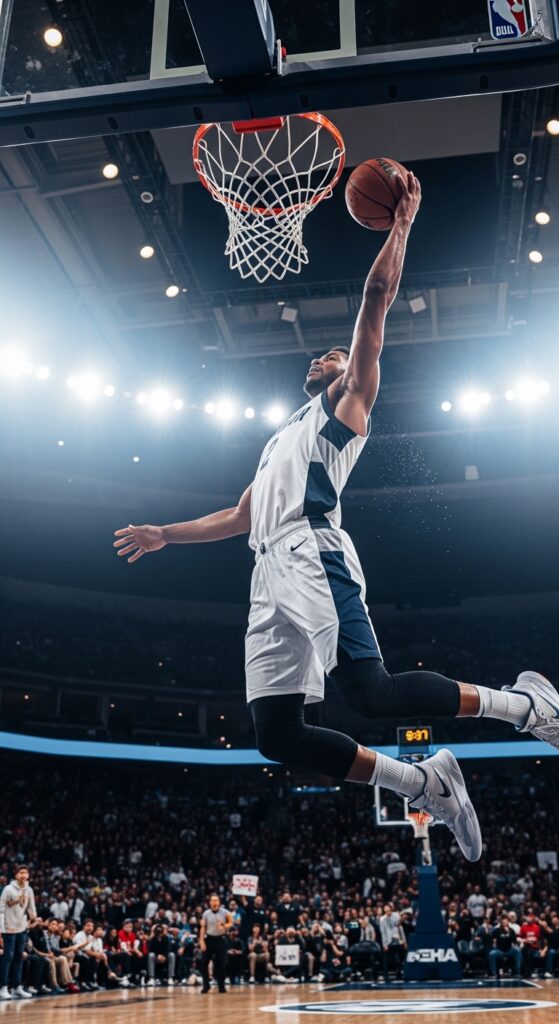
Basketball is one of the most dynamic and widely loved sports in the world. Known for its speed, excitement, and constant movement, the game has grown far beyond the gymnasiums where it first began. Today, basketball is played in schools, parks, community centers, and professional arenas across nearly every continent. It is more than a sport of scoring points and winning games. Basketball is a cultural force, a source of inspiration, a tool for education, and a symbol of teamwork, discipline, and creativity.
At first glance, basketball appears simple. Two teams compete to score by putting a ball through a hoop. The team with more points at the end wins. Yet behind this straightforward objective lies a sport of remarkable complexity. Basketball demands physical fitness, technical precision, quick thinking, and strong communication. It is a game in which decisions are made in seconds, where one pass can break a defense, one rebound can shift momentum, and one shot can define an entire match.
One reason basketball is so appealing is its pace. Unlike some sports that unfold slowly, basketball is fast from beginning to end. The action moves continuously from one side of the court to the other, keeping both players and spectators fully engaged. A game can change dramatically in just a few seconds. A team that appears to be losing can come back with a series of steals, fast breaks, and three-point shots. This unpredictability makes basketball thrilling to watch and emotionally powerful to play.
Basketball also rewards a wide range of skills. Shooting is perhaps the most visible aspect of the sport, and great shooters often become the most celebrated players. A perfectly timed jump shot or a long-range three-pointer can energize a team and excite a crowd. However, scoring is only one part of basketball. Passing, dribbling, defending, rebounding, screening, and court awareness are equally important. A player who cannot score many points may still be essential because of vision, leadership, or defensive ability. This balance helps make basketball a deeply strategic team sport rather than a simple contest of individual talent.
Teamwork is at the center of basketball’s identity. Even the most gifted player cannot succeed alone for long. A strong basketball team moves as a unit, with each player understanding both personal responsibilities and the needs of the group. Offensively, players must space the floor, share the ball, and create opportunities for one another. Defensively, they must communicate constantly, switch assignments when necessary, and trust each other to cover open space. A well-coordinated team can often defeat a more talented but less organized opponent. This lesson gives basketball value far beyond sports, since it teaches the importance of cooperation, timing, sacrifice, and shared effort.
Another fascinating feature of basketball is the relationship between structure and creativity. Coaches design plays, defensive systems, and game plans to guide their teams. At the same time, basketball allows enormous room for improvisation. A player may react to pressure with a crossover dribble, a no-look pass, or a sudden drive to the basket. The sport values instinct and imagination as much as preparation. Great players are often those who can understand the system and then elevate it through individual flair. Because of this, basketball is both disciplined and expressive, making it attractive to players with different personalities and strengths.
The history of basketball adds to its significance. Invented in 1891 by James Naismith, the game was originally created as an indoor activity to keep students active during the winter. From those modest beginnings, basketball developed into a global sport with massive cultural impact. Professional leagues, international competitions, school tournaments, and street basketball communities have all played important roles in shaping the game. Over time, basketball has become not just a competition, but also a way of life for many people.
Professional basketball has had a major influence on the sport’s global popularity. Elite leagues have turned basketball into a major entertainment industry, bringing together athletic excellence, storytelling, media, and business. Star players have become international icons, known not only for their performance on the court but also for their influence on fashion, advertising, music, and social issues. Their journeys often inspire young athletes, especially those from difficult backgrounds, to believe that hard work and persistence can open life-changing opportunities.
However, basketball’s real strength may lie in its accessibility. While professional basketball is glamorous, the sport itself can be played almost anywhere. A full indoor court is ideal, but not required. A single hoop in a schoolyard or public park is enough to bring people together. This flexibility has helped basketball spread quickly across cities and communities. In many urban areas, the local court is more than a place to play. It is a place to meet friends, compete, learn discipline, and build identity. Street basketball in particular has created its own traditions, language, and culture, showing how the game can adapt to different social environments.
Basketball also plays a powerful educational role. In schools and youth programs, it teaches lessons that extend far beyond athletic performance. Young players learn the importance of practice, patience, and resilience. They discover that improvement rarely happens overnight. Repeating the same shot, defending the same drill, and correcting the same mistake can be frustrating, but it builds discipline. Players also learn how to handle success and failure. A missed free throw in an important moment can be disappointing, but it teaches composure and mental strength. Winning can build confidence, while losing can build character if approached with honesty and effort.
The physical demands of basketball are another reason the sport commands respect. Players need endurance to keep moving, speed to attack and recover, strength to fight for position, and coordination to control the ball under pressure. The game challenges nearly every part of the body. Quick stops, explosive jumps, sharp turns, and constant contact require both athletic ability and careful preparation. At higher levels, players spend countless hours training not only in skill development but also in conditioning, recovery, and injury prevention. This hidden work often goes unnoticed by casual fans, but it is essential to performance.
Mental sharpness is just as important as physical ability. Basketball is often described as a game of decisions. Players must read defenders, anticipate teammates’ movements, choose when to pass or shoot, and react instantly to changing conditions. Coaches also make constant judgments about substitutions, matchups, timeouts, and tactics. Because the game moves so quickly, hesitation can be costly. This mental dimension makes basketball intellectually engaging as well as physically demanding.
Another major strength of basketball is its inclusiveness. People of many body types and backgrounds can find a role in the game. Tall players may have advantages near the basket, but shorter players can excel through speed, shooting, or ball-handling. Some athletes dominate through strength, while others succeed through intelligence and timing. Basketball allows different styles to coexist. This diversity helps broaden participation and gives more people the chance to connect with the sport in meaningful ways.
The global growth of basketball has also been shaped by international competition. Tournaments between national teams create a sense of pride and shared identity, much like in other major sports. They also highlight how basketball has evolved in different regions. Some countries are known for technical fundamentals and ball movement, while others emphasize athleticism, defense, or tactical discipline. When these styles meet, the game becomes even richer. International events have also helped reveal new talent, proving that excellence in basketball is no longer limited to a small number of nations.
Women’s basketball deserves special recognition as well. Although it has historically received less attention and investment than the men’s game, women’s basketball has continued to grow in quality, visibility, and influence. Female athletes have demonstrated extraordinary skill, leadership, and competitiveness, inspiring younger generations around the world. As audiences expand and support increases, women’s basketball is becoming a stronger and more visible part of the global sports landscape. Its growth is not only important for gender equality, but also for the future development of basketball as a whole.
Like all major sports, basketball faces challenges. Commercialization has brought money, exposure, and opportunity, but it has also introduced pressure and inequality. Wealthy teams often have greater access to facilities, coaching, and player development. Young athletes may face unrealistic expectations or be pushed too hard too early. At times, the business side of the sport can overshadow the joy of playing. There are also concerns about burnout, mental health, and the intense public attention placed on athletes. These issues remind us that behind every performance is a human being dealing with stress, ambition, and vulnerability.
Basketball has also become a platform for social expression. Many players and teams have used their visibility to speak about education, equality, justice, and community support. Because athletes often come from diverse social and economic backgrounds, they bring important perspectives to public life. Their influence can extend far beyond sports, especially when they use their voices responsibly. This gives basketball a special place in modern culture. It is not only entertainment, but also a space where larger conversations about society can take place.
One of the most beautiful aspects of basketball is the way it creates memorable moments. A buzzer-beater at the end of a close game, a dramatic comeback, a crucial block, or a brilliant assist can live in memory for years. Fans remember not only the result, but the emotion surrounding it: the suspense, the noise, the celebration, the disbelief. Because scoring is frequent but still difficult under pressure, basketball produces a steady rhythm of tension and release. This emotional movement makes the game deeply engaging and highly watchable.
For players, basketball often becomes part of personal identity. It shapes routines, friendships, goals, and dreams. Many people first learn important life lessons on a basketball court: how to trust others, how to recover from mistakes, how to accept criticism, and how to work for something larger than oneself. Even those who never play professionally may carry these lessons throughout life. The game stays with them because it connects effort with growth in a direct and memorable way.
The future of basketball looks promising. Technology is improving training methods, game analysis, and fan engagement. Young players can now study skills and tactics from around the world with unprecedented ease. At the same time, the core appeal of the game remains unchanged. People still fall in love with basketball because of the same basic elements: the sound of the ball bouncing on the floor, the challenge of a perfect shot, the excitement of competition, and the bond formed among teammates.
In the end, basketball is much more than a contest of points. It is a sport that combines speed with intelligence, individual brilliance with teamwork, and discipline with creativity. It can entertain millions in a packed arena and still mean everything on a quiet outdoor court with only a few friends playing at sunset. It has the power to build confidence, unite communities, and inspire dreams. Whether played for fun, for school pride, or at the highest professional level, basketball continues to capture hearts because it reflects something fundamental about human ambition and connection.
That is why basketball remains one of the world’s most beloved sports. It challenges the body, sharpens the mind, and speaks to the emotions. It teaches that success requires practice, that talent must be supported by teamwork, and that even under pressure, creativity can flourish. In every pass, shot, and defensive stand, basketball tells a story of movement, effort, and possibility. And as long as people seek competition, expression, and community, the game will continue to thrive.
