
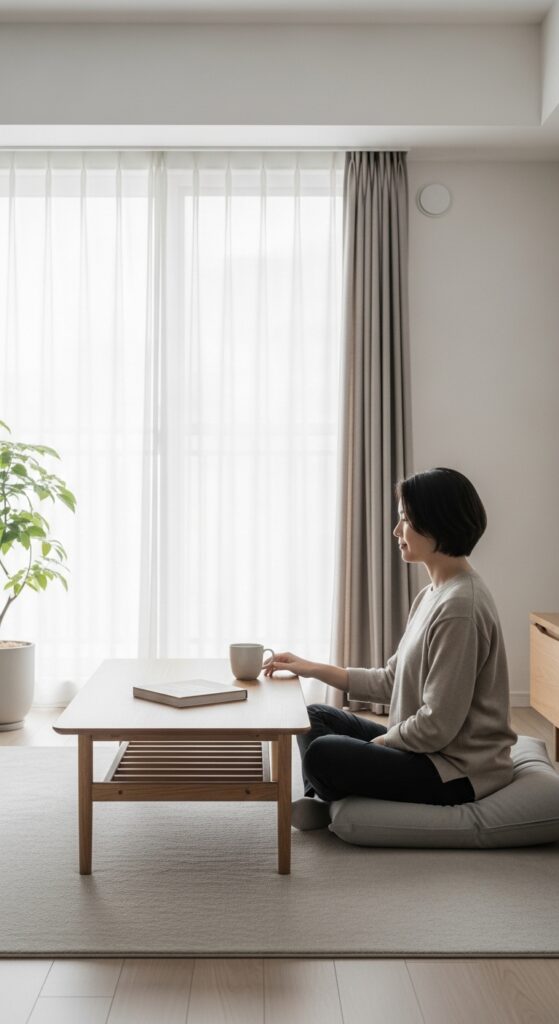
In a world overflowing with choices, possessions, notifications, and obligations, many people are beginning to ask a simple but powerful question: Do I really need all of this? From crowded closets to packed schedules and endless digital distractions, modern life often encourages accumulation rather than intention. Yet, in response to this constant excess, a growing number of people are turning toward a different way of life: minimalism.
Minimalist living is often misunderstood. Some imagine empty white rooms, a wardrobe of only black shirts, or a life stripped of comfort and personality. In reality, minimalism is not about deprivation. It is about clarity. It is the conscious decision to remove what is unnecessary so that there is more room for what truly matters. At its core, minimalist living is not about owning as little as possible; it is about living as fully as possible with less.
Minimalism has become more than a design trend or lifestyle movement. It is now a response to many of the pressures of modern society: consumerism, stress, environmental waste, financial insecurity, and emotional burnout. By choosing simplicity over excess, minimalists seek freedom from the physical and mental clutter that weighs them down. Their goal is not perfection, but intention.
One of the most obvious aspects of minimalist living is the reduction of material possessions. Many people own far more than they use. Clothes sit unworn for years. Kitchen tools gather dust in drawers. Decorative items fill shelves but add little real value to daily life. Over time, this excess becomes a burden. It takes space, demands attention, and often creates guilt. Every object in a home requires maintenance, organization, and mental energy.
When people begin to simplify their belongings, they often discover something surprising: letting go feels lighter than holding on. A cleaner space can create a calmer mind. A room with fewer distractions may feel more peaceful, more breathable, and more functional. Instead of being surrounded by things they barely notice, minimalists choose to keep only the items that are useful, beautiful, meaningful, or necessary. Their homes become places of rest rather than storage.
However, minimalism goes beyond physical stuff. It also touches how people spend their time. Modern culture often treats busyness as a sign of success. A packed calendar can appear impressive, and constant activity may feel productive. Yet many people are exhausted, overwhelmed, and disconnected from themselves. Minimalist living invites a different perspective. It asks people to examine not only what they own, but also what they commit to.
A minimalist approach to time means saying no to obligations that do not align with personal values. It means protecting time for rest, relationships, creativity, and reflection. Instead of filling every moment, minimalists try to create space in their schedules. This space is not emptiness in a negative sense; it is freedom. It allows for deeper attention, better health, and a more meaningful experience of life. In this way, minimalism is not about doing nothing. It is about doing fewer things with greater purpose.
The emotional benefits of minimalist living are significant. Many people experience stress not only because of major life problems, but also because of constant low-level overload. Too many decisions, too many messages, too many possessions, and too many expectations can create chronic mental fatigue. Every extra item to clean, every app notification, every unnecessary commitment adds another small demand. Over time, these demands can drain a person’s energy and focus.
Minimalism reduces this background noise. When life becomes simpler, decision-making often becomes easier. A streamlined wardrobe saves time in the morning. A tidy workspace improves concentration. Fewer commitments reduce anxiety. Many people who adopt minimalist habits report feeling calmer, more present, and more in control of their lives. They are no longer constantly reacting to clutter, distraction, and excess. Instead, they begin to act with intention.
Another important aspect of minimalist living is financial freedom. Consumer culture encourages people to buy more, upgrade often, and measure success through ownership. Advertising constantly sends the message that happiness is one purchase away. But the result is often debt, dissatisfaction, and the endless pursuit of more. Minimalism challenges this cycle by encouraging people to question their spending habits and understand the difference between wants and needs.
When people buy less, they often save more. They become more conscious of where their money goes and whether their purchases reflect their values. Instead of impulsive buying, they may choose quality over quantity. Instead of spending to impress others, they invest in experiences, security, or long-term goals. This does not mean minimalists never spend money. Rather, they try to spend in ways that support a meaningful life instead of feeding temporary desire.
The environmental dimension of minimalism is also becoming increasingly important. Mass consumption has a direct impact on the planet. From fast fashion to plastic packaging and disposable goods, modern lifestyles generate enormous waste. The constant production of new items requires energy, raw materials, transportation, and labor. Many products are used briefly and discarded quickly, contributing to pollution and environmental degradation.
Minimalist living offers a more sustainable alternative. By consuming less, reusing more, and buying more thoughtfully, people can reduce their ecological footprint. A minimalist does not need to be perfectly zero-waste or anti-technology. Even small changes—buying fewer clothes, avoiding unnecessary products, repairing instead of replacing, and valuing durability—can make a difference. In this sense, minimalism is not only a personal choice but also an ethical one. It recognizes that every purchase has consequences beyond the individual.
Despite its benefits, minimalism is not always easy. One reason is emotional attachment. People often connect possessions to memories, identity, or security. A person may keep clothes that no longer fit because they represent a younger self. They may hold onto gifts out of guilt, or save broken items because they fear future scarcity. Letting go can feel uncomfortable, even when the object is no longer useful. Minimalism requires honesty, and honesty can be difficult.
There is also social pressure. In many societies, success is still associated with visible wealth: bigger homes, newer devices, trendier fashion, and a constant display of abundance. Choosing to live with less can seem strange or even unsuccessful to others. Some people may not understand why someone would reject the opportunity to own more. For this reason, minimalism often requires confidence. It asks people to define success for themselves rather than borrowing society’s standards.
It is also worth noting that minimalism looks different for different people. A single student living in a small apartment will practice minimalism differently from a parent with three children. An artist may need many tools and materials, while another person may find joy in owning only the essentials. Minimalism should not become another rigid standard or competition. It is not about counting possessions or copying a certain aesthetic. It is about removing excess in a way that supports one’s real life.
In fact, one of the biggest dangers of modern minimalism is turning it into another form of perfectionism or consumer identity. Some people become so focused on having the “perfect minimalist home” that they end up buying expensive storage systems, designer neutral-colored items, or trendy lifestyle products. This misses the point. Minimalism is not something to perform; it is something to practice. Its value lies not in appearance, but in freedom. The goal is not to look minimalist. The goal is to live intentionally.
Digital life is another area where minimalist principles are increasingly relevant. Many people now experience clutter not only in their homes but also on their screens. Thousands of photos, unread emails, constant notifications, unnecessary apps, and endless scrolling create a mental environment as crowded as a messy room. Digital minimalism encourages people to be more selective about the technologies they use and how they use them.
This might involve deleting unused apps, limiting social media, turning off notifications, or spending more time offline. It could also mean choosing depth over distraction: reading a book instead of scrolling, having a face-to-face conversation instead of checking a phone, or focusing on one task instead of dividing attention across multiple screens. In a time when attention has become a valuable commodity, protecting it is a radical act. Minimalism helps people reclaim their focus.
Relationships, too, can benefit from a minimalist mindset. This does not mean reducing people in a cold or selfish way. Rather, it means investing more deeply in relationships that are genuine, supportive, and meaningful, instead of spreading oneself thin across shallow or draining connections. In the same way that a minimalist home has room to breathe, a minimalist social life has room for real presence. When people are less distracted by clutter and busyness, they often become better listeners, better partners, and more attentive friends.
Minimalism also invites a philosophical shift. It asks people to reconsider what gives life value. Is happiness found in accumulation, or in appreciation? Does freedom come from having more options, or from needing less? Can satisfaction grow not through constant expansion, but through contentment? These are not new questions. Many philosophical and spiritual traditions have long emphasized simplicity, self-discipline, and inner peace. What is new is the modern context in which these ideas are being rediscovered.
In a culture of endless consumption, choosing enough can be revolutionary. Minimalism reminds us that abundance is not always about quantity. Sometimes abundance is time to rest, silence to think, space to breathe, and clarity to notice what truly matters. A life filled with things is not necessarily a rich life. A rich life may be one with meaningful work, loving relationships, good health, and the ability to enjoy the present moment.
For those interested in beginning a minimalist lifestyle, the process does not need to be dramatic. It can start with one drawer, one habit, or one honest question: What is adding value to my life, and what is simply taking up space? From there, small changes can lead to deeper transformation. Clearing a desk may inspire a clearer mind. Reducing shopping may reveal different priorities. Protecting quiet time may renew a sense of self.
Minimalism is not a destination where life becomes perfectly clean, simple, and controlled. Life will always be messy in some ways. There will always be responsibilities, emotions, changes, and uncertainty. But minimalism offers a framework for living with greater awareness. It encourages people to choose carefully, keep intentionally, and let go bravely.
In the end, minimalist living is not about less for the sake of less. It is about less for the sake of more—more peace, more freedom, more purpose, and more life. In a noisy world that constantly demands more attention, more consumption, and more speed, minimalism offers a quiet but powerful alternative. It tells us that we do not need to chase everything. We can step back, simplify, and discover that sometimes the most meaningful life is built not by adding more, but by removing what was never necessary in the first place.
