
Luxury automobiles have always been more than machines. They are cultural objects, status symbols, engineering showcases, and moving expressions of taste. In every era, the world’s most prestigious cars have reflected the highest aspirations of their time. In the early twentieth century, luxury meant handcrafted bodies and powerful engines. In the postwar era, it meant chrome, comfort, and prestige. In the late twentieth and early twenty-first centuries, it came to mean performance, advanced safety, digital convenience, and global brand identity. Yet the future of luxury automobiles promises something even more ambitious. It is not simply about faster cars, quieter cabins, or more expensive materials. It is about redefining what luxury itself means in an age shaped by electrification, artificial intelligence, sustainability, autonomy, and changing human values.
The luxury car of the future will not merely transport people from one place to another. It will function as a private sanctuary, a digital assistant, an environmentally conscious product, and a personalized experience platform. It will blend craftsmanship with code, tradition with innovation, and emotional desire with social responsibility. The brands that succeed will not only build beautiful vehicles, but also create ecosystems of meaning around them.
One of the most transformative forces shaping the future of luxury cars is electrification. For over a century, the internal combustion engine defined automotive excellence. The growl of a V8 or the smooth surge of a V12 became central to the emotional identity of premium brands. However, electric mobility is changing the foundations of automotive design and engineering. Electric luxury cars offer instant torque, silent acceleration, and refined ride quality that align naturally with the ideals of comfort and effortless power. What was once seen as a compromise is rapidly becoming a new standard of elegance.
Electric platforms free designers from many old packaging constraints. Without large engines, transmissions, and exhaust systems occupying traditional spaces, automakers can rethink cabin proportions, storage, and interior openness. The result is likely to be more spacious lounges on wheels, with flat floors, flexible seating, and interiors that emphasize calmness rather than mechanical drama. In this context, silence itself becomes a form of luxury. The absence of vibration and noise allows occupants to appreciate subtle design details, better conversations, immersive audio systems, and a more meditative sense of travel.
Yet the electric future of luxury is not only technical. It is symbolic. Buyers are increasingly aware of climate change, urban pollution, and the environmental cost of consumption. In the coming years, true luxury may be measured not by excess alone, but by responsibility. A future luxury automobile will need to prove that it can be both exceptional and ethical. This is why sustainability is becoming central to premium automotive identity. Leather alternatives made from plant-based or recycled materials, responsibly sourced metals, low-impact manufacturing, and circular design principles are likely to define the next generation of prestige.
This shift marks an important cultural evolution. In the past, luxury often celebrated visible abundance. Large engines, rare woods, and extravagant finishes communicated wealth through material intensity. Future luxury, by contrast, may communicate sophistication through intelligence and restraint. An elegant electric vehicle built from sustainable materials and produced in a carbon-conscious factory may carry more prestige than a wasteful car covered in traditional signs of opulence. Consumers, especially younger affluent buyers, are increasingly drawn to brands that align with their values. For them, the moral story behind a product matters as much as the physical product itself.
Artificial intelligence will also play a major role in transforming the luxury automobile. In future vehicles, AI will not simply power voice assistants or navigation systems. It will become the invisible architecture behind personalization. A luxury car will learn its owner’s routines, preferences, moods, and priorities. It may adjust seat position, lighting color, cabin temperature, music selection, suspension settings, and route choices based on time of day, calendar events, health data, or even emotional state inferred from speech patterns and biometric feedback.
Imagine entering your car after a stressful business meeting. The vehicle recognizes your tension and responds by dimming the lights, activating a calming scent profile, selecting a quiet route home, and playing music designed to reduce stress. On another day, before an important presentation, the same vehicle could transform into a productivity space, displaying agenda notes, optimizing connectivity, and offering focused acoustic conditions for last-minute preparation. In this sense, the future luxury automobile becomes less like a machine and more like an attentive host.
This level of personalization will redefine brand loyalty. Instead of selling a fixed product, luxury automakers will offer evolving relationships. Software updates, digital services, exclusive content, and adaptive features will continue to shape the ownership experience long after the vehicle leaves the showroom. The car becomes a living platform. Owners may subscribe to seasonal performance settings, bespoke travel services, concierge support, or wellness-oriented cabin modes. In the future, luxury could depend not just on what a vehicle is, but on what it can become over time.
Autonomous driving technology adds another layer to this transformation. Fully autonomous mobility remains a complex and contested goal, but even partial or situational autonomy will dramatically reshape expectations in the premium segment. For luxury vehicles, autonomy is not just about convenience. It is about reclaiming time. Time is perhaps the ultimate luxury in modern life. If a car can safely manage highway travel, traffic congestion, or repetitive urban routes, occupants gain something more valuable than speed: freedom to think, work, rest, or connect with others.
As autonomy advances, interior design will become increasingly important. If the driver is no longer always the central figure, the cabin may evolve into a social or reflective space. Seats may swivel, displays may retract when not needed, and dashboards may become less dominant. Designers will treat the interior not as a cockpit but as an architectural environment. Materials, sound, light, and even scent will be orchestrated to support different modes of experience, from conversation and entertainment to relaxation and sleep.
However, future luxury cars will need to balance autonomy with emotion. Many buyers still value the joy of driving, especially in high-end markets where the car is an object of passion rather than mere utility. The challenge for premium brands will be to offer dual identities: a vehicle that can drive itself when desired, yet still deliver engaging, meaningful control when the owner chooses to take the wheel. In this balance lies a major philosophical question for the industry. Can a machine be both servant and instrument, both sanctuary and thrill? The most successful luxury brands of the future will answer yes.
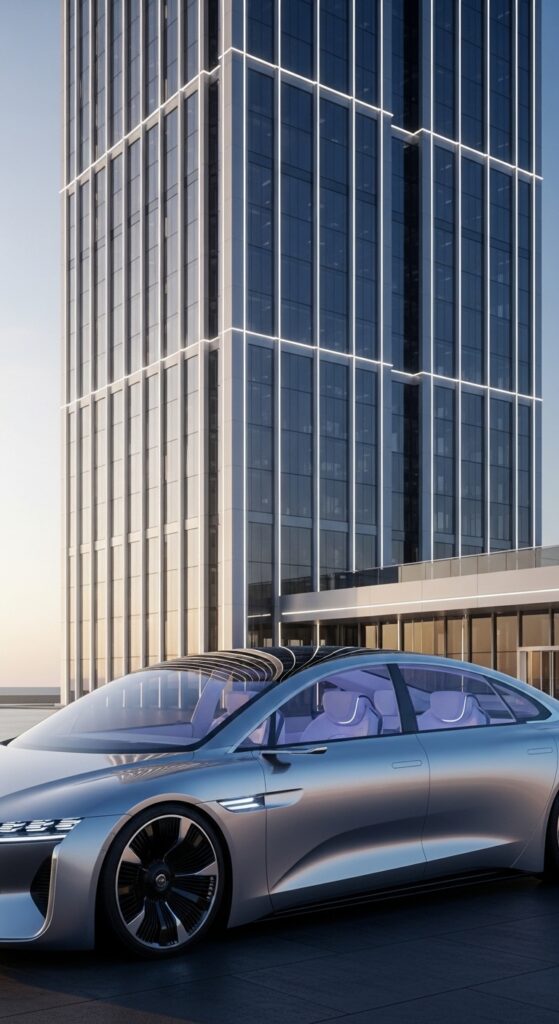
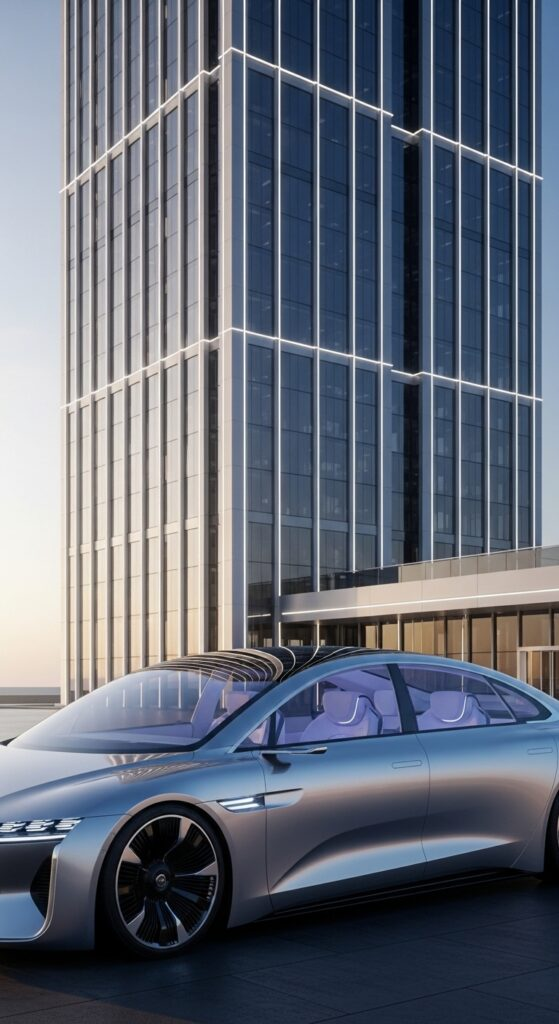
The exterior design of luxury automobiles will also change in subtle but significant ways. Electrification reduces the need for large front grilles, while aerodynamic efficiency becomes more important for range. As a result, future luxury cars may appear cleaner, more sculptural, and more minimalist. Their beauty may come less from aggressive visual complexity and more from proportion, surface quality, and purity of line. Designers may draw inspiration from architecture, fashion, and consumer electronics, producing forms that feel timeless rather than overstated.
Lighting will become especially important. Advanced LED and laser technologies, along with digital light signatures, will allow brands to create instantly recognizable identities day and night. Cars may greet their owners with choreographed lighting sequences, communicate with pedestrians through external displays, or subtly change their appearance depending on drive mode or environment. These features will not be mere gimmicks. In the luxury segment, every visual detail contributes to emotional theater. The car of the future will still need presence, but its presence may be expressed through elegance and intelligence rather than size alone.
Connectivity will further redefine luxury mobility. In the coming decades, premium automobiles are likely to function as nodes within broader digital ecosystems that include smart homes, wearable devices, offices, and urban infrastructure. A luxury car could coordinate with your home to adjust room temperature before arrival, sync with your calendar to recommend departure times, book charging stations automatically, and communicate with city systems to reduce congestion. The ownership experience becomes seamless, predictive, and deeply integrated into daily life.
This integration could also reshape the meaning of exclusivity. Traditional automotive luxury was often based on rarity, craftsmanship, and price. Those elements will remain important, but digital exclusivity may grow in significance. Brands may offer private digital communities, curated travel experiences, members-only charging lounges, over-the-air design themes, or AI companions trained on a customer’s lifestyle. The danger, of course, is that luxury becomes too virtual or superficial. To avoid this, manufacturers must ensure that technology enhances authenticity rather than replacing it. People still crave tactile beauty, emotional resonance, and a sense of permanence in a world of constant updates.
Craftsmanship, therefore, will remain essential. In fact, it may become even more valuable as technology becomes more pervasive. When screens, sensors, and software spread across the industry, genuine material excellence can distinguish true luxury from expensive imitation. The future cabin may feature hand-finished surfaces, precision metalwork, sustainable textiles, and artistic detailing combined with nearly invisible technology. The finest systems will not overwhelm occupants with flashy interfaces. Instead, they will disappear into the environment, emerging only when needed. This is perhaps the highest form of design sophistication: technology that feels natural, not intrusive.
There is also a geopolitical and cultural dimension to the future of luxury automobiles. The next generation of affluent consumers will be more globally diverse than ever before. Demand will increasingly come from Asia, the Middle East, and new urban centers around the world, each with distinct expectations about prestige, comfort, and innovation. Luxury brands will need to respond to this diversity with flexible design language and culturally intelligent services. A premium vehicle in the future may need to reflect not only universal standards of excellence, but also regional tastes and digital lifestyles.
At the same time, cities themselves are changing. Urban densification, stricter environmental regulation, and new mobility models are challenging private car ownership, especially in megacities. This creates tension for the luxury segment. On one hand, the private automobile remains a powerful symbol of freedom, privacy, and identity. On the other hand, congestion, restricted access zones, and shared mobility trends may reduce the practical appeal of owning large vehicles in some areas. Future luxury automakers may respond by expanding into smaller premium electric vehicles, subscription ownership models, chauffeur-oriented autonomous pods, or multimodal mobility services. In other words, luxury mobility may matter more than luxury car ownership alone.
Still, emotion should not be underestimated. People do not aspire to luxury automobiles only because they are useful. They aspire to them because they promise a feeling: mastery, comfort, recognition, beauty, escape. The future will not erase these desires. It will reinterpret them. The luxury automobile of tomorrow may be quieter, smarter, cleaner, and more connected, but it will still need to stir imagination. A car that is technically brilliant but emotionally empty will not define the future of true luxury.
In the end, the future of luxury automobiles will be shaped by a delicate fusion of opposites. These vehicles must be sustainable yet desirable, digital yet human, autonomous yet engaging, minimalist yet warm, global yet personal. They must serve practical needs while preserving the dreamlike quality that has always made luxury cars special. The best future models will not simply display wealth. They will express discernment. They will show that luxury is no longer just about owning more, but about experiencing better.
As society changes, the luxury automobile will remain a mirror of ambition. It will reflect what the wealthy, the innovative, and the aspirational value most deeply. If the twentieth century celebrated mechanical grandeur and the early twenty-first century embraced performance and connectivity, the coming era may celebrate conscious excellence: machines that are beautiful without wasteful excess, intelligent without dehumanization, and exclusive without moral blindness.
