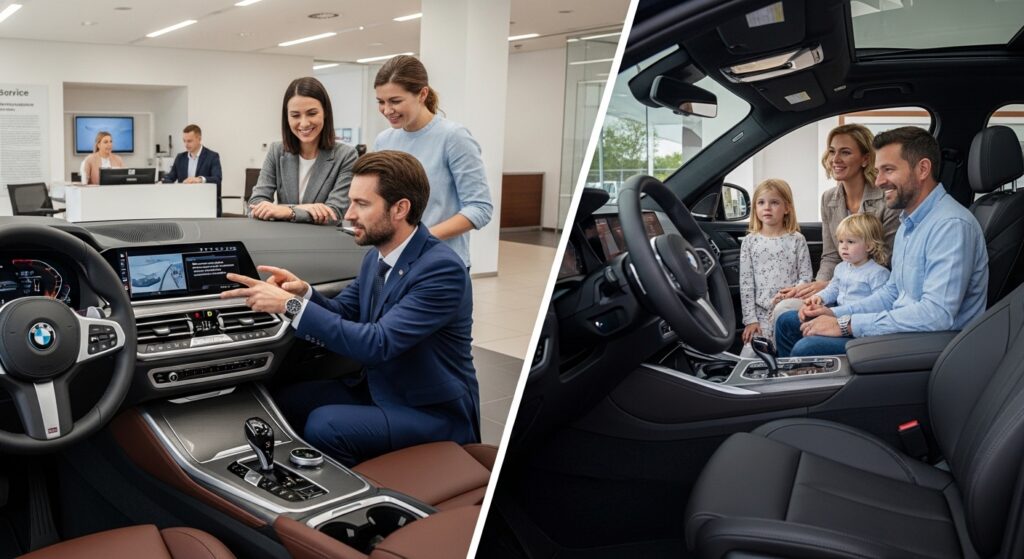
Strong showings by models such as the X6 and X7 in J.D. Power’s 2025 quality-related studies have reinforced BMW’s position as a premium brand that still manages to balance performance, everyday usability and increasingly sophisticated in-car technology.
BMW has long sold more than a car. It has sold a promise — that luxury should not come at the expense of driver involvement, that daily commuting can still feel precise and composed, and that advanced technology can be folded into a vehicle without stripping away the pleasure of being behind the wheel. In 2025, that balancing act appears to be working well enough to earn outside validation, even if the broader quality picture remains more nuanced than a single awards list might suggest.
The clearest evidence came from J.D. Power’s 2025 studies, where several BMW models posted standout results. In the U.S. Initial Quality Study, which measures problems experienced by owners after 90 days, the BMW X6 ranked highest in the Upper Midsize Premium SUV segment and the BMW X7 ranked highest in the Large Premium SUV segment. In the U.S. APEAL Study, which focuses on owners’ emotional satisfaction with the design, performance and overall execution of a vehicle, the BMW X6 again topped its segment — and, according to BMW’s own summary of the results, ranked highest among all individual models. The BMW X4 also won its segment in that study.
Those results matter because they support a central part of BMW’s current identity. The company is not merely trying to build high-performance halo cars for enthusiasts or minimalist electric vehicles for early adopters. It is trying to remain relevant across the much harder middle ground: premium vehicles people can use every day, whether they are driving to work, carrying family, navigating city traffic or covering long highway miles. The X6 and X7, both large and highly visible parts of BMW’s SUV lineup, sit squarely in that mission.
That helps explain why quality recognition for these models carries extra weight. Luxury buyers increasingly expect a vehicle to do everything well at once. It must feel refined, intuitive and technologically current. It must also offer comfort, safety, cabin versatility and increasingly seamless digital integration. In that environment, a premium badge alone is no longer enough. Owners are judging not just the badge, but the full experience of living with the vehicle.
BMW’s competitive strength has traditionally begun with driving dynamics. Even as the industry has moved toward larger vehicles, touch-heavy cabins and electrified powertrains, BMW has tried to preserve the sense that its products respond more sharply and more cohesively than many rivals. Steering feel, chassis tuning and power delivery remain central to the brand’s reputation, particularly in the 3 Series, 5 Series and performance-oriented M models. But in today’s market, that reputation only goes so far unless it is matched by comfort, software competence and perceived reliability.
That is where the 2025 J.D. Power results become useful for BMW. They do not prove perfection across the lineup, and they should not be read that way. In fact, BMW’s overall brand performance in the 2025 U.S. Initial Quality Study was slightly worse than the industry average, according to J.D. Power’s published data. That detail is important because it tempers any temptation to turn a few model-level wins into a blanket statement about the entire brand. What the results do show is that BMW is executing especially well in some of its most commercially important premium SUV segments, even while the broader industry continues to struggle with software complexity, touchscreen usability and the growing pains of technology-heavy interiors.
That distinction matters because modern quality is no longer defined only by engine durability or panel gaps. J.D. Power’s latest quality research has emphasized a recurring industry problem: owners are increasingly frustrated by poorly integrated touchscreens, confusing controls and technology that promises convenience but creates friction instead. BMW is not immune to those trends, but its better-performing models suggest the company is managing that transition more successfully in some vehicles than others.
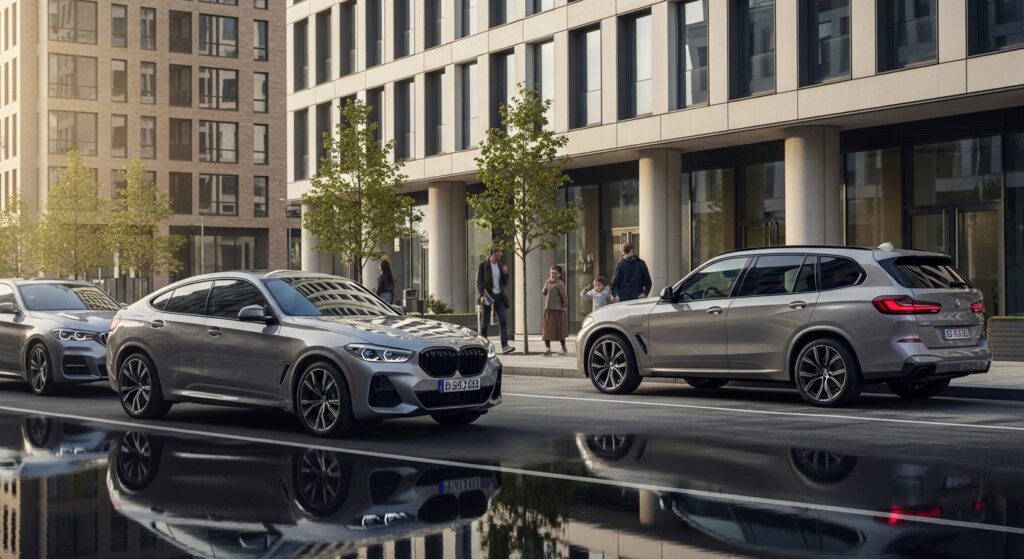
The X6 is perhaps the clearest example of BMW’s current formula. It combines the high driving position and everyday practicality buyers want from an SUV with a more aggressive coupe-like profile and the kind of road manners BMW wants associated with the roundel. The model’s strong showing in both quality and APEAL research suggests owners are not only tolerating that mix, but actively valuing it. That is particularly notable because the X6 has often been treated by critics as a style-first vehicle. The J.D. Power findings imply that buyers see more substance in it than skeptics sometimes assume.
The X7 plays a somewhat different role. It is less about sporty design statement and more about proving that BMW can compete credibly in the large luxury SUV category, where comfort, space and family usability matter at least as much as acceleration or handling. A segment win for the X7 in initial quality suggests BMW is doing more than building a flagship SUV with impressive specs. It is delivering a strong early ownership experience in a class where expectations are especially high and small frustrations can quickly feel unacceptable.
BMW’s ability to combine performance character with daily usability is also part of why the brand remains influential even as the premium market becomes more crowded. Rivals such as Mercedes-Benz, Audi, Lexus, Porsche and newer electric entrants are all competing for buyers who want luxury without compromise. Some emphasize serenity, some software, some efficiency and some status. BMW continues to differentiate itself by insisting that even practical luxury should still feel engaging. That proposition may sound traditional, but it remains commercially powerful when executed well.
Technology is another pillar of the company’s appeal. BMW has spent years developing its iDrive interface, expanding driver-assistance systems, and integrating larger curved displays, connected services and electrified drivetrains across more of its portfolio. The challenge, as with every automaker, is ensuring that more technology actually improves the user experience instead of making it more distracting. The wider auto industry’s quality struggles show how difficult that has become. BMW’s stronger model-level performances suggest that, at least in some products, it is threading that needle effectively enough to satisfy owners.
Still, the company’s current position calls for careful reading rather than simple celebration. J.D. Power’s studies capture different slices of ownership. Initial quality focuses on early problems. APEAL tracks satisfaction and emotional response. Dependability studies, by contrast, look deeper into longer-term ownership. A vehicle can delight owners in the first months and still reveal weaknesses later. That is why BMW’s 2025 recognition should be seen as meaningful but not conclusive evidence of overall long-term superiority.
Even so, the optics matter. Awards influence consumer perception, dealership messaging and residual brand confidence. For BMW, having the X6 and X7 perform well gives the company something valuable in a competitive luxury-SUV market: third-party evidence that some of its most visible, profit-rich vehicles are resonating with owners not just in performance, but in perceived quality and ownership satisfaction.
There is also a manufacturing dimension behind that story. Both the X6 and X7 are built at BMW’s Spartanburg plant in South Carolina, a facility that has become central to the company’s global SUV business. Recognition for those models reflects not only design and engineering decisions, but production execution as well. In a premium segment where buyers notice flaws quickly, manufacturing consistency is part of the brand promise.
In the end, BMW’s 2025 standing looks less like a triumph of marketing than a case of selective execution. The company is not dominating every quality metric across every model. But it is showing that it can still deliver vehicles that feel technologically current, rewarding to drive and practical enough for everyday luxury buyers — and that some of those vehicles, particularly the X6 and X7, are standing out in independent research.
For a brand built on the idea of the “ultimate driving machine,” that may be the most important evolution of all. BMW is no longer judged only by how a car feels on a winding road. It is judged by how well it lives in a driveway, on a school run, in commuter traffic and through the messy realities of modern digital ownership. On that broader test, at least in key parts of its lineup, the company appears to be doing a good deal right.