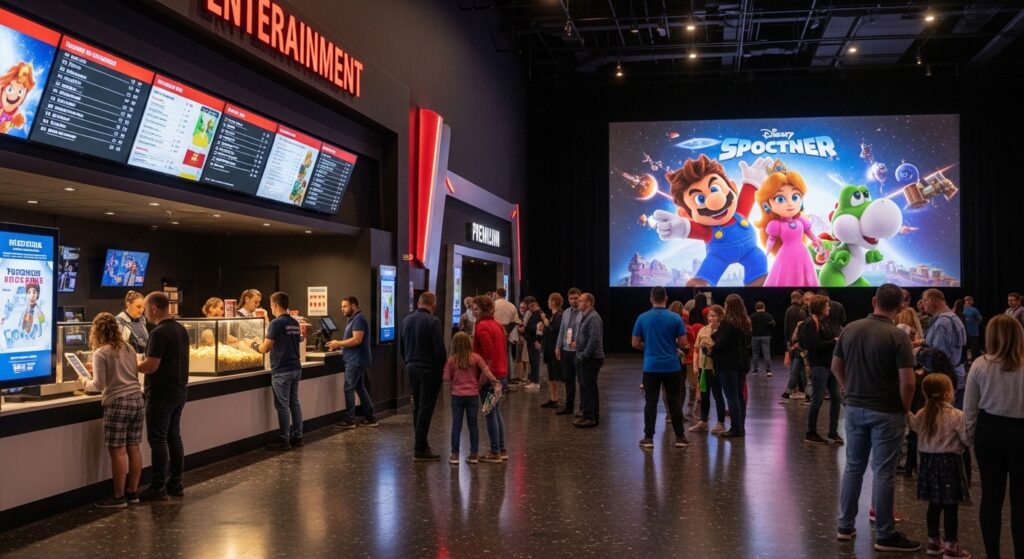
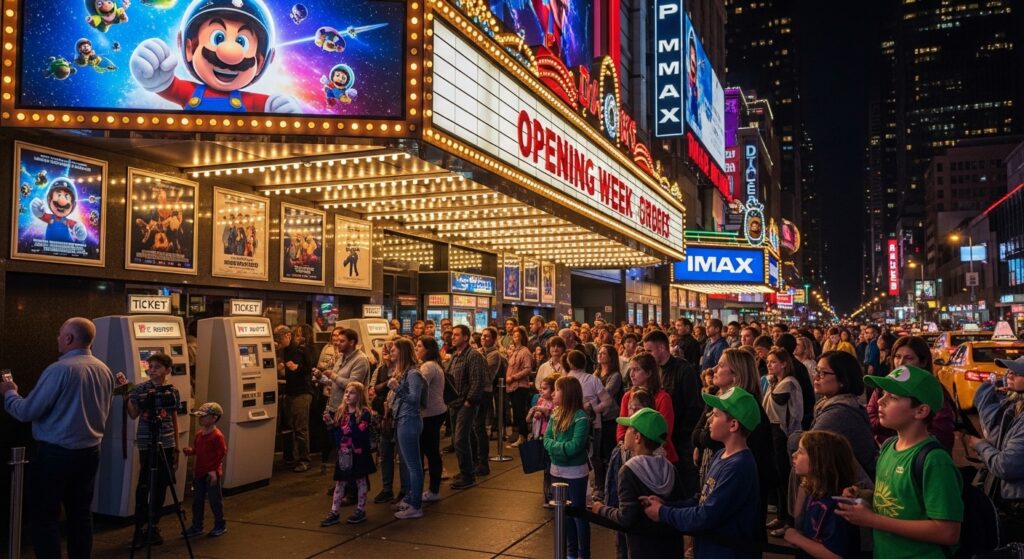
The Nintendo-Illumination sequel surged to about $372.5 million worldwide in its first five days, giving Hollywood its biggest launch of the year so far and reaffirming the power of family franchises at the global box office.
“The Super Mario Galaxy Movie” has delivered exactly the kind of result theater owners and studios had been hoping for: a broad, family-driven hit capable of energizing the global box office well before the traditional summer season reaches full speed.
According to studio estimates reported over the weekend, the animated sequel earned about $190.1 million in North America over its first five days and another $182.4 million from 80 overseas markets, for a worldwide debut of roughly $372.5 million. That makes it the biggest Hollywood opening of 2026 to date and one of the strongest early-year launches for any animated release in recent memory.
The performance is especially significant because it confirms that Nintendo and Illumination have turned Mario into more than a one-film success story. The 2023 “The Super Mario Bros. Movie” was already a cultural and commercial juggernaut, grossing more than $1.3 billion worldwide and proving that a carefully managed video game adaptation could become one of the most dependable properties in mainstream family entertainment. The new film’s opening suggests that momentum has not faded.
In box office terms, the new sequel did not quite surpass the launch of its predecessor, but it came close enough to reinforce the franchise’s unusual durability. At a time when many Hollywood releases struggle to generate repeat event status, Mario appears to have joined the small circle of brands that can turn a theatrical release into a global family outing almost on command.
Universal positioned the film carefully. It opened on Wednesday, taking advantage of school breaks and the run-up to the Easter holiday, a corridor that gave it a five-day frame in North America instead of the standard three-day test. That calendar strategy mattered, but it does not fully explain the scale of the result. The film also benefited from premium-format play, broad audience recognition, and a cross-generational appeal that few franchises can match. Parents know the characters, children know the worlds, and Nintendo’s brand carries a level of trust rare in modern franchise filmmaking.
The domestic numbers were strong enough on their own. The film earned $130.9 million over the conventional three-day weekend in the United States and Canada, then climbed to $190.1 million across its first five days. It played in 4,252 theaters, including hundreds of IMAX and premium large-format screens, giving it a footprint large enough to dominate multiplexes. IMAX alone contributed a sizable share of the opening, underlining how even animated family films are increasingly being sold as event cinema rather than simple children’s programming.
Abroad, the film was similarly powerful. Mexico led the international markets with $29.1 million, while the United Kingdom and Ireland delivered $19.7 million. With Japan still to come later in the month, the global total may yet gain additional momentum from one of Nintendo’s most symbolically important territories. For now, the launch has already established the movie as the No. 1 title in the world and given Universal one of its clearest commercial wins of the year.
What makes the debut even more notable is that it arrived despite mixed critical reviews. Early reaction from reviewers was far less enthusiastic than the audience response, echoing a pattern that has become increasingly common with large-scale family and fan-driven properties. Critics may debate story construction, tonal repetition or franchise logic, but ticket buyers often judge these films by different standards: familiarity, pace, humor, visual energy and the promise of a communal outing. On those terms, “The Super Mario Galaxy Movie” appears to have connected.
That split between critical reception and audience turnout also says something broader about franchise economics in 2026. In a theatrical marketplace still searching for reliable habits after years of disruption, known brands continue to command an enormous advantage. Theaters do not simply need good movies; they need movies that can compel families, teenagers and casual viewers to leave home at the same time. Mario, like a handful of superhero, animated and legacy franchises before it, can still do that.
The opening also arrives as another reminder of how decisively video game adaptations have changed their status in Hollywood. For years, the category was treated with caution or skepticism, often associated with misfires that failed to translate interactive worlds into coherent films. But recent successes have rewritten that narrative. Studios now view game-based properties not as risky experiments but as long-term franchise engines, provided they are handled with enough brand discipline and audience awareness. Nintendo, famously protective of its characters, appears to have learned that lesson particularly well.
There is also a strategic dimension to the sequel’s success. Animated tentpoles have become crucial to studios because they tend to travel well internationally, appeal to families, and generate revenue far beyond ticket sales through merchandise, streaming windows, theme parks and consumer products. Mario sits at the center of all those channels. A hit film does not merely boost a studio’s quarterly results; it reinforces an ecosystem of licensing, gaming, retail and brand visibility that can last for years.
That helps explain why Universal and its partners have treated the release as more than a movie opening. The Mario business now stretches across theatrical distribution, premium screens, broadcast tie-ins, merchandise and destination entertainment. A strong debut strengthens every part of that system. In that sense, the $372.5 million launch is not just a revenue story. It is evidence of a franchise architecture working almost exactly as intended.
For the wider box office, the result is equally welcome. The industry has been searching for signs that audiences will still turn out in force when offered a title with broad enough appeal. “The Super Mario Galaxy Movie” provided that answer. It also helped lift the overall marketplace, while pushing aside strong holdovers including “Project Hail Mary,” which remained robust in second place. That kind of top-two combination matters because it suggests a healthier market than one dominated by a single event film.
Still, the more difficult question begins now: how far can the movie run after its opening burst? Family animation often benefits from strong legs, especially if schools are out and competition remains manageable. But massive front-loaded debuts can also create inflated expectations for later weeks. The sequel’s trajectory will depend on repeat family viewings, the arrival of new rivals and the strength of word of mouth beyond the core fan base. The mixed reviews may matter less than exit-poll enthusiasm, but they remain part of the conversation.
Even so, the first verdict is unmistakable. “The Super Mario Galaxy Movie” has given Hollywood its largest launch of 2026 so far and confirmed that Mario remains one of the safest bets in theatrical entertainment. It did not need to rewrite the rules of franchise filmmaking to succeed. It only needed to deliver a familiar property at a scale large enough to feel like an occasion.
That may be the real lesson of its opening. In an era of crowded content and fragmented attention, theatrical success increasingly belongs to films that can persuade audiences that showing up matters. With nearly $372.5 million worldwide in five days, Mario has done exactly that again — not as a novelty this time, but as a proven global force.