The final show in Vancouver ends a nearly two-year global run that reshaped the concert business, shattered box-office records and reinforced Swift’s place at the center of popular culture.
Taylor Swift has closed the curtain on the “Eras Tour,” ending a concert run that did more than fill stadiums. It redefined the scale of modern touring, demonstrated the commercial force of a global pop brand at full power and left behind a template that music executives, promoters and rival artists are likely to study for years.
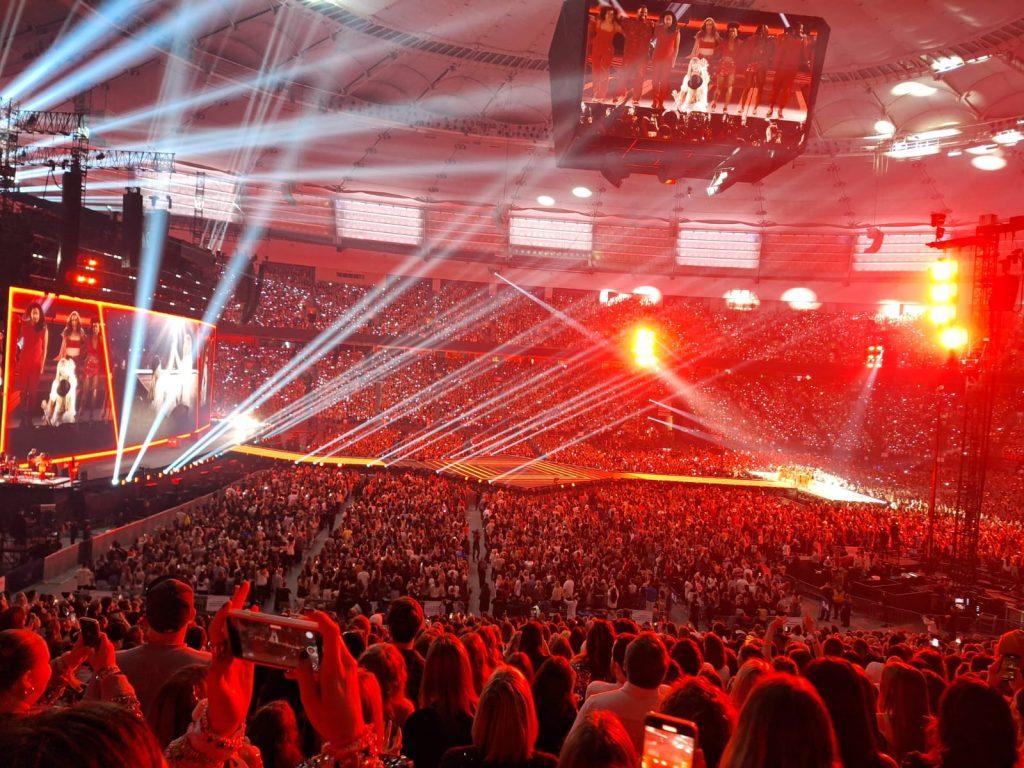
The final performance took place at BC Place in Vancouver on Dec. 8, bringing to an end a tour that began in Glendale, Arizona, in March 2023. By the time Swift took her last bow, the numbers had already placed the production in a category of its own. Pollstar estimated the tour grossed about $2.2 billion across 149 shows, making it the highest-grossing tour in history. More than 10 million tickets were sold, a threshold that underlined not only the scale of demand but also the rarity of a tour capable of sustaining global frenzy for so long.
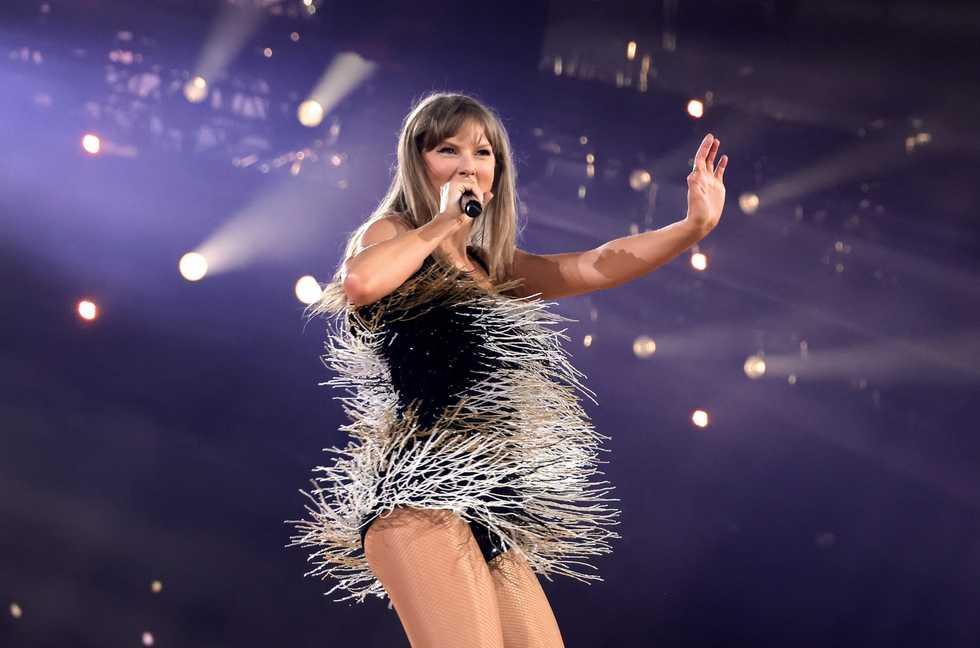
Yet the magnitude of the “Eras Tour” cannot be explained by numbers alone. It was, from the start, more than a conventional concert cycle built around a single new album. Swift designed the show as a sweeping retrospective of her catalog, dividing the performance into distinct “eras” tied to the aesthetic and emotional identity of different albums. The result was part pop spectacle, part autobiographical theater and part communal ritual. Audiences were not simply attending a concert. They were participating in a carefully staged act of memory.
That structure helped make the tour unusually resilient. Most major tours rely on the momentum of a recent hit record and fade as the album cycle cools. Swift’s concept did the opposite. By drawing on multiple phases of her career, she turned nostalgia into an engine of demand. Fans arrived dressed for specific eras, traded friendship bracelets and treated each concert as an event with its own social language. In effect, the audience extended the show beyond the stadium.
This was also a tour that landed at a moment when the live music business was hungry for a new benchmark. The pandemic had disrupted touring economics, strained venue operations and sharpened questions about ticketing, pricing and fan access. The “Eras Tour” became both a commercial recovery story and a stress test for the industry’s infrastructure. Its launch exposed the fragility of ticketing systems when demand reached extraordinary levels, and the scramble for seats quickly became part of the narrative.
That early ticketing chaos could have damaged the tour’s image. Instead, it amplified it. Scarcity intensified desire. Public frustration over access was real, but it also reinforced the sense that this was not just another blockbuster tour. It was a cultural event with the force of a major sports final or a global film premiere. In city after city, attendance became a marker of participation in a broader moment.
Economically, the tour’s footprint reached far beyond the concert business. Hotels, restaurants, airlines, ride-share services and local retailers in host cities all reported boosts tied to Swift’s arrival. Economists and city officials began measuring what some called the “Taylor Swift effect,” an indication of how a single touring artist could move local spending at scale. That kind of spillover is not entirely new in entertainment, but the breadth and consistency of it during the “Eras Tour” was striking.
The phenomenon also reflected Swift’s uncommon control over narrative. Few artists have managed to merge music, branding, fan community and media attention with such discipline. Throughout the tour, she sustained interest not only through the concerts themselves but through surprise songs, set-list changes, rerecorded albums and the eventual release of a concert film. Even when she was not physically on stage in a given city, the tour remained present in feeds, headlines and fan discourse. It functioned as a rolling media ecosystem.
Artistically, the tour succeeded because it balanced scale with intimacy. The production was enormous, yet it repeatedly returned to the idea of personal connection. Swift moved through different versions of herself as songwriter and performer, but the emotional core of the show remained recognizable: heartbreak, ambition, reinvention, regret and self-mythology. In a stadium setting, where intimacy is usually the first casualty, the “Eras Tour” managed to make personal storytelling feel legible even from the upper deck.
That matters in understanding why the tour endured. Spectacle alone can sell tickets once. It rarely sustains nearly two years of global devotion. Swift’s deeper advantage was that her audience had been trained over time to experience her catalog as a shared personal archive. Each era came with its own emotional memory for listeners, and the concert transformed those individual memories into a collective performance.
The final Vancouver show therefore carried an unusual emotional weight. Endings are part of the business of touring, but this one felt larger because the “Eras Tour” had become a long-running public narrative. It tracked not just Swift’s music but her cultural centrality. During the tour’s lifespan, she released new work, continued her rerecording project and remained a constant subject of entertainment, business and even political conversation. The tour did not merely reflect her relevance. It reinforced and enlarged it.
It also marked the culmination of a rare phase in an artist’s career, one in which commercial power, critical standing and fan loyalty converged almost perfectly. Pop stars often peak in one dimension at a time. Some dominate charts without commanding the road. Others become revered live performers after their commercial apex. Swift, during the “Eras” period, operated with all three forms of power at once. That convergence is one reason the tour now sits less as a successful album cycle and more as a historical marker in the business of popular music.
For the touring industry, the implications are immediate. Promoters and managers will look at the “Eras Tour” and ask which elements can be replicated: the career-spanning concept, the deep fan rituals, the cinematic extension, the eventization of every stop. But much of what made the tour work cannot be easily copied. It depended on a catalog broad enough to sustain the concept, a fan base large enough to globalize it and an artist disciplined enough to control tone and timing across every platform.
That does not mean its influence will be limited. On the contrary, the “Eras Tour” is likely to accelerate a shift toward tours as multi-format cultural franchises rather than simple live performances. Concert films, exclusive merchandise, citywide activations and online fan participation are no longer side elements. They are now part of the core architecture of a major tour.
Swift’s closing night in Vancouver also invited a simpler reading. Beyond the billion-dollar headlines and the business-school case study, the final show was the end of a specific relationship between artist and audience. For nearly two years, the “Eras Tour” gave fans a way to gather inside a version of Swift’s career that was at once nostalgic and present-tense. It offered reassurance through repetition and surprise through variation. By the end, the show had become familiar enough to feel ritualistic and large enough to feel historic.
Its legacy will likely rest on both dimensions. It was a tour of immense financial consequence, and it was a tour that altered the emotional scale of pop performance. It proved that catalog could be narrative, fandom could be infrastructure and a concert could become, in effect, a global season of culture.
Now that it is over, the question is not whether the “Eras Tour” was historic. The evidence on attendance, revenue and influence has already settled that point. The more interesting question is what follows. For Taylor Swift, the end of the tour closes one of the most dominant chapters of any contemporary music career. For the industry, it leaves behind a new standard that may be admired more easily than matched.
When Swift exited the stage in Vancouver, she was ending a run that had long since moved beyond entertainment into the territory of phenomenon. The stadium lights went down. The records remained.