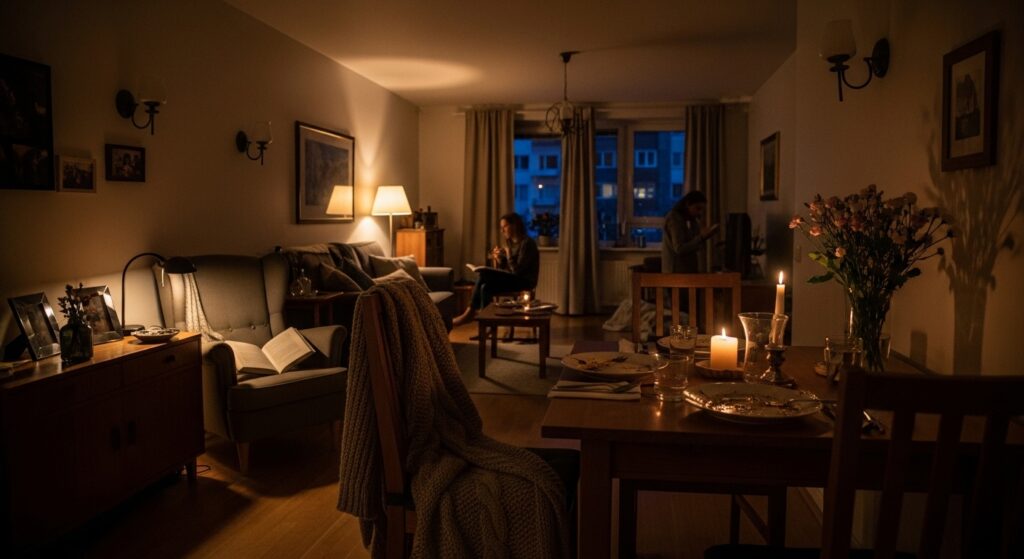
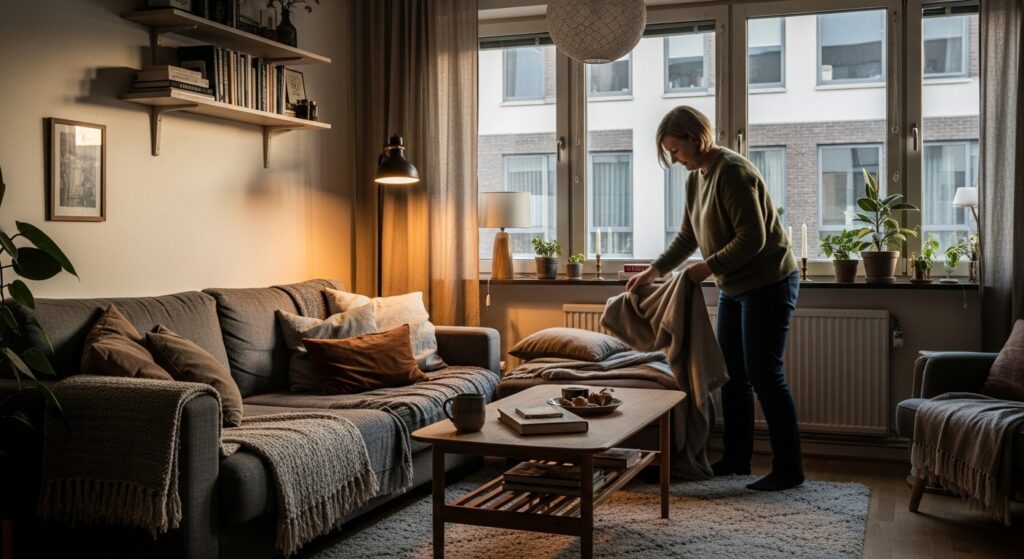
Warm lighting, layered textures and deeply personal interiors are reshaping how people want to live, as homes become less about display and more about comfort, refuge and emotional ease.
For years, the aspirational home was often defined by restraint. Clean lines, sparse surfaces, cool tones and immaculate spaces dominated social media feeds, magazine spreads and real-estate marketing. The visual language was polished, controlled and undeniably photogenic. But in many households, that ideal also came to feel distant from daily life. A room could look perfect and still feel cold. A home could appear expensive and still fail to offer comfort.
Now a different mood is taking hold. Across cities and suburbs, among young renters, first-time buyers and families renovating long-term residences, the idea of the “cozy home” is moving from niche preference to mainstream aspiration. It is showing up in design choices large and small: softer lighting, warmer paint, deeper colors, heavier curtains, textured fabrics, vintage wood, bookshelves, layered bedding and rooms arranged for conversation rather than display. The shift is not simply decorative. It reflects a broader change in how people think about home itself.
The cozy home trend arrives at a moment when domestic space is carrying more emotional weight than before. For many people, the home is no longer only a place to sleep between commutes. It is also an office, a retreat, a social setting, a recovery space and, increasingly, a statement about how one wants to feel. That has encouraged a move away from interiors that look pristine in photographs but demand constant maintenance in real life. In their place comes a more forgiving aesthetic, one that prizes warmth, softness and individuality.
The appeal is easy to understand. After years of economic strain, political tension and digital overload, people are looking for environments that calm rather than impress. Design is responding accordingly. The cozy home is less interested in perfection than in atmosphere. It invites use. A chair is meant to be sat in, a blanket to be pulled over cold legs, a lamp to cast a pool of light in the evening rather than flood a room with brightness. Shelves hold objects with history, not just objects with symmetry. Kitchens are expected to feel lived in. Bedrooms are judged by how well they restore, not how sharply they photograph.
This does not mean comfort has replaced style. On the contrary, coziness has become a style in its own right, but one with a distinctly emotional vocabulary. The new interiors lean into sensory experience. Linen, wool, boucle, aged timber, brushed metals and natural stone all create a sense of tactility that sleek surfaces often cannot. Color palettes are warming too, with creams, browns, muted greens, ochers, terracottas and dusty blues replacing the dominance of bright white and cool gray. These choices make rooms feel grounded, particularly in an era when many people spend much of their day looking at flat digital screens.
Lighting has emerged as one of the clearest signals of the trend. Overhead brightness is giving way to layered illumination: table lamps, shaded sconces, dimmable fixtures and candles that create intimacy and softness. Designers say the goal is no longer to make a room uniformly bright, but to make it feel inhabitable at different times of day. Morning light, afternoon calm and evening quiet each require a different atmosphere. In the cozy home, light is not just functional. It is emotional architecture.
Furniture is shifting as well. Hard-edged statement pieces are increasingly sharing space with deeper sofas, rounded forms, oversized armchairs and dining layouts intended for longer conversation. Even in small apartments, people are trying to carve out corners for reading, resting or simply withdrawing from the pace of the day. Window seats, breakfast nooks, layered rugs and low, warm lamps help create these zones of retreat. The effect is subtle but significant: the home becomes less like a curated set and more like a landscape of moods.
Another reason the trend is expanding is that it gives permission for homes to look personal again. Minimalism often favored visual discipline over memory. Cozy interiors move in the other direction. They accommodate old ceramics, inherited furniture, secondhand finds, travel objects, family photographs and shelves full of books. Rooms look collected over time rather than assembled in a single shopping trip. In this sense, the cozy home also aligns with a quiet reaction against disposable design. People are showing more interest in pieces that age well, carry patina or hold sentimental value.
That preference intersects with another cultural shift: the desire for sustainability that feels practical rather than performative. Buying fewer things, keeping them longer, repairing upholstery, refinishing wood and mixing old with new can all reduce waste while making interiors feel more layered and distinctive. Vintage furniture has gained fresh appeal not only because it offers character, but because it resists the anonymous sameness that mass-market interiors can produce. A worn oak table, a faded rug or an old brass lamp can make a room feel settled in ways new items often need years to achieve.
The trend also reflects changing social behavior. Entertaining at home has regained importance in many places, partly because dining out is more expensive and partly because people want social experiences that feel intimate and less performative. That has pushed living rooms and kitchens to become warmer, more flexible gathering spaces. The ideal is not formal hosting but relaxed hospitality: friends crowded around a kitchen island, children moving between rooms, music low in the background and lighting soft enough to make everyone linger. The cozy home supports this by favoring comfort over spectacle.
Yet the rise of coziness is not only about softness and nostalgia. It is also about function. As more people expect to remain in their homes longer, design choices are being made with longevity in mind. Storage matters more. Durable fabrics matter more. Easy-to-use layouts matter more. A room that feels calming but cannot absorb daily life will not remain calm for long. The most successful cozy interiors therefore balance romance with practicality. They use washable textiles, warm but resilient finishes, flexible furniture and layouts that can support work, family life and rest without constant rearrangement.
There are, however, tensions within the trend. As “cozy” becomes marketable, retailers are eager to package it into a formula of neutral throws, beige ceramics and carefully distressed accessories. That can flatten a deeply personal concept into a shopping category. True coziness is harder to mass-produce because it depends on habit, memory and the specific rhythms of the people who live in a space. A home feels warm not only because of what is purchased, but because of what is allowed: signs of use, meaningful clutter, imperfect arrangements and the slow accumulation of personality.
This is why the best cozy homes rarely look identical. One may lean country, another urban, another contemporary, another nostalgic. Some draw from English cottage traditions, others from Scandinavian softness, Japanese calm or Mediterranean warmth. The unifying element is not a single look but a shared intention. These homes are designed to lower the emotional temperature of the outside world. They seek to make people exhale.
For architects, designers and retailers, the message is becoming clearer. Consumers still care about beauty, but beauty alone is no longer enough. They want rooms that support recovery, intimacy and real life. They want homes that photograph well, perhaps, but more importantly homes that feel better at 9 p.m. on a difficult Tuesday than they do in a staged afternoon shoot. That is a more demanding brief, and perhaps a more honest one.
The rise of the cozy home says something larger about the present moment. In an age of noise, acceleration and public performance, the private interior is being asked to do more emotional work. People are searching for softness not as indulgence, but as infrastructure. Warm light, textured fabric, familiar objects and quieter rooms are becoming tools for everyday resilience.
In that sense, cozy design is not a retreat from the world so much as a response to it. It acknowledges that comfort is not trivial, that atmosphere shapes behavior, and that a well-lived home can offer a form of stability when much else feels unsettled. The new dream home may still be beautiful, but its highest ambition is no longer to look untouchable. It is to feel human.