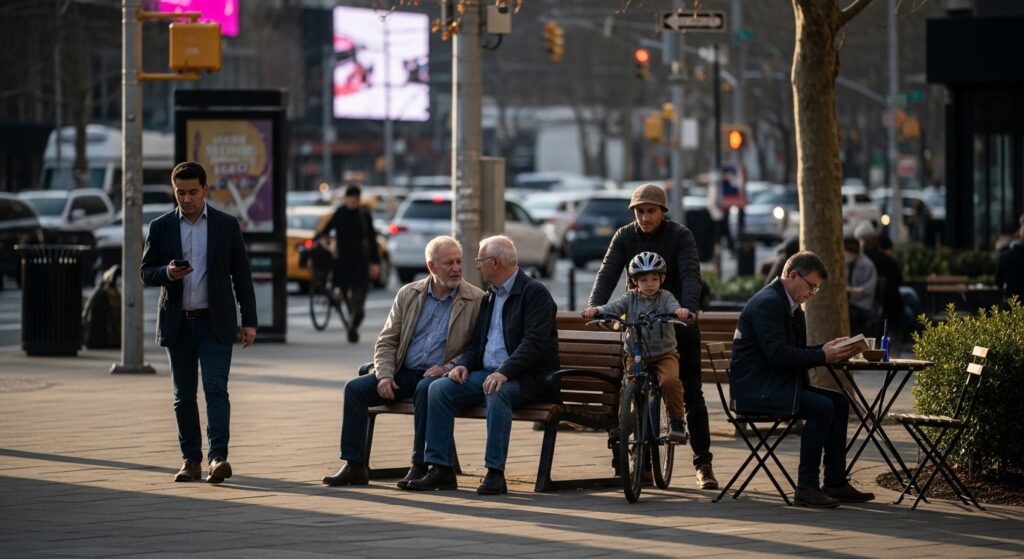
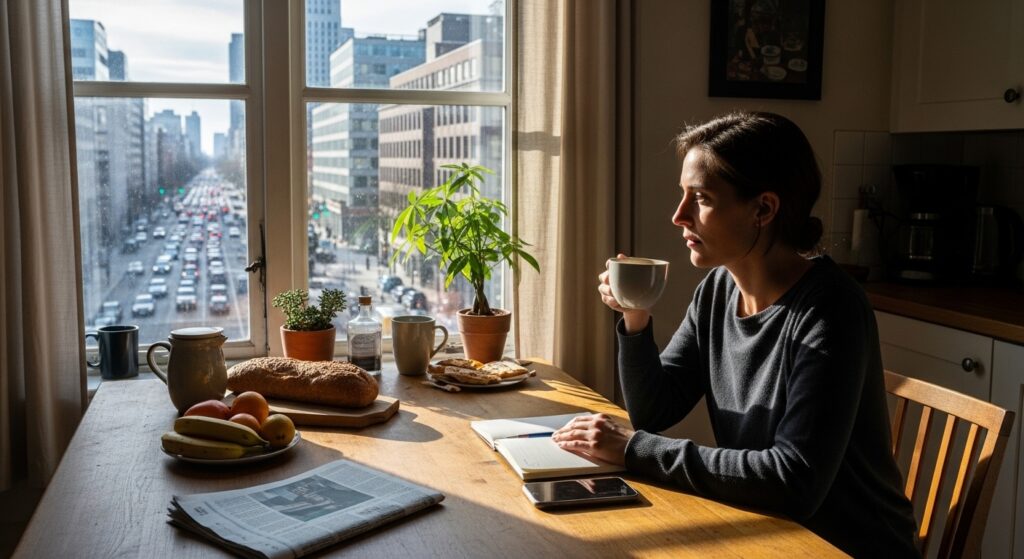
As burnout, digital fatigue and social disconnection spread across modern life, “slow living” is re-emerging less as a soft aesthetic and more as a practical response to a culture built on speed.
For years, slow living was easy to dismiss as an indulgence of the affluent: linen curtains, handmade ceramics, long breakfasts and social media feeds arranged in muted earth tones. It was often packaged as an aspirational mood rather than a serious way of organizing daily life. But the idea has returned with new force, and this time its appeal appears broader, more urgent and less decorative. In homes, workplaces and online culture, people are again talking about rest, limits, routine, attention and the right to move through life at a human pace.
The renewed fascination with slow living comes at a moment when many people feel overwhelmed by the opposite. Work has become more porous, extending beyond the office into kitchens, bedrooms and weekends through smartphones, messaging apps and always-on expectations. Social media, once sold as connection, increasingly leaves users overstimulated, distracted or emotionally depleted. Even leisure is often treated like a performance metric, tracked, optimized and turned into content. In that environment, slow living is no longer being embraced merely as a lifestyle fantasy. It is increasingly framed as a corrective.
At its core, slow living is not about doing everything slowly. It is about doing fewer things with more intention. That can mean cooking at home instead of relying on convenience, taking walks without audio in one’s ears, limiting notifications, protecting evenings from work, repairing objects instead of replacing them, or making room for relationships that are not mediated by screens. The philosophy is not anti-ambition, nor is it simply nostalgia for a pre-digital age. Rather, it reflects a growing suspicion that constant acceleration has costs that modern life has underestimated.
Those costs are becoming harder to ignore. Burnout is now widely recognized in the language of work and health. The World Health Organization classifies burnout in ICD-11 as an occupational phenomenon resulting from chronic workplace stress that has not been successfully managed. That definition matters because it places exhaustion, cynicism and reduced professional efficacy at the center of contemporary work culture. It does not describe private weakness. It describes a structural condition of life under pressure.
Recent surveys suggest that the strain extends beyond the workplace itself. The American Psychological Association’s 2025 Stress in America report focused on what it called a crisis of connection, arguing that social division and loneliness are intensifying stress for many adults. In Britain, Ofcom’s latest media attitudes research points to a digital environment that remains deeply embedded in daily life even as confidence in it appears to weaken. Adults are spending an average of four and a half hours online each day, while more users have grown less active in posting, sharing or commenting publicly. That shift suggests not a retreat from technology, but a more wary relationship with it.
This is where slow living re-enters public conversation with unusual force. Its new popularity appears less like a trend cycle and more like an adaptation to overload. People are not rejecting modern life outright. They are trying to renegotiate its terms. In practical terms, that means reducing friction, protecting attention and resisting the logic that every moment should be productive, visible or monetized.
The resurgence can be seen first in the home. During the past decade, the home was transformed into office, classroom, gym, studio and entertainment hub all at once. As a result, many people began to reconsider what domestic space was for. Slow living has benefited from that reassessment. There is rising interest in quieter interiors, less clutter, more durable objects, cooking as routine rather than spectacle, and rituals that divide work time from private time. These habits are not merely aesthetic choices. They represent attempts to restore boundaries that technology and economic pressure have blurred.
Food is another area where the shift is visible. In a culture built on speed and convenience, slow living has elevated ordinary acts such as preparing simple meals, shopping locally when possible, eating without multitasking and treating food as part of rhythm rather than interruption. None of that is revolutionary on its own. What has changed is the emotional meaning attached to it. Activities once considered mundane are being revalued as forms of control and steadiness in lives that can otherwise feel fragmented.
The same logic is now influencing travel, fashion and consumption. Slow travel, for example, favors fewer destinations, longer stays and more local immersion over hurried itineraries designed for photographs. In fashion, the language of “buy less, choose well” has become more attractive amid fatigue with micro-trends and fast fashion churn. Even the rise of repair culture, secondhand shopping and interest in craft can be read through the same lens. Consumers are showing signs of wanting objects that last and routines that feel inhabitable, not just new stimuli.
That does not mean slow living is free of contradictions. Much of its visibility still comes from the very platforms whose pressures it claims to resist. A carefully edited video about unplugging is still content. A minimalist kitchen posted for millions to admire can turn simplicity into another standard to perform. In that sense, slow living risks becoming absorbed into the same consumer machinery it critiques. A lifestyle marketed through expensive products, perfect homes and curated leisure can exclude the very people most in need of relief from speed and stress.
This tension is central to whether the movement can mature. If slow living remains only an aesthetic of privilege, it will have limited reach and limited credibility. Many workers cannot simply log off earlier, downshift their careers or trade convenience for time. Parents balancing several jobs, caregivers, service workers and people facing high housing costs often do not have the luxury of slowness in any romantic sense. For them, the appeal of slow living lies not in picturesque rituals but in smaller, harder-won acts: saying no to unnecessary demands, creating screen-free time, eating one meal in peace, or establishing routines that reduce chaos.
That is why the most serious version of slow living is less about escaping the world than about redesigning everyday life within it. It asks whether workplaces can respect boundaries, whether cities can create more public space for walking and rest, whether schools can reduce the pressure to treat childhood as competition, and whether technology can be used more deliberately instead of by default. It is as much a question of systems as of personal choice.
Work culture may be the sharpest test. Research from the Chartered Institute of Personnel and Development in 2025 found that stress-related absence remains common in organizations, with heavy workloads among the leading causes. Mental ill health continues to rank prominently in both short- and long-term absence. These findings help explain why language once dismissed as self-care rhetoric is moving into management, policy and public health. In that context, slow living is not only about candles and journals. It overlaps with debates about flexible working, workload, autonomy and what a sustainable job should look like.
Younger adults appear especially receptive to the shift, in part because they have grown up inside the architecture of permanent connectivity. For many of them, the promise of optimization has lost some of its shine. Hyper-efficiency, personal branding and productivity culture can look less like liberation than like another trap. The appeal of analog hobbies, quieter routines and deliberate limits reflects a desire to reclaim time from systems designed to fragment it. It is a search for texture in a life flattened by feeds.
Businesses have noticed. Hospitality brands now sell stillness. Retailers promote timelessness, ritual and intentional consumption. Wellness companies market digital detoxes, sleep retreats and guided pauses. Some of this reflects genuine demand. Some of it is simply the market discovering another mood to monetize. But even commercial appropriation points to the same fact: slowness has become culturally valuable again because speed has become exhausting.
Whether slow living endures will depend on how it evolves. If it remains a polished visual identity, it may fade when another style takes its place. If, however, it continues to answer real pressures in work, technology and mental health, it could become something more durable: a quiet social correction after years of overstimulation. Its strength lies in its modesty. It does not promise transformation through intensity. It proposes that life becomes more livable when not every hour is optimized, every feeling shared or every silence filled.
The return of slow living, then, says less about romance than about exhaustion. It suggests that large numbers of people are no longer convinced that faster is wiser, fuller is richer, or more connected is more whole. In a culture that measures value through output, visibility and response time, the desire to slow down can look almost radical. Yet it may be one of the most practical instincts of the present moment: not to withdraw from life, but to inhabit it more fully.