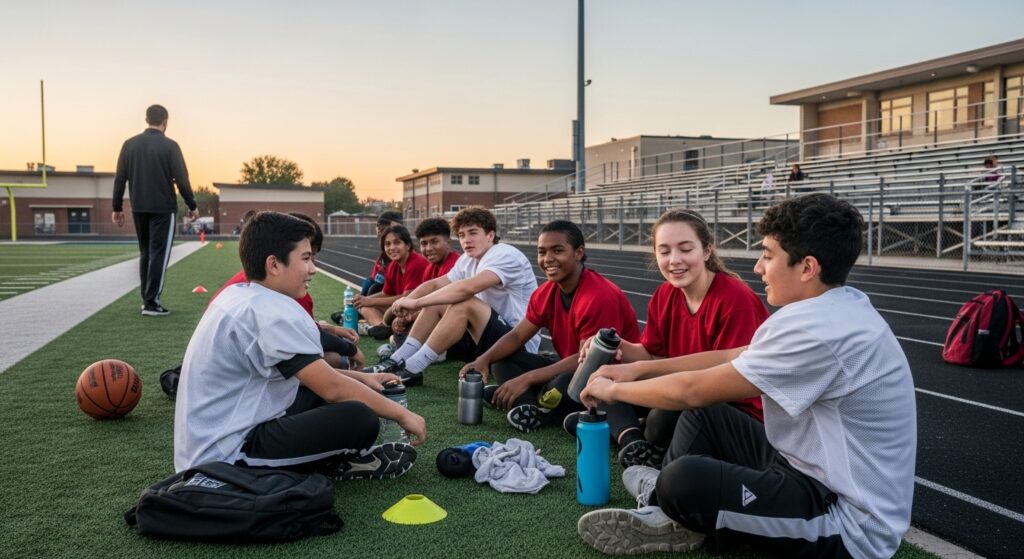
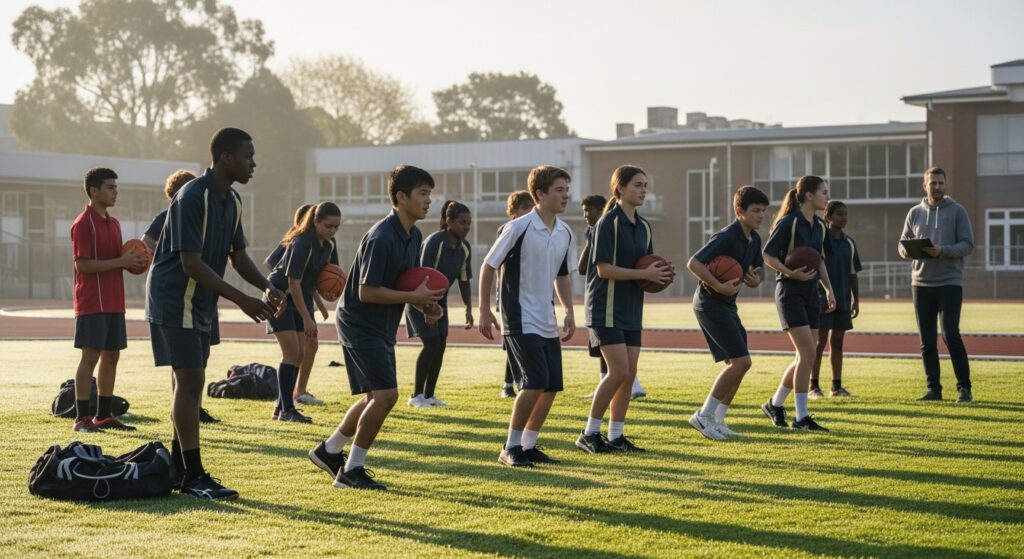
From better physical health to stronger discipline, teamwork and emotional resilience, sports can shape student life far beyond the scoreboard.
For students, sports are often seen first through the narrow lens of competition: a race won, a match lost, a trophy lifted, a season remembered. But the real value of sports in student life runs deeper than medals or final scores. On school grounds and neighborhood courts, in swimming pools, on dusty football fields and indoor gym floors, sports provide one of the most practical and powerful forms of education available to young people. They build healthier bodies, but they also sharpen minds, strengthen character and create habits that can last long after graduation.
At a time when students face mounting academic pressure, digital distraction and growing concerns about mental health, sport offers something increasingly rare: structured movement, social connection and a sense of purpose outside the classroom. It asks students to be present. It teaches them how to work toward a goal, how to cope with setbacks and how to keep going when effort becomes uncomfortable. In that way, sports are not separate from education. They are part of it.
The most immediate benefit is physical health. Regular participation in sports helps students develop strength, stamina, coordination and flexibility. It encourages active lifestyles at a stage of life when routines are still being formed. Students who play sports are more likely to spend less time sitting, reduce unhealthy habits and become more aware of how sleep, food and exercise affect performance. These lessons can have lifelong consequences. A student who learns to value movement early is better equipped to maintain good health as an adult.
Yet the benefits do not stop at the body. Physical activity is closely linked to cognitive performance, and many students discover that sports improve their ability to focus, manage energy and sustain concentration. Exercise increases blood flow to the brain and can help reduce fatigue and mental stress. After training or games, students often report feeling more alert, more organized and better able to handle academic tasks. The discipline required in sports can also carry into the classroom. Learning plays, following practice schedules and pushing through hard drills all reinforce habits that support studying: attention, consistency and delayed gratification.
Sports also teach time management in a way few lectures can. Student-athletes quickly learn that success requires planning. Homework, training sessions, travel, rest and family obligations must all fit into limited hours. Those who continue with sports over time often become better at prioritizing tasks and using time efficiently. This does not mean the balance is always easy. In fact, it is often difficult. But that difficulty is itself part of the training. Students learn that achievement usually depends not on raw talent alone, but on routine, commitment and careful choices.
Perhaps no lesson in sports is more important than teamwork. Even in individual sports such as tennis, athletics or martial arts, students are usually embedded in a wider network of coaches, training partners and school communities. They learn that personal success is rarely achieved alone. In team sports, this lesson becomes unmistakable. Players must communicate, trust one another and understand their roles. They must sometimes sacrifice individual recognition for the benefit of the group. In the process, students practice cooperation in a real and emotionally meaningful setting. These are not abstract values written on a classroom poster. They are tested every day in training and under pressure in competition.
Leadership grows naturally in that environment. A student does not need to wear a captain’s armband to learn how to lead. Leadership in sports can mean encouraging a struggling teammate, setting the tone in practice, staying calm in difficult moments or taking responsibility after a mistake. It can also mean listening, adapting and showing respect. Students exposed to these situations begin to understand that leadership is not simply authority. It is reliability, accountability and example.
Sports are equally important for emotional development. Students who play regularly become familiar with both success and disappointment. They win and lose. They make crucial mistakes in front of others. They improve slowly, sometimes painfully. They discover that effort does not always produce immediate results. These experiences can be frustrating, but they are also deeply educational. Sport teaches resilience because it gives students repeated opportunities to recover. A poor performance on Friday does not end the season. There is another practice, another race, another chance to do better. Over time, this cycle builds emotional endurance and a healthier relationship with failure.
That matters far beyond athletics. Students who understand that setbacks are temporary are often better prepared for the broader uncertainties of life. They are less likely to be defined by one bad day, one disappointing grade or one rejection. Sports help normalize struggle. They show that progress is often uneven, and that confidence is built through repetition, not granted at the beginning.
Mental health is another major area where sports can make a difference. For many students, physical activity provides relief from anxiety, social isolation and academic stress. A practice session can offer a structured break from screens and exams. The rhythm of exercise, the presence of teammates and the satisfaction of physical effort can improve mood and reduce tension. Sports can also provide identity and belonging, especially for students who feel disconnected elsewhere. Being part of a team or training group can create community, routine and emotional support.
Still, the benefits are not automatic. The culture surrounding youth sports matters enormously. When adults place too much emphasis on winning, scholarships or elite performance, sports can become a source of pressure rather than growth. Students may feel overwhelmed, excluded or afraid to fail. Injuries, burnout and unhealthy comparison can follow. That is why schools, coaches and parents have a responsibility to keep student well-being at the center. The most effective sports environments are those that value development over perfection, participation over status and learning over humiliation.
Access is another challenge. Not every student has the same opportunity to play. Equipment costs, transportation, limited facilities and unequal school resources can all become barriers. In some communities, girls and students with disabilities still face additional obstacles to full participation. If sports are truly to serve education, they must be inclusive. Schools and local governments need to treat physical activity not as an extra privilege for a few, but as an essential part of student development for all.
When done well, sports can also help bridge social divides. On teams, students often interact with peers they might not otherwise know well. Differences in background, academic level or personality can become less important when a shared goal is at stake. Mutual effort creates respect. A student who struggles in class may shine on the field; a quiet classmate may emerge as a fierce competitor; a newcomer may find friendship through training. In these moments, sports can reshape how students see one another and themselves.
There is also a simple but significant joy in play. Amid conversations about performance metrics and educational outcomes, that joy should not be overlooked. Running, jumping, passing, swimming, striking and moving with purpose can be fun. For students, that sense of enjoyment is not trivial. It is often what makes healthy habits sustainable. A teenager is far more likely to remain active when exercise is tied to friendship, challenge and pleasure rather than obligation alone.
In the end, the benefits of playing sports for students extend well beyond the final whistle. Sports can improve health, sharpen concentration, teach discipline, build resilience and create community. They can prepare students not only to compete, but to collaborate, persist and grow. In a world where young people are asked to navigate increasing complexity, those lessons are invaluable.
Not every student will become a champion, and that is not the point. The real promise of sports lies in what they give ordinary students every day: a stronger body, a steadier mind and a better understanding of what it means to strive, to belong and to keep moving forward.