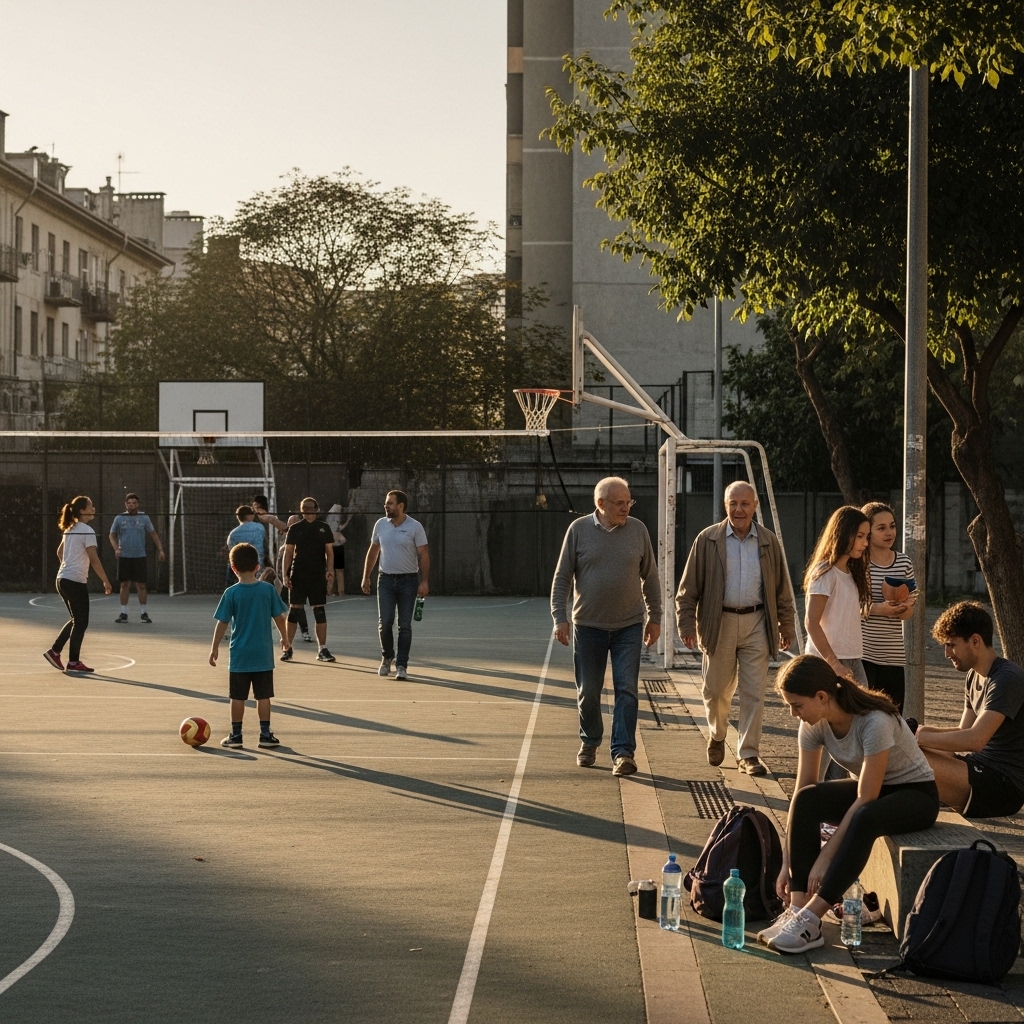
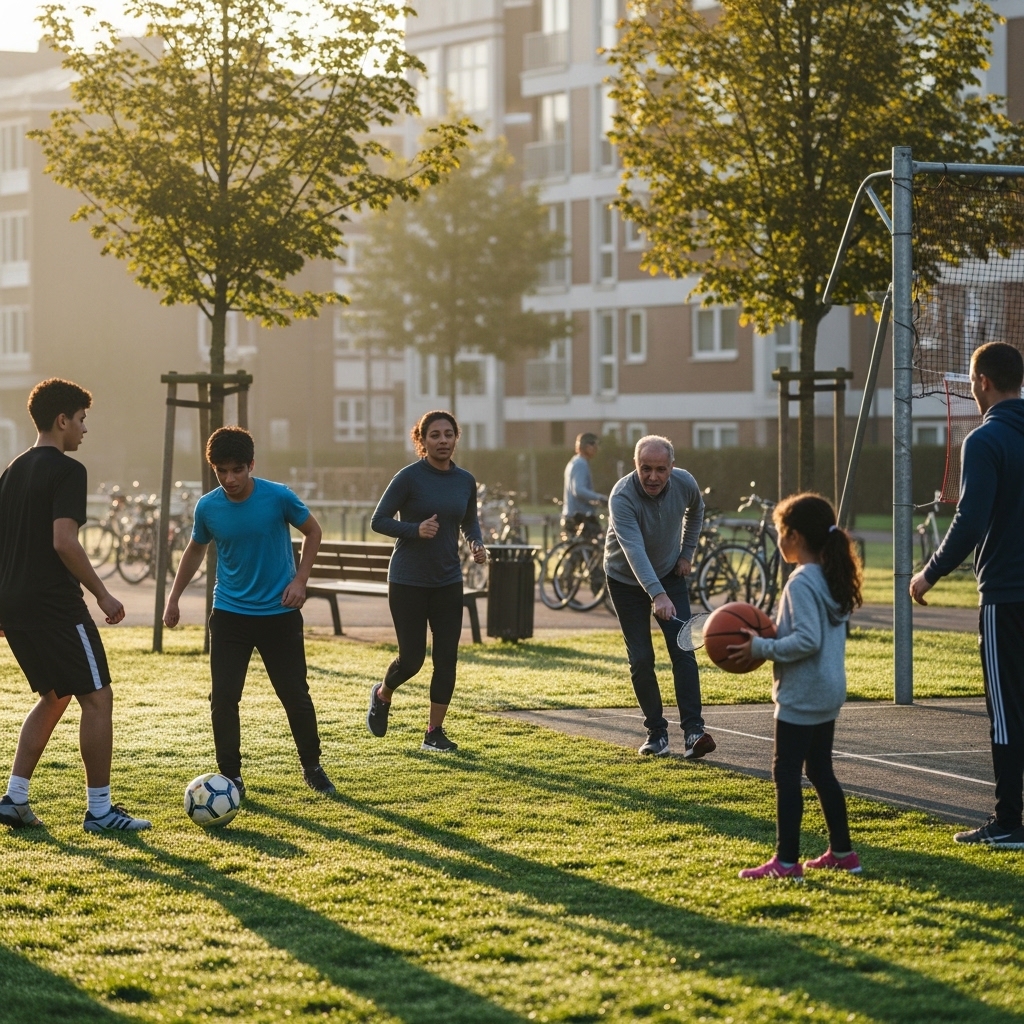
From neighborhood parks to crowded cities, regular participation in sports is increasingly recognized as a practical way to improve health, strengthen communities and build discipline in everyday life.
In many parts of the world, sports are often associated with professional leagues, packed stadiums and elite competition. Yet for most people, the real significance of sports lies far from television cameras or championship trophies. It is found instead in the morning jog before work, the evening football game in a neighborhood field, the school basketball practice that teaches teamwork, or the weekend badminton match that keeps older adults active and socially connected. In daily life, sports serve a wider purpose than entertainment. They shape routines, protect health and create a shared social space in an age when many people are becoming more sedentary and isolated.
One of the most immediate benefits of sports is physical health. Modern life, particularly in urban areas, often encourages inactivity. Many jobs require long hours in front of computers, commuting reduces time for exercise, and digital entertainment keeps people indoors. Sports offer a structured and often enjoyable response to these habits. Unlike repetitive exercise routines that some people struggle to maintain, sports tend to include competition, goals and social interaction, all of which make regular movement easier to sustain. Whether it is swimming, tennis, football, volleyball or cycling, sport raises heart rate, improves endurance, builds muscle strength and helps manage weight. Over time, these effects can lower the risk of chronic illnesses such as heart disease, diabetes and hypertension.
The value of sports, however, goes beyond the body. Mental health has become a growing concern across age groups, and sports can play an important role in reducing stress and improving emotional well-being. Physical activity stimulates the release of chemicals in the brain associated with better mood, but the psychological effects are broader than biology alone. Sports provide a break from routine pressures, whether those pressures come from school, work or family responsibilities. They create a focused space where attention shifts away from anxiety and toward movement, skill and teamwork. For many people, that sense of immersion can be deeply restorative. A regular game or training session can become a stabilizing rhythm in life, offering confidence, emotional release and a sense of progress.
For children and adolescents, sports can be especially influential. Schools and families often emphasize academic achievement, sometimes at the expense of physical development and social learning. Yet sports teach lessons that classrooms cannot always deliver in the same way. Young athletes learn discipline by showing up on time, practicing regularly and respecting rules. They learn resilience by losing games and trying again. They learn cooperation by depending on teammates and understanding that individual talent rarely succeeds without collective effort. These lessons are not abstract. They become habits that can carry into adult life, affecting how people handle pressure, communicate with others and respond to setbacks.
Sports also help shape identity and self-esteem. This is particularly important during adolescence, when many young people struggle with confidence, peer pressure and a rapidly changing sense of self. A child who may not excel academically can discover purpose and recognition through sport. A teenager who feels socially disconnected can find belonging in a team. The court, field or track can become a place where effort is visible and rewarded, regardless of background. In this way, sports can serve as a social equalizer, giving people opportunities to develop ability, leadership and pride that might otherwise remain hidden.
Among adults, the role of sports often changes but does not diminish. For workers facing long hours and rising stress, sports can become a way to reclaim balance. A lunchtime run, a company football match or an early-morning fitness class may seem modest, but such routines can improve concentration, sleep quality and overall energy. In many workplaces, informal sports have also become a tool for team building. Shared physical activity breaks down hierarchy, encourages communication and creates camaraderie that formal meetings cannot easily produce. When colleagues meet outside the logic of deadlines and targets, they often build trust in a more natural way.
For older adults, sports and recreational physical activity can be crucial in maintaining independence and quality of life. Low-impact sports such as walking football, table tennis, golf, swimming or tai chi help preserve mobility, balance and coordination. They can reduce the risk of falls and support cardiovascular health, but just as importantly, they can combat loneliness. Retirement, reduced mobility or the loss of a partner can leave many older people socially isolated. Community sports programs provide routine, interaction and purpose. They remind participants that aging does not require withdrawal from public life. Instead, sport can help extend active participation in society.
The social importance of sports is visible not only at the individual level but also across neighborhoods and nations. In communities marked by economic stress, social division or limited public space, sports can offer one of the few accessible forms of connection. A local match can bring together people of different ages, incomes and backgrounds around a common activity. Public courts and playing fields often serve as informal meeting places where relationships are built and local identity is reinforced. Even in divided societies, sports can create moments of shared pride and mutual recognition. They do not solve structural problems on their own, but they can open channels for dialogue and belonging.
This communal function is one reason why the decline of accessible sports infrastructure can have wider consequences. When parks are neglected, school programs are cut, or urban development leaves little room for recreation, the loss is not merely aesthetic. It removes a low-cost path to health, social connection and youth development. In many cities, access to sports increasingly depends on income. Families with resources can afford coaching, private facilities and specialized equipment, while others must rely on overcrowded public spaces or go without. That gap can deepen inequality over time. If sports are truly important to daily life, then access to them should be treated less as a privilege and more as a public good.
Technology has complicated this picture. On one hand, fitness apps, online coaching and wearable devices have helped many people track activity and stay motivated. On the other hand, screens compete directly with physical play for time and attention, especially among younger users. Hours spent on phones, gaming systems and streaming platforms can gradually replace informal outdoor activity that once happened naturally after school or work. The challenge for families, schools and policymakers is not to reject technology altogether, but to prevent it from displacing movement, face-to-face interaction and unstructured play. Sport remains one of the clearest ways to restore that balance.
Importantly, sports do not need to be intense, expensive or professional to matter. Their value in daily life comes from consistency rather than spectacle. A short game played several times a week may do more for a person’s health and happiness than an occasional burst of ambitious exercise. The same is true socially. A neighborhood volleyball match with familiar faces may build stronger ties than a rare major event. The most meaningful sports culture is often the least glamorous: parents coaching after work, teenagers practicing on worn concrete courts, older adults gathering at sunrise in public parks. These scenes reveal sport not as performance, but as habit, care and participation.
As governments and institutions debate public health, education and social cohesion, sports deserve a more central place in the conversation. Their contribution is not limited to medals, rankings or commercial success. In ordinary life, sports help people move, connect, cope and grow. They teach patience and self-control, offer relief from stress, and create communities out of routine contact. In an era shaped by speed, isolation and digital overload, that may be more valuable than ever.
The importance of sports in daily life lies precisely in their simplicity. They ask people to show up, to move, to try, to lose, to improve and to return the next day. In doing so, they cultivate healthier bodies, steadier minds and stronger communities. For millions, that is not a side benefit of modern life. It is part of what makes daily life sustainable, humane and shared.”””