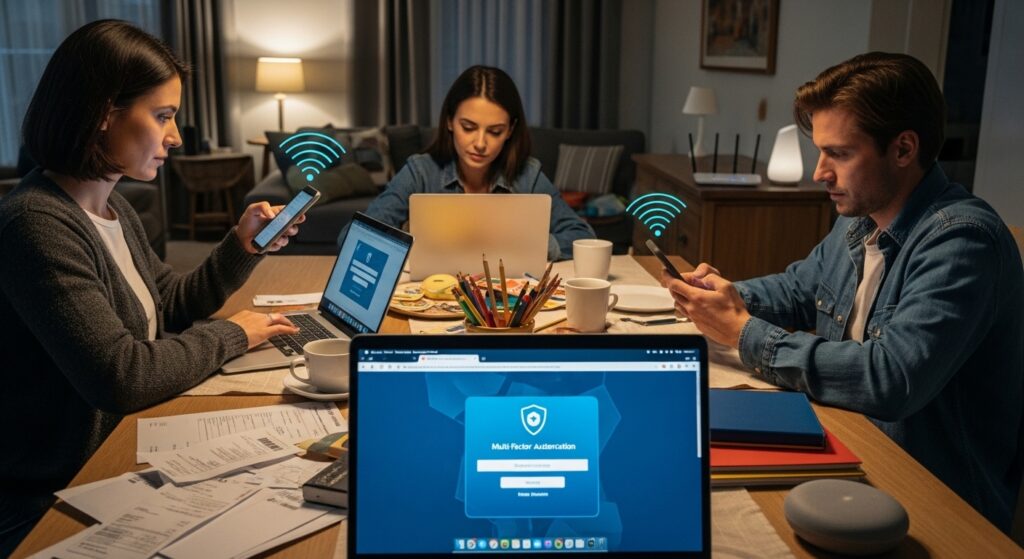

As governments, businesses and households move deeper into connected systems, cyber threats are no longer a technical issue on the margins. They are now a central risk to daily life, economic stability and national security.
Cybersecurity was once treated as a specialist concern, discussed mainly by IT departments, software engineers and a narrow circle of government officials. In the digital age, that is no longer possible. The expansion of connected devices, cloud computing, online finance, remote work and artificial intelligence has turned cybersecurity into one of the defining public-interest issues of modern life. It matters not only because systems can be hacked, but because digital systems now underpin nearly everything people rely on.
The modern economy runs on data. Banks process transactions through interconnected networks. Hospitals store medical records digitally and depend on networked systems for appointments, diagnostics and treatment. Schools manage student information online. Businesses rely on cloud platforms for communication, payroll, inventory and customer service. Governments use digital infrastructure to deliver services, collect taxes and operate critical systems. Even households are increasingly connected through smartphones, smart televisions, home assistants, cameras and internet-enabled appliances. Every connection creates convenience, but every connection can also create vulnerability.
That vulnerability has become more visible as cyberattacks grow in scale, sophistication and impact. Criminal groups target companies with ransomware, locking up systems and demanding payment. Fraudsters steal personal data to access bank accounts, open fraudulent loans or impersonate victims. State-backed hackers are accused of probing energy grids, telecommunications systems and government databases. Disinformation campaigns exploit digital platforms to shape public opinion, deepen distrust and influence political outcomes. The digital realm is no longer simply a place for communication and commerce. It is also a contested environment where money, power and security are constantly at stake.
One reason cybersecurity matters more than ever is that the cost of failure has risen sharply. A breach is no longer just an embarrassing technical incident. It can halt hospital operations, disrupt airline schedules, expose millions of customer records or freeze a company’s ability to function. For individuals, the effects can be deeply personal. A stolen password may lead to drained accounts, identity theft, blackmail or the exposure of private information. For businesses, a cyberattack can mean regulatory penalties, legal claims, reputational damage and lost revenue. For governments, it can threaten public trust and national resilience.
The growth of remote work has expanded this challenge. When employees worked mainly inside office networks, companies had more direct control over devices, access points and security policies. Today, workers log in from homes, airports, hotels and shared spaces, often using multiple devices and cloud-based tools. This flexibility has improved productivity for many organizations, but it has also widened the attack surface. A weak home Wi-Fi password, an unpatched laptop or a convincing phishing email can provide an entry point into a much larger network. Cybersecurity now extends beyond the office firewall into the habits and decisions of individual users.
The rise of artificial intelligence adds another layer of urgency. AI can help defenders detect anomalies, monitor threats and automate responses faster than human teams alone. But it also gives attackers new tools. Phishing emails can be written more convincingly. Fraudulent voice and video impersonations can become harder to detect. Malware can be adapted more quickly. The same technological progress that improves digital services can also sharpen the capabilities of those trying to exploit them. This creates a moving target for defenders, who must protect systems that are both more advanced and more exposed than before.
Critical infrastructure makes the stakes even higher. Energy pipelines, water systems, transportation networks and telecommunications providers increasingly depend on digital control systems. In theory, this allows for efficiency, automation and better monitoring. In practice, it means cyber incidents can spill into the physical world. A digital intrusion can disrupt fuel supplies, interrupt communications or delay emergency services. The concern is no longer limited to stolen information. It includes the risk that cyberattacks could affect public safety and economic continuity in direct, visible ways.
Another reason cybersecurity matters is the sheer volume of personal information now collected, stored and traded. Every online purchase, app login, location ping, health record and streaming preference contributes to a larger digital profile. Much of this data is held by private companies, which may vary widely in their ability or willingness to protect it. Consumers often have little choice but to trust platforms with sensitive details, even when they do not fully understand how that data is stored, shared or monetized. When breaches occur, the consequences can last for years, since a stolen birth date, medical file or identity number cannot simply be changed like a password.
Small businesses are especially vulnerable. Large corporations often have dedicated security teams, legal counsel and incident-response plans. Smaller firms may lack those resources, even though they still hold valuable customer and financial data. Many operate under the mistaken belief that they are too small to be targeted. In reality, attackers often view smaller organizations as easier entry points because defenses may be weaker. A single cyber incident can be devastating for a small business, not only because of direct losses but because customers may not return once trust is broken.
Cybersecurity also matters because human behavior remains one of the weakest links in any system. People reuse passwords, click suspicious links, ignore software updates and share too much information online. Attackers understand this. Many of the most successful cyberattacks begin not with advanced code, but with deception. A fake invoice, a spoofed login page or an urgent message from what appears to be a trusted source can trick even careful users under pressure. This means cybersecurity is not merely a technical issue to be solved by software. It is also a matter of education, institutional culture and everyday discipline.
Governments have responded by tightening regulations, issuing security standards and pressuring organizations to disclose breaches more quickly. But regulation alone cannot eliminate the threat. The digital ecosystem is global, while enforcement is fragmented across borders and legal systems. Attackers can operate from jurisdictions far from their victims, making prosecution difficult. Meanwhile, technological change moves faster than many laws and compliance frameworks. This leaves a persistent gap between the speed of threats and the speed of governance.
The financial sector offers a clear example of why cybersecurity is now inseparable from public confidence. People are increasingly comfortable banking online, sending payments instantly and storing financial credentials in mobile apps. That convenience depends on trust. If users believe digital finance is unsafe, participation weakens and the efficiency gains of modern systems begin to erode. The same is true in healthcare, education, e-commerce and government services. Cybersecurity is not simply about preventing losses. It is about preserving trust in the digital systems on which modern society depends.
What makes the issue particularly urgent is that digital dependency will only deepen. More vehicles are connected. More factories rely on smart automation. More public services are moving online. More homes contain internet-enabled devices. As this trend continues, cybersecurity will become less like a specialized branch of technology policy and more like a basic condition of social stability, much like public health, transportation safety or financial regulation.
The challenge, then, is not to eliminate digital risk entirely, which is unrealistic. It is to build systems that are more resilient, more transparent and more responsive when attacks occur. That means stronger security by design, better employee training, faster patching, clearer accountability and more serious investment from both public and private institutions. It also means recognizing that individuals have a role to play through stronger passwords, multi-factor authentication, skepticism toward unsolicited messages and regular software updates.
In the digital age, cybersecurity matters because the line between online and offline life has largely disappeared. A cyberattack can interrupt work, drain savings, delay medical care, shut down services or weaken confidence in institutions. What was once viewed as a technical back-office function is now a frontline issue for economies, governments and ordinary citizens. The more connected the world becomes, the more cybersecurity shifts from a niche concern to a basic requirement of modern life.