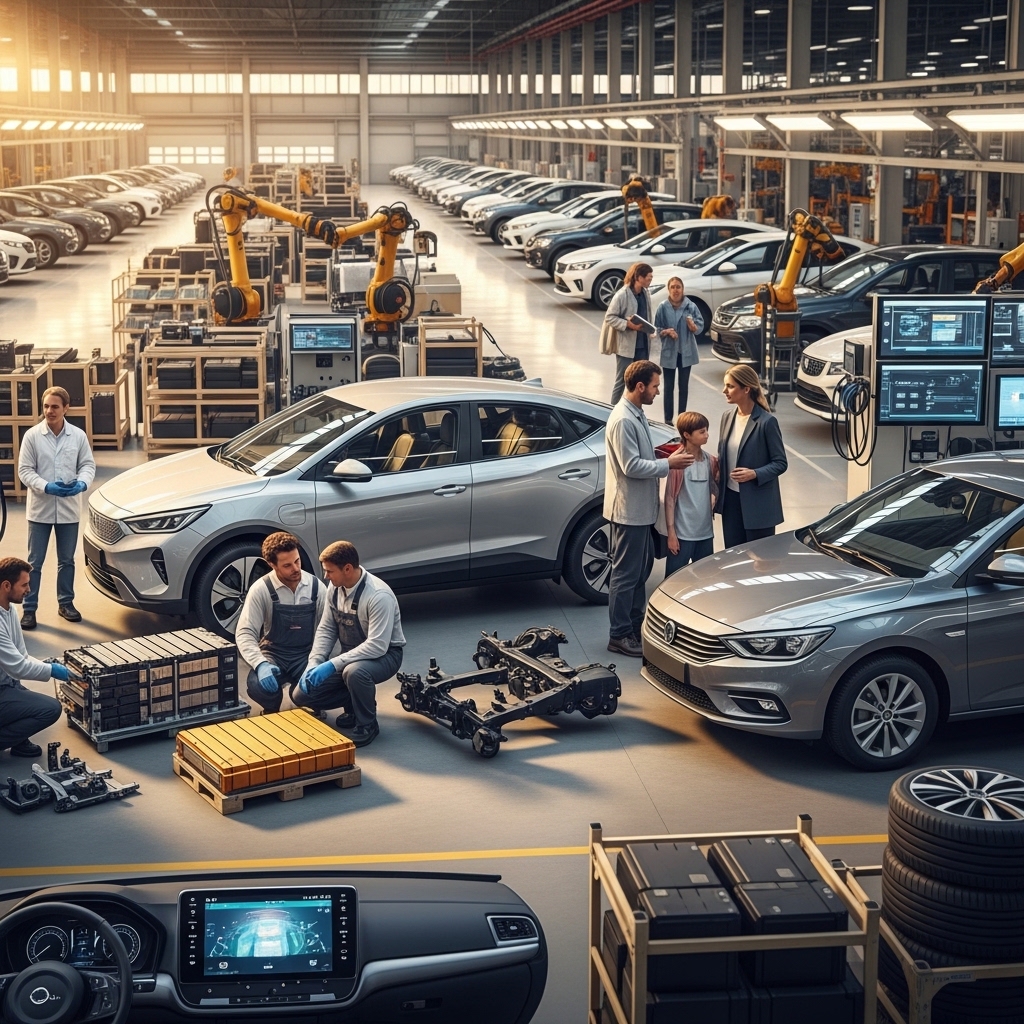
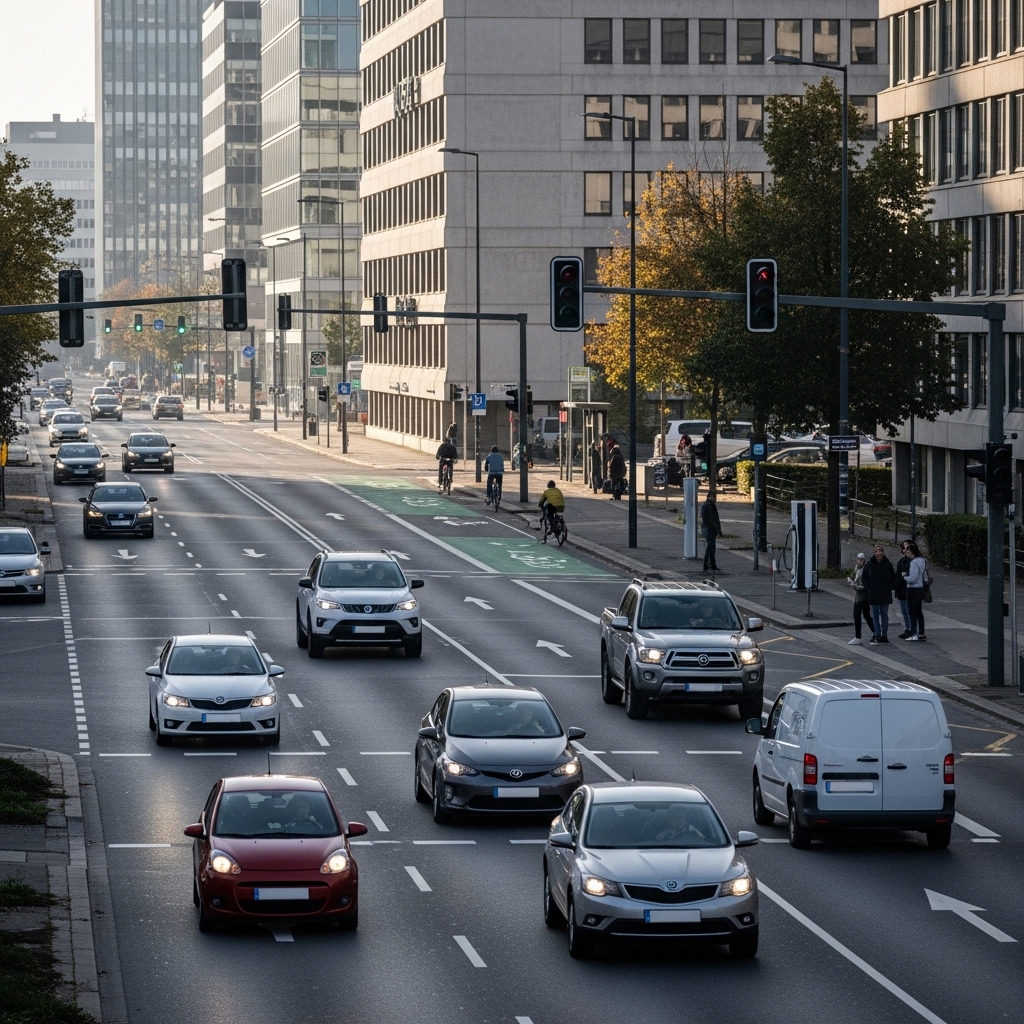
From mass-market necessity to software-defined machine, the automobile is being reshaped by electrification, automation and a global contest over cost, technology and climate.
For more than a century, the car has been one of the clearest symbols of modern life: a machine of freedom, utility, status and industrial power. It has carried families to work and school, moved goods across vast territories, and helped define the geography of suburbs, highways and global trade. Yet the car now stands at a turning point unlike any in its history. The industry that once measured progress mainly in horsepower, chrome and assembly-line scale is being forced to adapt to a different set of demands, where batteries, software, data and emissions targets are becoming just as important as engines and sheet metal.
That transition is not happening evenly. In some markets, electric vehicles have moved from niche products to a visible part of daily traffic. In others, gasoline-powered cars remain dominant, supported by lower fuel prices, weaker charging networks or consumer hesitation over cost and range. Hybrid models have emerged as a compromise for buyers who want better fuel economy without fully relying on charging infrastructure. The result is not a single global path forward, but a fragmented transition in which automakers must build for different realities at the same time.
For the car industry, that complexity is expensive. Traditional manufacturers are trying to protect profits from internal combustion vehicles while investing billions of dollars in battery plants, software platforms and new supply chains. Newer electric-vehicle makers, meanwhile, are under pressure to prove they can grow without burning cash or cutting prices too aggressively. Competition has intensified not only between brands, but also between industrial systems. The contest increasingly involves access to minerals, semiconductor capacity, battery chemistry, charging standards and government support.
Consumers are feeling this shift in practical ways. The car is no longer judged solely by how it drives off the lot. Buyers now ask how quickly it can charge, whether its software will remain supported, how advanced its driver-assistance features are, and how much its battery may degrade over time. Ownership itself is changing. Monthly subscriptions for features, remote updates, integrated navigation and smartphone-based controls have turned many vehicles into connected devices on wheels. That has created convenience, but also unease. Drivers who once expected to own every function built into a vehicle are confronting a future in which some capabilities may depend on software licenses, data sharing or manufacturer ecosystems.
Safety remains central to the industry’s public promise, and modern cars are in many ways more protective than those of previous generations. Advanced braking systems, lane-keeping features, airbags and structural engineering have reduced risks in many crash scenarios. But the safety conversation has also become more complicated. Larger vehicles, especially heavy sport utility vehicles and pickups, can offer more protection to occupants while increasing danger to pedestrians, cyclists and people in smaller cars. Touchscreen-heavy interiors, marketed as sleek and futuristic, have prompted criticism from regulators and road-safety advocates who argue that burying basic controls inside digital menus can distract drivers. Technology has expanded what cars can do, but it has also raised new questions about what should remain simple.
Environmental pressure is another force reshaping the automobile. For decades, the debate around cars focused on fuel economy and tailpipe pollution. Now the conversation is broader, covering carbon emissions across manufacturing, battery production, electricity generation and end-of-life recycling. Electric cars can reduce local air pollution and, in many power systems, lower overall emissions over time. But they also require enormous industrial input, from lithium and nickel extraction to energy-intensive battery manufacturing. Critics of the transition argue that electrification can merely shift environmental burdens if supply chains are poorly governed. Supporters counter that cleaner grids, recycling advances and better battery design are steadily improving the equation. Both views underscore the same reality: the future of the car cannot be separated from the systems that build and power it.
China has become a central actor in this transformation, not only as the world’s largest auto market but as a formidable manufacturing base for electric vehicles and batteries. Chinese automakers have demonstrated that it is possible to produce feature-rich electric cars at prices that challenge established competitors. That has unsettled manufacturers in Europe, North America, Japan and South Korea, many of whom built their global reputations in an era when engineering prestige and dealer networks were stronger barriers to entry. Now speed of development, battery cost and software execution can be just as decisive. The competitive pressure is forcing legacy brands to rethink how quickly they innovate and how cheaply they can produce without sacrificing reliability.
Yet price remains one of the car industry’s most stubborn realities. For all the excitement around new technology, affordability is worsening in many markets. New cars have become larger, more complex and more expensive. Even used vehicles, long the refuge of lower-income buyers, have seen prices rise sharply in recent years in many countries due to supply disruptions and tight inventory. This has widened the gap between the industry’s vision of the future and the financial reality facing ordinary households. A car may be packed with sensors, giant displays and advanced connectivity, but for many families the decisive question remains whether the monthly payment fits the budget.
That affordability crisis has broader social consequences. In much of the world, public transport remains limited, unreliable or politically neglected, leaving millions of people dependent on private vehicles whether they want them or not. In these places, the car is less a luxury than a survival tool, essential for employment, childcare and access to healthcare. The transition to cleaner transport, therefore, is not only a technological challenge but also a question of fairness. Policymakers pushing for lower emissions must contend with the risk that cleaner cars remain out of reach for those most dependent on mobility. Subsidies, charging access and urban planning all shape who benefits from the next generation of vehicles and who is left behind.
Meanwhile, the dream of fully autonomous cars has evolved from near-term promise to slower, more cautious reality. Driver-assistance systems have improved, and limited forms of automated driving are increasingly common in premium and even some mainstream vehicles. But the leap from assistance to true autonomy has proven more difficult than some early forecasts suggested. Edge cases, regulation, liability and public trust continue to limit deployment. The car of the future may become more automated, but for now the human driver remains firmly in the loop in most conditions.
Even design, once a defining language of automotive identity, is being reshaped by efficiency and software packaging. Electric platforms allow flatter floors and different proportions, but they also encourage a certain sameness: smooth surfaces, sealed front ends and screen-dominated cabins. Carmakers still try to project brand personality through lighting signatures and styling cues, yet the deeper distinction may increasingly lie under the skin, in battery management, user interface and digital services. That marks a subtle but profound shift. The car used to reveal itself first through sound, shape and mechanical feel. Increasingly, it is experienced through code.
Still, the emotional power of the automobile has not disappeared. People continue to form attachments to cars that go beyond transportation. A sports coupe, a battered family sedan, a work truck or a first compact hatchback can carry memory and meaning in ways few consumer products do. That emotional bond helps explain why the future of the car remains so contested. The argument is not only about machines, but about identity, aspiration and control. To some, the ideal future car is electric, quiet and seamlessly connected. To others, it is durable, repairable, affordable and free from excessive digital mediation. Many consumers want all of those qualities at once.
The industry’s central challenge is to reconcile those demands without losing public trust. Cars must become cleaner without becoming unattainable, smarter without becoming alienating, and safer without transferring risk onto those outside the vehicle. Manufacturers, regulators and cities are all trying to shape that outcome, often with different incentives and timelines. The next chapter of the automobile will not be written by engineering alone. It will be shaped by politics, trade, energy systems and the daily choices of drivers deciding what kind of mobility they can afford, tolerate and believe in.
For now, the car remains what it has long been: one of the most consequential objects in modern society. But it is no longer a settled technology. It is an industry in motion, a cultural artifact under review, and a machine being asked to do more than ever before. At this crossroads, the future of the car will depend not just on how fast it goes, but on whom it serves, what it costs and what kind of world it leaves behind.