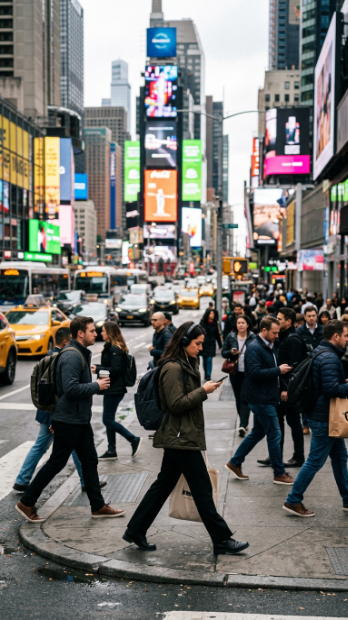
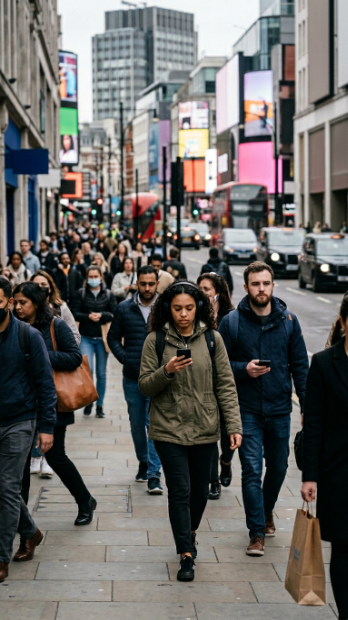
In an era defined by rapid transformation, keeping up with daily news has become both more important and more challenging than ever. From technological innovation and shifting work patterns to evolving social behaviors and environmental concerns, the world is continuously changing in ways that directly affect everyday life. For modern readers, the need is no longer just access to information, but clarity—an understanding of what matters and why.
This overview highlights several key trends currently shaping society, offering a concise yet meaningful look at how global developments are influencing daily routines, economic decisions, and future expectations.
The Rise of Practical Technology
Technology continues to be one of the most influential forces in modern life. However, the focus has shifted from novelty to practicality. Instead of being impressed by new features alone, users are increasingly interested in how technology improves efficiency, saves time, and simplifies everyday tasks.
Artificial intelligence, for example, is no longer limited to specialized industries. It is now integrated into common tools such as search engines, writing assistants, customer service platforms, and personal productivity apps. These tools are helping individuals and businesses automate repetitive tasks, analyze information faster, and make more informed decisions.
At the same time, there is growing awareness about digital responsibility. Concerns around data privacy, misinformation, and screen time are becoming part of everyday conversations. As a result, many users are adopting a more balanced approach—using technology where it adds value while setting boundaries to maintain focus and well-being.
Shifts in Work and Productivity
The way people work has undergone significant changes in recent years, and these changes continue to evolve. Hybrid work models—combining remote and in-office work—have become more common across many industries. This flexibility allows employees to better manage their time, reduce commuting, and create more personalized work environments.
However, this shift also brings challenges. The boundaries between work and personal life can become blurred, leading to longer working hours and increased stress. As a result, there is a growing emphasis on productivity strategies that prioritize efficiency rather than constant availability.
Employers and employees alike are exploring new ways to measure performance, focusing more on outcomes than time spent online. Tools for collaboration, time management, and communication are being refined to support these new working styles.
Additionally, the concept of career development is changing. Many individuals are now seeking continuous learning opportunities, adapting their skills to keep pace with technological and economic shifts.
Consumer Behavior Becomes More Intentional
Another noticeable trend is the change in how people approach consumption. Rather than focusing solely on quantity or price, consumers are becoming more selective and intentional in their choices.
Sustainability has become a key consideration. More people are paying attention to how products are made, how long they last, and their impact on the environment. This has led to increased demand for durable goods, ethical production practices, and reduced packaging.
At the same time, convenience remains important. Services that save time—such as online shopping, food delivery, and digital payments—continue to grow. The challenge for consumers is balancing convenience with responsible decision-making.
Minimalism, or the idea of owning fewer but more meaningful items, is also gaining popularity. This approach is not about strict limitation, but about reducing unnecessary clutter and focusing on what truly adds value to daily life.
Health and Well-Being in Focus
Health has become a central topic in both public discussion and personal priorities. While traditional healthcare remains essential, there is increasing attention on preventive habits and everyday well-being.
People are becoming more aware of the importance of balanced nutrition, regular physical activity, quality sleep, and mental health. Rather than waiting for health issues to arise, many are taking proactive steps to maintain their well-being.
Mental health, in particular, is receiving more recognition. Conversations around stress, burnout, and emotional balance are becoming more open, reducing stigma and encouraging individuals to seek support when needed.
Workplaces, schools, and communities are also adapting by promoting healthier environments and offering resources to support both physical and mental health.
Urban Living and Lifestyle Adjustments
Cities continue to evolve as populations grow and lifestyles change. Urban living is increasingly focused on efficiency, accessibility, and quality of life.
Public transportation systems are being improved in many areas to reduce traffic congestion and environmental impact. Green spaces, such as parks and walking paths, are becoming more valued as people seek balance between busy city life and moments of relaxation.
Housing trends are also shifting. Smaller, more functional living spaces are becoming common, especially in densely populated areas. These spaces are designed to maximize usability, often combining work, relaxation, and daily living in a single environment.
At the same time, there is a growing interest in flexible living arrangements. Some individuals are choosing to move between locations, combining work with travel, while others prioritize stability and community connections.
Information Consumption in the Digital Age
The way people consume news has changed significantly. Traditional sources such as television and newspapers are now complemented by digital platforms, social media, and mobile applications.
This shift has made information more accessible, but it has also increased the challenge of identifying reliable sources. With large amounts of content available, readers must navigate between accurate reporting and misleading information.
As a result, there is a growing emphasis on media literacy. Understanding how to evaluate sources, verify information, and avoid misinformation is becoming an essential skill.
Many readers are also seeking concise and clear summaries of news rather than long, detailed reports. This reflects the need to stay informed while managing limited time and attention.
Environmental Awareness and Responsibility
Environmental issues remain a significant concern worldwide. Climate change, resource management, and pollution are topics that continue to influence policies, businesses, and individual behavior.
While large-scale solutions require government and industry action, individual awareness is also increasing. Simple actions such as reducing waste, conserving energy, and making sustainable choices are becoming part of daily routines for many people.
Businesses are responding by adopting more environmentally friendly practices, and governments are introducing policies aimed at reducing environmental impact. However, progress varies across regions, and challenges remain.
The growing awareness of environmental issues reflects a broader shift toward long-term thinking—considering not only immediate benefits but also future consequences.
Conclusion
The modern world is shaped by a combination of technological progress, social change, and evolving individual priorities. While these developments can sometimes feel overwhelming, they also create opportunities for improvement and adaptation.
For today’s readers, staying informed does not require following every detail. Instead, it involves understanding key trends and how they influence daily life. By focusing on practical insights—how technology is used, how work is structured, how consumption is approached, and how well-being is maintained—individuals can make better decisions in a rapidly changing environment.
In a time of constant information, clarity becomes the most valuable resource. News is no longer just about what is happening, but about understanding what it means and how it affects the way we live.