Living Better, Not Louder: The Rise of Thoughtful Consumption in Everyday Lifestyle
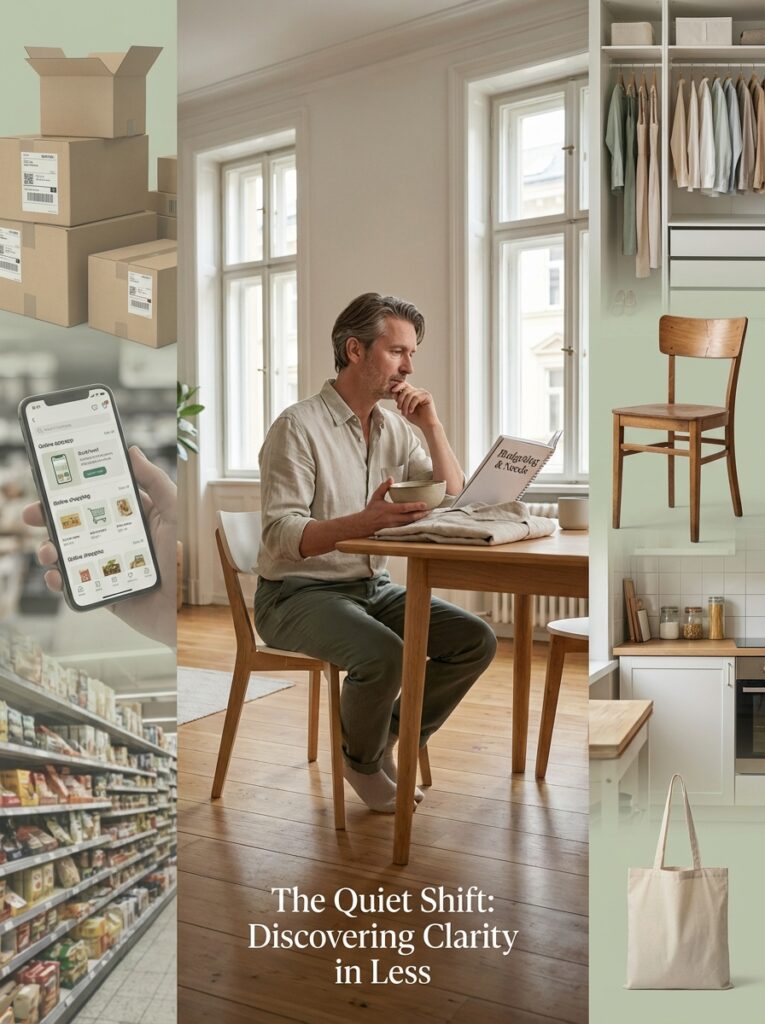
For many years, lifestyle culture was closely tied to visible abundance. A better life was often imagined as a life with more: more clothes, more upgrades, more beauty products, more gadgets, more decor, more subscriptions, more convenience, more everything. The marketplace encouraged this idea from every angle. Shopping became not just a way to meet needs, but a way to express personality, keep up with change, and emotionally reset after stress. Yet in recent years, a quieter shift has begun to take shape. More people are starting to question whether consuming more actually improves daily life. In response, thoughtful consumption is becoming a defining part of modern lifestyle.
Thoughtful consumption does not mean rejecting comfort, taste, or enjoyment. It does not require people to stop buying things or live in strict deprivation. Instead, it reflects a more deliberate relationship with purchasing. It asks a simple but increasingly relevant question: does this actually make life better? The answer is not always the same as desire, novelty, or trend. In fact, many people are discovering that the things that improve daily life most are not always the things that attract the most attention.
One reason this shift is happening is because people are becoming more aware of the hidden costs of constant consumption. The cost is not only financial, though that matters. It is also spatial, mental, and emotional. Every object enters a home, requires storage, adds visual weight, and creates one more thing to maintain, clean, organize, or eventually discard. Every purchase also creates a decision trail: whether to buy it, how to use it, where to keep it, whether to replace it, and whether it was worth the money in the first place. Multiplied over time, these small burdens can become significant.
That is why many modern consumers are becoming less interested in quantity and more interested in fit. The question is no longer just whether something is attractive or affordable, but whether it suits the reality of life. Does this jacket match the clothes I actually wear? Will this kitchen item simplify cooking or remain unused in a drawer? Does this decor piece add comfort, or only more clutter? Is this subscription still useful, or am I paying for convenience I no longer use? These questions reflect a deeper change in values. Lifestyle is shifting away from accumulation and toward alignment.
Thoughtful consumption is often strongest in the home, where the consequences of excess are easiest to feel. A home filled with too many objects can become harder to clean, harder to relax in, and harder to navigate. Visual noise affects attention. Full drawers and crowded surfaces create subtle stress. Many people do not realize how much lighter they feel until they remove what no longer serves a clear purpose. This does not mean every home should be sparse. It means that a more selective approach to buying can protect the livability of a space.
The same principle applies to clothing. Fast fashion and social media have encouraged constant wardrobe turnover, but many people are finding more ease in smaller, more flexible wardrobes built around real habits. Clothes that fit well, wear well, and work across different settings often provide more value than larger collections built around impulse purchases. A thoughtful wardrobe reduces decision fatigue and lowers the pressure to keep reinventing appearance through consumption alone. It can still be expressive, but in a way that feels more coherent and less exhausting.
Technology is another area where thoughtful consumption matters. New devices and upgrades are marketed as necessary signs of modern life, but not every innovation improves everyday experience. Some products genuinely save time or reduce friction. Others simply add features that complicate routines or encourage more screen dependency. A lifestyle built on intentional choices asks whether a piece of technology supports focus, comfort, connection, or health—or whether it creates more noise. This is especially relevant in households already saturated with digital input.
Financial awareness is also playing a larger role in lifestyle decisions. Rising living costs have forced many people to become more conscious about how money is used. But beyond necessity, there is also growing recognition that spending in alignment with actual priorities can improve life more than spending broadly. Some people choose to buy fewer clothes in order to invest in better groceries. Others reduce impulse spending to create a more calming home. Some prefer fewer restaurant meals so they can have more financial breathing room at the end of the month. Thoughtful consumption is not always about spending less. Often, it is about spending with clearer intention.
There is an emotional side to all of this as well. Consumption is often tied to mood. People shop when they are bored, stressed, lonely, overstimulated, or seeking reward. This is understandable. Buying something new can create a brief sense of control or pleasure. But when purchasing becomes a regular response to discomfort, it can leave behind clutter and regret rather than relief. A more intentional lifestyle does not ignore this emotional pattern. It tries to understand it. What am I actually looking for right now—comfort, stimulation, novelty, reassurance, rest? Sometimes the answer is not a product at all.
This shift toward thoughtfulness is changing the meaning of luxury too. Luxury in modern lifestyle increasingly means ease rather than excess. It may mean a room that feels uncluttered, a mattress that supports sleep, a jacket that lasts for years, food that is simple but satisfying, fewer but better tools in the kitchen, or a weekend with fewer errands because the home is functioning well. In other words, quality of life is beginning to feel more connected to durability, usefulness, and calm than to visible consumption.
There is also a growing appreciation for maintenance. In a consumption-driven culture, buying is exciting and caring for what one already owns is often overlooked. But a thoughtful lifestyle treats maintenance as meaningful. Repairing a chair, polishing shoes, washing linens properly, sharpening kitchen knives, or taking care of a coat extends usefulness and deepens respect for the object. Maintenance slows the cycle of replacement. It creates a household culture based not only on acquisition, but on stewardship.
Of course, thoughtful consumption is not about moral superiority. It is not a competition to own the fewest things or appear the most disciplined. People have different needs, incomes, family structures, and relationships to comfort. What matters is not adherence to a strict philosophy, but the development of awareness. Why am I buying this? What role will it actually play in my life? Will it add ease, beauty, usefulness, or burden? That awareness is what turns consumption into a conscious act rather than a reflex.
The rise of thoughtful consumption is also a response to digital overload. Online platforms encourage constant desire by presenting endless options, endless comparisons, and endless reasons to feel that life would improve with one more purchase. Choosing more carefully in that environment is not easy. It requires pause. It requires enough self-knowledge to separate a passing urge from a real need. But many people are finding that this pause is worthwhile. The fewer unnecessary things they bring in, the more clearly they can see what actually supports them.
Ultimately, thoughtful consumption is about building a lifestyle that feels quieter, clearer, and more durable. It is about recognizing that more is not always better, and that daily life improves not when every desire is immediately converted into a purchase, but when choices are guided by usefulness, comfort, and values. The most satisfying home, wardrobe, kitchen, or routine is often not the one filled with the most items. It is the one in which each part has a reason to be there.
That may be why this approach is gaining so much relevance. In an age of noise, excess, and constant marketing, living better may depend less on buying louder and more on choosing wisely. A thoughtful lifestyle is not empty. It is edited. It creates room—for movement, for calm, for clarity, for better habits, and for a life that feels more intentional from the inside out.