Hollywood and global media giants face a radical restructuring as agentic AI and immersive fan ecosystems redefine the industry in April 2026
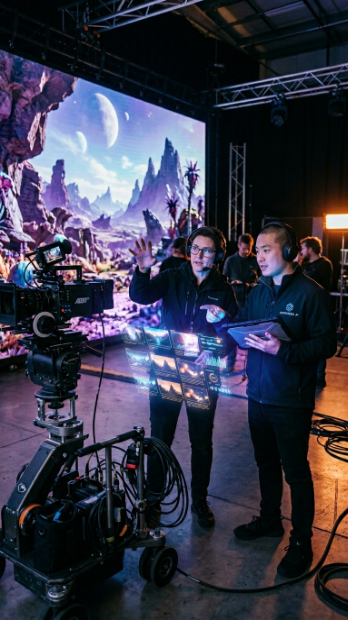
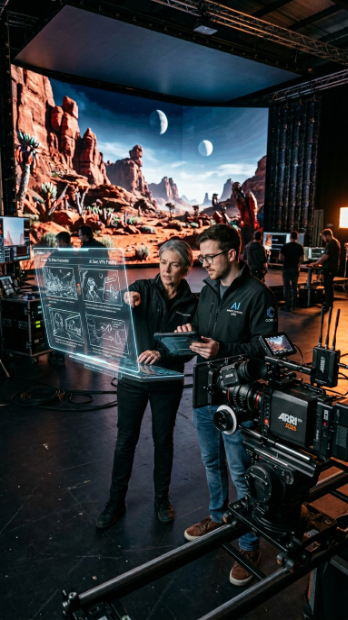
The global entertainment landscape in April 2026 is defined by a profound and unsettling transition as the boundaries between human creativity and machine intelligence become increasingly porous. This month represents a critical milestone in the digital transformation of media with the arrival of agentic AI workflows that have moved from experimental curiosities to the very operating layer of major studios. Industry analysts report that the traditional greenlight process has been fundamentally altered with executives now prioritizing intellectual property that can function as a seamless creative continuum across streaming gaming and social platforms. As legacy media companies struggle to maintain their footing in an era of hyper personalization the very definition of what constitutes a blockbuster is being rewritten by algorithms capable of dynamically altering narrative arcs and even generating real time recaps for fragmented audiences. The tension between efficiency and authenticity has reached a breaking point as the first fully AI generated short films begin to appear on commercial screens sparking both technological awe and intense public backlash.
The rapid adoption of generative AI in production has already led to a significant shift in the creative labor market. Reports from major hubs in Los Angeles and London suggest that the industry is moving toward a model of human augmentation where AI serves as a core partner in every stage of development. From early concept visualization to automated video editing and marketing sentiment analysis the speed of content creation has increased by orders of magnitude. This technological surge has created a new class of creative professionals who orchestrate complex AI toolchains to produce micro dramas at scale. However the human cost of this efficiency remains a subject of fierce debate. Labor organizations including the Writers Guild of America are currently scrutinizing the use of large reasoning models like Google TurboQuant which have drastically reduced the memory overhead for processing massive context windows of script data. The fear is no longer just about job displacement but about the potential dilution of the human spark as data driven metrics begin to dictate the emotional beats of global storytelling to ensure maximum audience retention.
In the realm of streaming the battle for eyeballs has evolved into a quest for frictionless aggregation. After years of platform fragmentation 2026 has seen a major push toward unified interfaces where direct to consumer services are integrated into a single coherent entry point. Consumers are increasingly demanding a better mix of live events gaming and dedicated apps without the frustration of switching between multiple subscriptions. This shift is particularly evident in the rise of immersive sports broadcasting where interactive tools and ultra low latency streaming allow fans to engage with live matches through real time polls and digital tipping. Major players like Netflix and Disney are also experimenting with modular storytelling where viewers can influence the direction of a plot through interactive choices powered by large language models. This convergence of gaming and cinema is creating emergent experiences that blur the line between being a spectator and a participant forcing creators to rethink the traditional linear narrative format.
The theatrical experience is simultaneously undergoing a selective renaissance. While mid budget films continue to struggle for space on the big screen the cinema has become a venue for high intensity event films that offer multisensory experiences home environments cannot replicate. High end exhibitors are investing heavily in spatial audio and haptic technologies to differentiate the moviegoing experience. Interestingly there is also a growing counter movement of fans seeking authenticity and sociability in an increasingly algorithmic era. In a notable incident this April a major theater chain was forced to pull a fully AI generated short film from its schedule following a wave of online outrage from audiences who viewed the project as an erosion of human artistry. This pushback highlights a significant trend for 2026 the rise of the human truth movement where consumers prioritize content that feels raw and unmediated. This desire for connection is also driving a resurgence in live music and theater where the unpredictability of a live performance provides a refreshing contrast to the polished perfection of synthetic media.
Financially the industry is navigating a high stakes period of strategic specialization. The era of the all encompassing media conglomerate is giving way to a more focused approach where firms must choose between being content powerhouses or distribution giants. Audience intelligence has become the most valuable currency with studios spending billions on proprietary platforms to track every click and gaze to build hyper granular fan profiles. This level of surveillance allows for targeted advertising that feels like a childs wonderland of personalized content but it also raises significant ethical questions regarding data sovereignty and the potential for digital addiction. In the music industry the focus has shifted toward capturing always on fandom where artists use generative AI to maintain a constant stream of content for their communities even during the off season. This strategy involves creating digital replicas for virtual concerts and using AI to translate lyrics into dozens of languages instantly ensuring that a local hit can become a global phenomenon overnight.
As April 2026 draws to a close the entertainment industry stands at a threshold that feels both exhilarating and precarious. The technological tools available to creators are more powerful than ever before allowing for a level of visual spectacle and interactive depth that would have been impossible a decade ago. Yet the challenge remains to ensure that these tools enhance rather than replace the creative judgment of directors writers and performers. The coming months will be defined by how the industry handles the legal challenges of copyright and the ethical guardrails of synthetic content. Whether through a VR headset in a quiet living room or a shared laugh in a crowded theater the human need for stories that resonate with truth remains constant. The industrys ability to adapt to this new algorithmic era while protecting the core of human storytelling will determine its cultural and economic relevance for the next generation. The curtain is rising on a new act in media history and the world is watching to see if the machine can ever truly capture the heart of the audience.