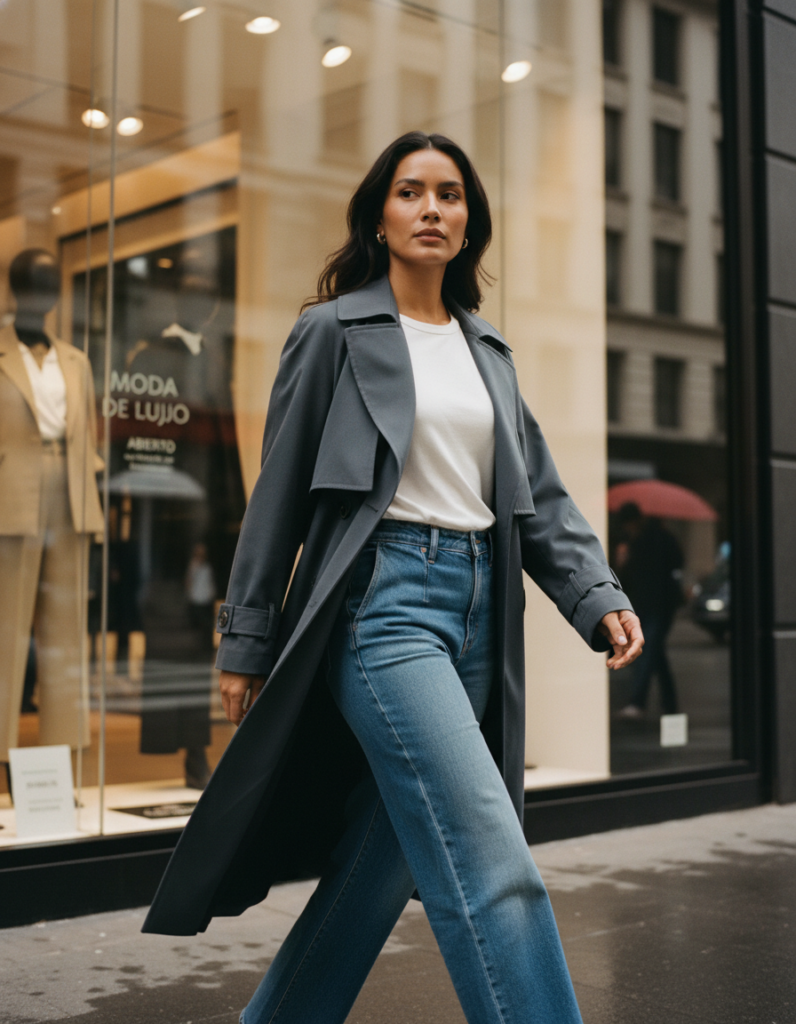

A new 38-piece collection and a multi-season partnership suggest that fashion’s center of gravity is moving toward clothes that feel practical enough for daily life but polished enough to satisfy designer-era expectations.
Victoria Beckham’s new collaboration with Gap arrives at a moment when fashion is rethinking what aspiration looks like.
For years, the industry’s most visible signals of luxury were tied to spectacle: runway theater, difficult silhouettes, extreme proportions and the coded exclusivity of high-fashion styling. That language has not disappeared. But as major brands search for relevance in a more price-conscious, lifestyle-driven market, another idea has been gaining force. Consumers still want design, discernment and identity, but increasingly they want those qualities delivered through clothes they can actually live in.
That is the significance of the new Victoria Beckham x Gap collection, first reported in detail by Vogue and framed by Gap as the beginning of a multi-season partnership. The debut line, a 38-piece capsule launching in spring 2026, takes Beckham’s sharply edited, tailored sensibility and filters it through the wardrobe categories that built Gap’s mass appeal: denim, khaki, tees, fleece, button-downs and practical outerwear. The result is not a radical reinvention of either brand. It is more strategic than that. It is an argument that the most commercially potent version of modern fashion may now be the one that sits between luxury taste and real-life function.
That is also why this collaboration feels more consequential than a standard celebrity-designer capsule. Beckham is not simply lending her name to a high-street retailer. She is applying a design identity she has spent years refining. Her namesake label, founded in 2008, has gradually evolved from body-conscious dresses into a more rigorous, minimalist wardrobe system built on precision, structure and controlled polish. Gap, by contrast, carries the weight of American casualwear history: jeans, hoodies, khakis and logo basics associated less with elite fashion than with democratic dressing. Bringing those two sensibilities together creates tension, but also commercial opportunity.
The collection’s details make that strategy legible. According to Vogue and Gap’s announcement, the line is anchored in denim, khaki, tees, button-ups and fleeces, with pieces ranging from classic straight and capri jeans to matching denim jackets, trench coats, bombers, logo hoodies and organic cotton crewneck T-shirts. Beckham’s influence comes through in sharper structure, more considered proportions and subtle markers such as her red-stitched VB signature. Rather than rejecting Gap’s vocabulary, the collaboration refines it. The familiar categories remain intact, but they are elevated through cut, finish and styling language.
That formula speaks directly to a broader shift in fashion consumption. The old divide between “designer” and “everyday” has been weakening for some time. Luxury brands increasingly rely on knitwear, denim, tailoring separates and softened wardrobe essentials to drive sales. At the same time, mass retailers have learned that customers are willing to pay a premium for stronger design narratives, better fabric choices and collaboration-driven exclusivity. The middle ground between the two has become one of the most competitive zones in the industry.
Victoria Beckham and Gap are entering that zone with good timing. The collaboration lands in a market where shoppers are more selective, more trend-aware and less interested in buying clothes that function only in editorial contexts. Many consumers still want the emotional charge of fashion, but not necessarily the inconvenience. They want garments that can move across offices, travel, weekends and social settings without feeling bland. That is where elevated everydaywear becomes powerful. It promises style without costume.
The Beckham-Gap project also reflects a quiet but important evolution in how lifestyle fashion is defined. “Lifestyle” once risked sounding like a euphemism for soft basics or commercially safe clothing. Increasingly, it means something more sophisticated: a wardrobe ecosystem in which utility is part of the design proposition, not the opposite of it. A hoodie can still carry brand identity. A pair of khakis can still feel directional. A denim jacket can still signal fashion intelligence if the proportions, materials and styling are handled with enough care.
In that sense, this launch is as much about calibration as creation. The pieces described by Vogue and Gap do not suggest maximal experimentation. They suggest tuning. A trench cut a little cleaner. A fleece set made heavier and more graphic. A jean shape pulled from archival American references but sharpened through Beckham’s lens. This is design aimed not at novelty alone, but at the refinement of clothes people already understand. That can be less glamorous than conceptual runway work, but it is often far more influential in how people actually dress.
There is a business rationale behind that influence. Gap has been using collaborations to sharpen its cultural profile, and the Beckham partnership fits that broader effort to make the brand feel more design-led without abandoning its reach. Beckham, meanwhile, gains something different: a chance to translate her aesthetic for a larger audience at more accessible prices. Vogue reported that the collection ranges from $34 to $328, a pricing structure that places it above pure basics but well below luxury ready-to-wear. That band is important. It preserves the sense of buy-in to a designer’s world while still positioning the product as attainable.
The campaign imagery reinforces the same message. Gap said the advertising draws from archival denim references and silhouettes from the late 1980s and early 1990s, while Vogue described the visual world as rooted in Beckham’s sleek, edited style. That interplay between archive Americana and contemporary polish is central to the collection’s promise. It invites consumers to feel that they are not choosing between relaxed practicality and fashion credibility. They are getting both in one wardrobe proposition.
The deeper story, though, is not only about one collaboration. It is about where fashion seems to be heading. The industry appears to be moving away from a simple distinction between statement clothing and basics. In its place is a more nuanced hierarchy built around usability with authorship. The winning garments are often those that can disappear into daily life while still carrying a point of view. They are easy to wear, but not anonymous. Polished, but not precious. Comfortable, but not careless.
That shift has implications far beyond Gap. It suggests that the next wave of desirable fashion may come less from completely new categories than from the reengineering of familiar ones. Denim becomes sculptural. Sportswear becomes cleaner. Khaki becomes more intentional. Tailoring becomes softer without losing authority. The consumer does not have to relearn how to dress. Instead, brands offer a better version of the clothes already doing the most work in modern wardrobes.
Beckham is particularly well placed to contribute to that conversation because her own design evolution has tracked a similar path. Over time, her label has moved away from the idea of singular occasion dressing and toward a sharper understanding of how contemporary women assemble clothes across contexts. Gap, for its part, has the credibility of scale and heritage in exactly the categories where that thinking matters most. The partnership therefore feels less like a collision of opposites than a convergence of needs.
It would be too much to say a 38-piece capsule can redefine fashion on its own. But it can clarify a direction. And this collection does that with unusual neatness. It suggests that “high-low” dressing is no longer just about pairing a luxury shoe with a basic tee. It is increasingly built into the clothes themselves. A mass-market brand can carry designer discipline. A designer label can borrow mass-market ease. The category lines blur, and the shopper ends up with something closer to what modern dressing actually demands.
That may be why the Beckham-Gap collaboration reads as more than a retail event. It captures a larger realignment in taste. Fashion still wants aspiration. But aspiration now looks less like distance and more like fluency: knowing how to make daily clothes feel considered, how to turn staples into identity, how to build wardrobes that function hard without giving up design intent.
In that environment, elevated everydaywear is not a compromise. It is the new luxury language of practical desire. And with Victoria Beckham bringing her disciplined minimalism to Gap’s American essentials, the industry has been handed a particularly clear example of how that language is being written now.