Mercedes-Benz has long occupied a distinct place in the global premium car market: a brand associated less with raw aggression than with polish, comfort, technology and the quiet social power of a three-pointed star on the grille. In an era when luxury buyers can choose from sharper-driving BMWs, minimalist Teslas, fast-rising Chinese brands and increasingly refined Lexus models, Mercedes remains competitive not simply because of history, but because it continues to deliver what many affluent customers still want most — a sense of occasion, a smooth ride, advanced in-cabin technology and a badge that signals status without explanation.
That formula remains central to the company’s appeal in 2026, and it is reflected in one of the latest pieces of third-party validation available to the brand. In J.D. Power’s 2025 Quality Awards, the Mercedes-Benz CLE was listed as the highest-quality vehicle in the “upper midsize premium car” category, a result based on owner-reported problems during the first 90 days of ownership. The finding does not settle every debate about long-term reliability, ownership costs or repair complexity. But it does suggest that Mercedes remains highly credible in one of the categories that matters most to luxury buyers: delivering a premium experience that feels well executed from the beginning.
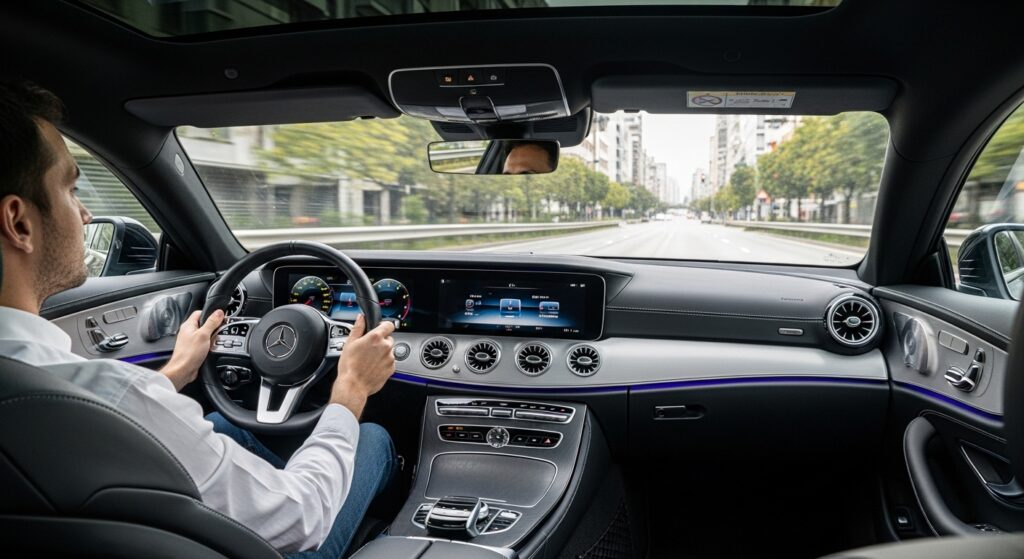
That distinction is important because Mercedes-Benz is not merely selling transportation. It is selling an atmosphere. For many customers, especially those stepping up from mainstream brands, the appeal begins with the cabin. Mercedes has spent years refining interiors that emphasize ambient lighting, layered materials, polished digital displays and a carefully insulated sense of calm. The effect is not accidental. Mercedes understands that luxury-car buyers often notice what a vehicle feels like before they begin measuring what it can do. A quiet cabin, supportive seating, elegant switchgear and a ride that smooths out rough pavement can matter more in daily life than an extra tenth of a second in a sprint to highway speed.
That is why the brand continues to resonate with buyers who define luxury through comfort rather than through overt sportiness. BMW has historically leaned harder into driver engagement. Audi has often emphasized clean design and all-weather confidence. Lexus has built a strong reputation around dependability and serenity. Mercedes, by contrast, has tried to combine softness, visual theater and technological prestige into a single package. Even when rivals outperform it in certain metrics, Mercedes often remains the emotional benchmark for people who want their car to feel expensive every time they enter it.
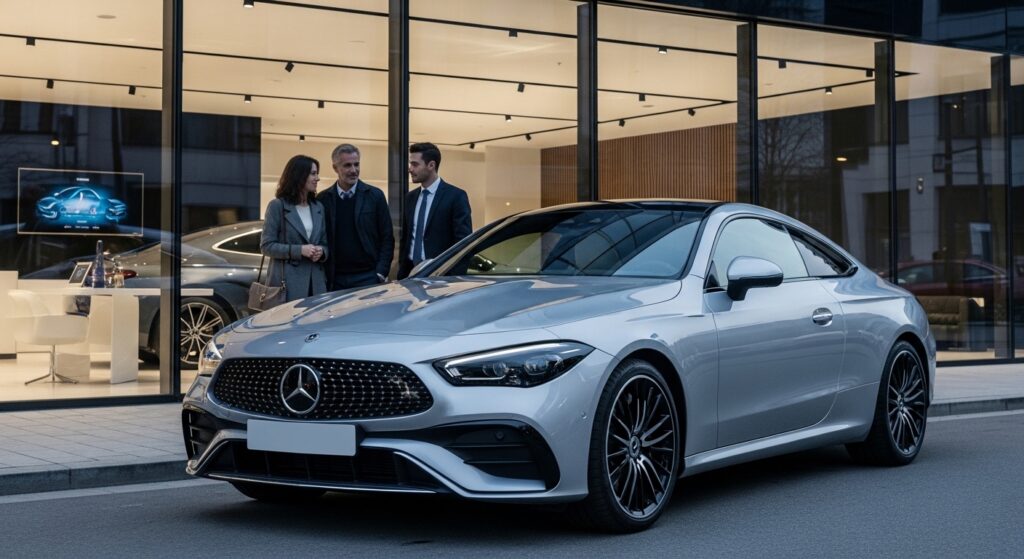
The CLE illustrates that positioning well. Official Mercedes-Benz materials describe the coupe as combining progressive styling with intelligent MBUX infotainment and outstanding comfort, language that mirrors the company’s broader pitch to buyers across its lineup. The CLE effectively bridges spaces that once belonged to separate Mercedes models, while preserving the classic luxury-coupe identity that still holds appeal in the premium market. It offers a product that is stylish enough to feel aspirational, but refined enough to serve as a daily expression of taste rather than a weekend-only indulgence.
Its J.D. Power recognition matters for another reason as well: technology has become both Mercedes-Benz’s strength and one of the biggest risks facing modern luxury brands. Premium buyers increasingly expect large screens, voice assistants, smartphone integration, navigation intelligence, driver-assistance systems and personalized digital environments as standard features rather than optional extras. Mercedes has embraced that expectation aggressively through MBUX, presenting the cockpit not just as a place to drive, but as a digital luxury environment. The benefit is obvious. Tech-rich interiors help Mercedes look contemporary, justify premium pricing and attract younger professionals who want their vehicles to feel as connected as their phones.
But the downside is equally clear. The more screens, software layers and electronic features a brand adds, the more opportunities there are for irritation, glitches or disappointing usability. Across the auto industry, complexity has made initial quality and long-term dependability harder to sustain. That is why a favorable quality result for the CLE carries weight beyond a trophy graphic on a brochure. It suggests Mercedes can still deliver a highly digital product without undermining the polished ownership experience that luxury buyers expect from the brand.
The brand advantage also extends beyond the vehicle itself. Mercedes-Benz remains one of the world’s most recognizable automotive names, and in the luxury market that recognition still matters. Buyers do not always choose premium vehicles on a purely rational basis. They buy them as statements of preference, reward, identity and arrival. A Mercedes parked in a driveway or office lot communicates something immediate: wealth, yes, but also conventional good taste, professional success and a preference for established prestige. That symbolic value helps explain why the brand remains strong even as competition becomes fiercer and as some rivals offer more generous value propositions on paper.
Still, brand strength alone is no longer enough. Luxury consumers in 2026 are more informed, more comparative and more demanding than before. They watch detailed reviews, compare software features, track maintenance costs and pay close attention to quality rankings. They are also less automatically loyal than prior generations. That means Mercedes must continuously prove that its premium image is supported by substance. Quality studies, customer satisfaction data and real-world product execution therefore matter more than marketing slogans.
The CLE’s result in J.D. Power’s 2025 quality rankings helps Mercedes on that front, but it should be interpreted carefully. J.D. Power’s quality awards measure issues reported during the first 90 days of ownership. That makes them useful as an indicator of initial execution, fit-and-finish, delivery quality and early user experience. They do not provide a complete picture of how a vehicle will perform after several years, nor do they erase the broader concern some consumers still have about the long-term cost of maintaining complex German luxury cars. A Mercedes can impress from day one and still leave buyers asking harder questions later about depreciation, service pricing and repair frequency outside warranty periods.
That tension defines much of the modern Mercedes-Benz proposition. The company is often at its best when evaluating design sophistication, ride comfort, infotainment ambition and premium cachet. It can be more vulnerable when ownership conversations shift toward total cost over many years. For some customers, that trade-off is acceptable, even desirable. They are not buying the car primarily to minimize lifetime expenses. They are buying it to enjoy the present-tense benefits of a luxury product that feels special, technologically advanced and socially meaningful.
In that sense, Mercedes remains particularly well suited to a specific kind of buyer: someone who values elegance over aggression, refinement over flash, and a plush everyday experience over minimalist austerity. This buyer may appreciate fast acceleration, but does not necessarily want a vehicle that constantly reminds them of performance capability. They may enjoy cutting-edge tech, but they also want it wrapped in leather, glass, metal accents and brand heritage. They may be willing to pay more not only for the hardware, but for the confidence that the name on the hood still carries weight in boardrooms, hotels, airports and gated communities around the world.
Mercedes-Benz’s challenge going forward is to preserve that appeal while navigating an auto market changing at remarkable speed. Electrification, software-defined vehicles, Chinese competition, rising customer expectations and shifting definitions of luxury are all pressuring legacy premium manufacturers to evolve. Mercedes has responded by leaning further into upscale positioning and advanced digital experiences, aiming to protect margins and reinforce its identity at the higher end of the market. That strategy makes execution even more important. A brand that asks customers to pay for “the best” must make the experience feel cohesive from first impression to final delivery.
For now, the evidence suggests Mercedes still understands its audience. The company continues to attract buyers who want comfort, status, strong design and visible technology in one package. The CLE’s performance in J.D. Power’s 2025 quality ranking does not prove Mercedes is unbeatable, and it does not end the premium segment’s constant rivalry. But it does reinforce a larger point: Mercedes-Benz remains highly relevant because it still offers one of the clearest, most recognizable interpretations of modern automotive luxury.
In a market crowded with capable alternatives, that clarity may be one of its greatest strengths. Buyers who want a car that feels expensive, rides with composure, surrounds them with technology and carries undeniable brand power still know where to look. Mercedes-Benz has built its reputation on exactly that promise. The CLE suggests the company is still delivering it.