
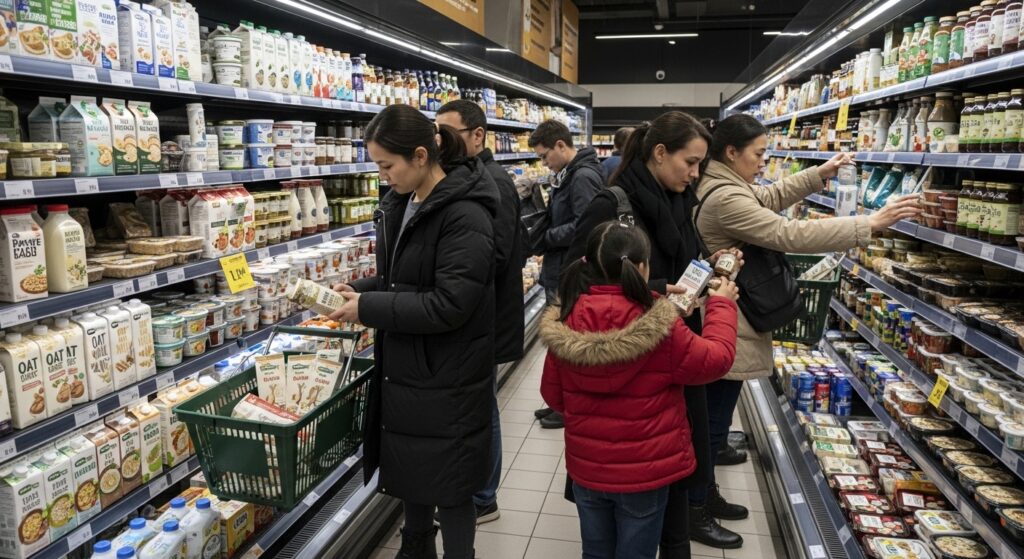
What began as a movement built around vegan labels and meat alternatives is evolving into a broader, more pragmatic shift toward affordable, protein-conscious and less-processed eating.
The plant-based movement is still growing, but not in quite the way its loudest early evangelists imagined. The first wave was driven by disruption and symbolism: burgers that bled, dairy-free products that mimicked cow’s milk, and a retail language built around replacement. The new phase is quieter, broader and more practical. Consumers are still moving toward plant-based eating, but increasingly on their own terms — not necessarily as vegans, and not always through the most heavily engineered substitutes.
That shift matters because it suggests the story is no longer confined to a niche lifestyle category. Plant-based eating is becoming less ideological and more embedded in everyday food choices, from supermarket private-label oat drinks and pea-protein yogurts to bean-based snacks, higher-protein meals and home cooking centered on legumes, grains, vegetables and nuts. In short, the movement is maturing.
Recent data from Europe underscores that point. Sales volumes of plant-based foods have continued to grow in several major markets, with lower-cost private-label products doing much of the work. That is especially true in plant-based milk and drinks, a category that is edging closer to the mainstream as price gaps narrow and household familiarity rises. In practical terms, consumers who may not have embraced premium vegan branding are still buying more plant-based products when those items become affordable, familiar and easy to use.
That is a crucial distinction. The earlier narrative around plant-based foods often focused on breakthrough products and venture-backed brands promising to remake the global diet. The newer narrative is more incremental and perhaps more durable. Growth is less about spectacle than routine. A shopper does not need to identify as vegan to put oat milk in coffee, choose a lentil-based lunch, or replace part of their weekly meat intake with beans, tofu or chickpeas. In that sense, the center of gravity has shifted from identity to behavior.
Health is one reason. Public awareness of the connection between diet and long-term wellbeing has deepened, and plant-forward eating continues to benefit from that trend. But consumers have also become more skeptical and more selective. The plant-based label by itself is no longer enough. Many shoppers now examine ingredients more closely, looking for products that feel less artificial, less sodium-heavy and less dependent on stabilizers, gums or unfamiliar additives. This has created winners and losers inside the category.
The losing side, at least in some markets, has been the first generation of highly processed meat analogues. In the United States, several plant-based meat brands have struggled as consumers questioned whether the products were genuinely healthier or simply different. Some companies that once built their reputations on replacing beef patties and chicken tenders are now repositioning themselves around a broader plant-protein identity, expanding into drinks, bars and foods that emphasize simpler ingredients and a more direct connection to whole plants.
That does not amount to a collapse of plant-based eating. It marks a recalibration. The movement is no longer being judged only on whether it can perfectly imitate meat. It is being judged on taste, nutrition, affordability and how naturally it fits into daily life. For many consumers, the answer is increasingly yes — but through formats that look more like adaptation than imitation.
This is why the rise of the “flexitarian” consumer may be the most important development in the sector. The future of plant-based food is unlikely to be driven primarily by strict vegan conversion. It will be driven by millions of people who still eat meat or dairy some of the time, but who consciously shift parts of their diet toward plants for reasons of health, price, convenience or environmental concern. That audience is far larger, less ideological and more commercially meaningful than the one the category originally targeted.
The food industry has noticed. Product development is increasingly oriented toward protein-rich but less confrontational offerings: high-protein soy or pea drinks, legume pastas, blended meals, bean snacks, dairy alternatives with cleaner labels, and prepared foods that present plants not as sacrifice but as the default. Retailers, meanwhile, have discovered that shelf placement, pricing and private-label strategy can be as important as innovation in determining whether consumers adopt plant-based options at scale.
There is also a cultural reason the movement has continued to spread. Plant-based eating now reaches far beyond the old binary of “vegan versus not vegan.” In many cities, restaurants, cafés and food manufacturers are treating plants as a creative center rather than a dietary restriction. Menus are leaning into mushrooms, lentils, tahini, beans, fermented ingredients, ancient grains, nuts and regional vegetable traditions. In Asia, the Mediterranean and parts of Latin America, the plant-based conversation is increasingly intersecting with long-established culinary habits rather than trying to replace them with laboratory-style novelty.
That gives the category greater resilience. Movements built on novelty can fade when excitement cools or inflation rises. Movements rooted in existing cooking habits, household budgets and health aspirations are harder to reverse. A family that begins using more beans, tofu, vegetables and plant milks is not making a symbolic purchase once; it is changing shopping patterns. That kind of shift tends to happen slowly, but it also tends to last.
Even so, the sector faces real challenges. Price remains decisive. Plant-based products that cost significantly more than conventional alternatives still struggle to break out beyond higher-income, urban consumers. Nutrition is another fault line. Some critics argue that the industry leaned too heavily on branding and climate claims while underestimating how closely consumers would inspect sugar, sodium, protein quality and ingredient lists. That criticism has landed, and the market is responding.
Another challenge is credibility. For years, the public conversation around plant-based foods often implied inevitability — that a rapid and near-total transformation of the food system was just around the corner. The reality is messier. Consumer adoption has been uneven across regions and product types. Some categories are expanding. Others are consolidating. Investment enthusiasm has cooled in parts of the sector. But those headwinds should not be confused with retreat. What is happening is a move from hype to structure.
That may ultimately be healthier for the category. Mature markets are built not on slogans but on repeat purchases. To succeed in the next chapter, plant-based products have to be good enough, cheap enough and nutritious enough to earn a regular place in kitchens. The companies and retailers that seem best positioned are those treating plant-based eating not as a moral lecture or futuristic stunt, but as a normal, desirable way to eat more often.
The broader policy context also matters. Health authorities and international organizations have continued to link more plant-rich diets with public health and sustainability goals. That does not mean governments are prescribing universal veganism. It means the direction of travel is becoming clearer: food systems that rely more on legumes, grains, fruits, vegetables and nuts are increasingly seen as compatible with both health and environmental priorities. As that consensus strengthens, it creates a tailwind for producers, retailers and restaurants willing to make plant-forward food easier to access and easier to trust.
What emerges from all of this is a more nuanced picture than either advocates or critics sometimes admit. The plant-based boom is real, but it is no longer defined by a single product or a single promise. It is not just about fake meat. It is about a widening consumer appetite for foods that come from plants, deliver protein, fit tighter budgets, and feel less processed and more ordinary.
That may sound less revolutionary than the rhetoric that surrounded the sector a few years ago. In fact, it may be more revolutionary. Food revolutions rarely arrive as a clean break. More often, they arrive through habit: one aisle, one product, one meal at a time. By that measure, plant-based eating is not disappearing. It is moving into the mainstream — not with a bang, but with the steady force of daily choice.