
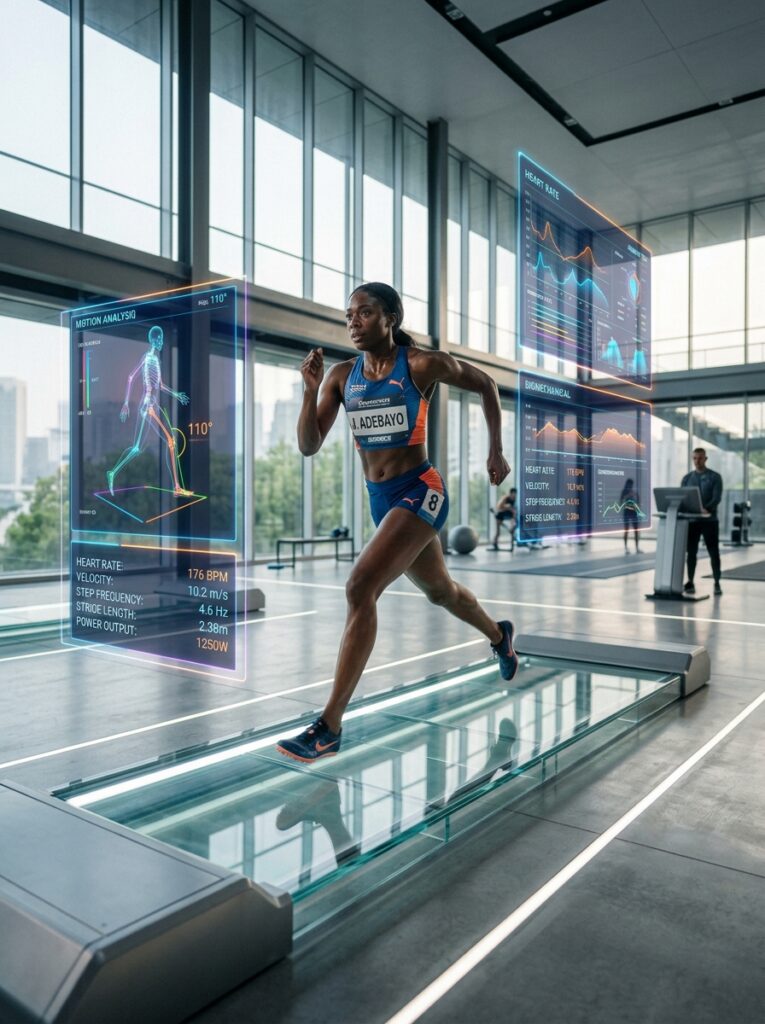
As the world of professional athletics reaches the second quarter of 2026 a quiet but profound transformation has moved from the research laboratories into the heart of the stadium where the very definition of human potential is being rewritten by artificial intelligence and high precision data streams
In the high stakes corridors of international competition the image of the intuitive coach and the raw talented athlete is being replaced by a new reality of synchronized systems and predictive modeling. As we navigate through April 2026 the integration of wearable technology and real time biometric analysis has reached a tipping point where the margin between victory and defeat is no longer measured by effort alone but by the sophistication of the algorithms guiding that effort. From the training grounds of Europe to the high performance centers in North America the sports industry is grappling with a fundamental question of whether technology is enhancing the human spirit or fundamentally altering the nature of the game itself. This evolution is not merely about better equipment but represents a seismic shift in how performance is cultivated managed and consumed by a global audience.
The bedrock of this change is the rapid advancement of wearable technology which has evolved from simple tracking devices into comprehensive biological monitoring systems. Elite athletes across disciplines from marathon runners in London to basketball stars in the United States are now equipped with sub dermal sensors and smart fabrics that provide a continuous flow of data on internal physiological states. These sensors track blood oxygenation levels electrolyte balance and muscle fiber recruitment with surgical precision allowing coaching staffs to visualize the internal mechanics of an athlete in real time. This level of insight has led to the rise of the digital twin a virtual replica of the athlete that can be subjected to thousands of simulated stressors to determine the optimal training load and recovery schedule. By testing different environmental conditions and tactical scenarios within a digital environment teams can identify the exact breaking point of an athlete before they ever step onto the field of play.
Artificial intelligence has become the connective engine that processes this vast ocean of data turning noise into actionable strategy. In professional soccer and American football AI platforms now analyze thousands of data points per second during live matches to suggest tactical adjustments or player substitutions. These systems can detect subtle changes in a players movement patterns that indicate the onset of fatigue or the early stages of a soft tissue injury long before the player themselves is aware of the risk. This predictive capability has significantly reduced injury rates across major leagues extending the careers of aging stars and ensuring that the best talent remains on the field for longer periods. However this reliance on data has also sparked a debate about the erosion of tactical creativity as coaches increasingly defer to the recommendations of a computer program rather than their own professional intuition.
The influence of technology extends far beyond the physical performance of the athlete and into the very fabric of the fan experience. In 2026 the way spectators engage with sports has been transformed by augmented reality and immersive data overlays. Fans watching a live tennis match at the Rolex Monte Carlo Masters can now see the spin rate of the ball the heart rate of the player and the probability of a successful return in real time through their mobile devices or smart glasses. This transparency has created a new class of hyper informed spectators who analyze the game with the same technical depth as the professionals. Furthermore the rise of generative AI has revolutionized sports broadcasting allowing for the instant creation of personalized highlight reels and multi language commentary tailored to the specific interests of individual fans. This democratization of data has bridged the gap between the athlete and the audience making the immense physical demands of professional sports more quantifiable and relatable to the average person.
Despite the clear benefits of this technological surge the ethical landscape of sports remains highly contested. The international sporting community is currently debating the regulations surrounding technological doping and the potential for an unfair advantage based on access to superior data processing. There is a growing concern that the wealth gap between elite franchises and smaller programs will only widen as the cost of these advanced AI systems remains high. Moreover the psychological impact on athletes who are under constant twenty four hour surveillance is a subject of increasing scrutiny. The pressure to maintain perfect biometric scores can lead to a new form of performance anxiety where the athlete feels like a biological machine in a larger corporate engine. Governing bodies are now tasked with creating frameworks that protect the privacy and mental health of competitors while still allowing for the innovation that drives the industry forward.
As we look toward the upcoming major events of 2026 including the FIFA World Cup and the continued expansion of high tech racing series the trend of digitization shows no signs of slowing. The next frontier appears to be the integration of neural interfaces and brain computer communication that could allow athletes to sharpen their focus and reaction times through direct cognitive training. While these concepts were once the province of science fiction they are now serious topics of discussion in the boardrooms of the worlds largest sports organizations. The challenge for the future will be to ensure that while we embrace the power of the algorithm we do not lose sight of the raw unpredictable and deeply human elements that make sports a universal language. The beauty of the game has always resided in the moment when the plan fails and the athlete must rely on sheer will and instinct. In the era of the algorithmic athlete the goal is to ensure that the data serves the human rather than the other way around.