
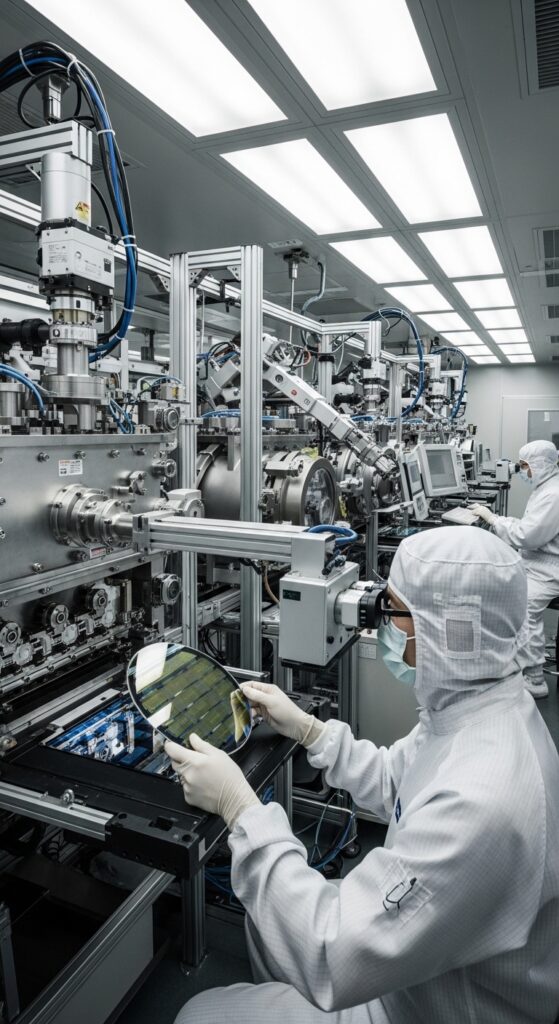
Semiconductors sit at the center of artificial intelligence, defense, cars and consumer electronics, turning chip supply chains into strategic national assets.
The semiconductor has become one of the most important objects in the global economy. Tiny chips now carry the weight of artificial intelligence, smartphones, electric vehicles, defense systems, medical devices and cloud computing. A shortage, export restriction or factory disruption can ripple across industries and borders.
For decades, the chip industry was built on specialization. Design, manufacturing, equipment, software and assembly often took place in different countries. That system helped reduce costs and drive extraordinary innovation. It also created vulnerabilities. A pandemic, earthquake, trade dispute or military crisis can threaten supply chains that are both global and highly concentrated.
Artificial intelligence has intensified the stakes. Training and running advanced AI models requires powerful processors, memory chips and specialized hardware. Companies that control advanced chips can shape the pace of AI development. Countries that lack access may fall behind in research, defense and industrial automation.
Governments are responding with industrial policy. The United States, European Union, China, Japan, South Korea and Taiwan have all treated semiconductors as strategic. Subsidies, tax incentives and export controls are now part of the chip landscape. The goal is not only economic competitiveness but technological sovereignty.
Building chip capacity is difficult. Advanced semiconductor fabrication plants cost billions of dollars and require specialized equipment, clean rooms, chemicals, water, energy and highly trained workers. Even when governments commit funding, factories take years to build and longer to operate efficiently. The industry cannot be reshored overnight.
Taiwan remains central to the most advanced manufacturing, while South Korea is critical in memory chips. The Netherlands plays an essential role in lithography equipment. The United States has leading chip designers and key equipment companies. China is investing heavily to reduce reliance on foreign technology. Each position gives leverage, but also exposure.
Automakers learned the importance of chips during recent shortages, when production lines slowed because vehicles could not be completed. Modern cars require semiconductors for safety systems, infotainment, battery management, sensors and driver assistance. Electric and autonomous vehicles will only increase demand.
Consumer devices are also changing. Smartphones, laptops, wearables and smart-home products depend on efficient chips to deliver performance without draining batteries. The next wave of personal AI devices may require more powerful on-device processing, increasing competition for advanced components.
The chip race has environmental costs. Fabrication plants consume large amounts of electricity and water. As demand grows, manufacturers face pressure to reduce emissions, recycle water and secure clean power. The digital economy has a physical footprint.
Talent is another constraint. Chip manufacturing requires engineers, technicians, materials scientists and software experts. Countries can build factories, but they also need education systems and immigration policies that support skilled labor. Human capital may prove as important as financial capital.
The industry also faces the risk of overcapacity in some segments and scarcity in others. Not all chips are the same. Mature chips remain essential for cars, appliances and industrial systems, while advanced chips drive AI and high-performance computing. A balanced strategy must address both.
Semiconductors are now compared to oil in their strategic importance. The comparison is imperfect, but it captures a truth: modern power depends on control over essential inputs. In the 20th century, energy shaped geopolitics. In the 21st, computing power is doing the same.”””
