Kia’s latest concept suggests that the future automobile may be shaped not only by roads and racetracks, but also by virtual worlds, controller logic and the expectations of a digital-native generation.
For decades, concept cars borrowed their drama from aviation, motorsport and science fiction. They were low, sharp and theatrical, designed to suggest speed, status and the future in a single glance. But as cars become more digital, more software-defined and more connected to everyday screens, another influence is becoming harder to ignore: video games.
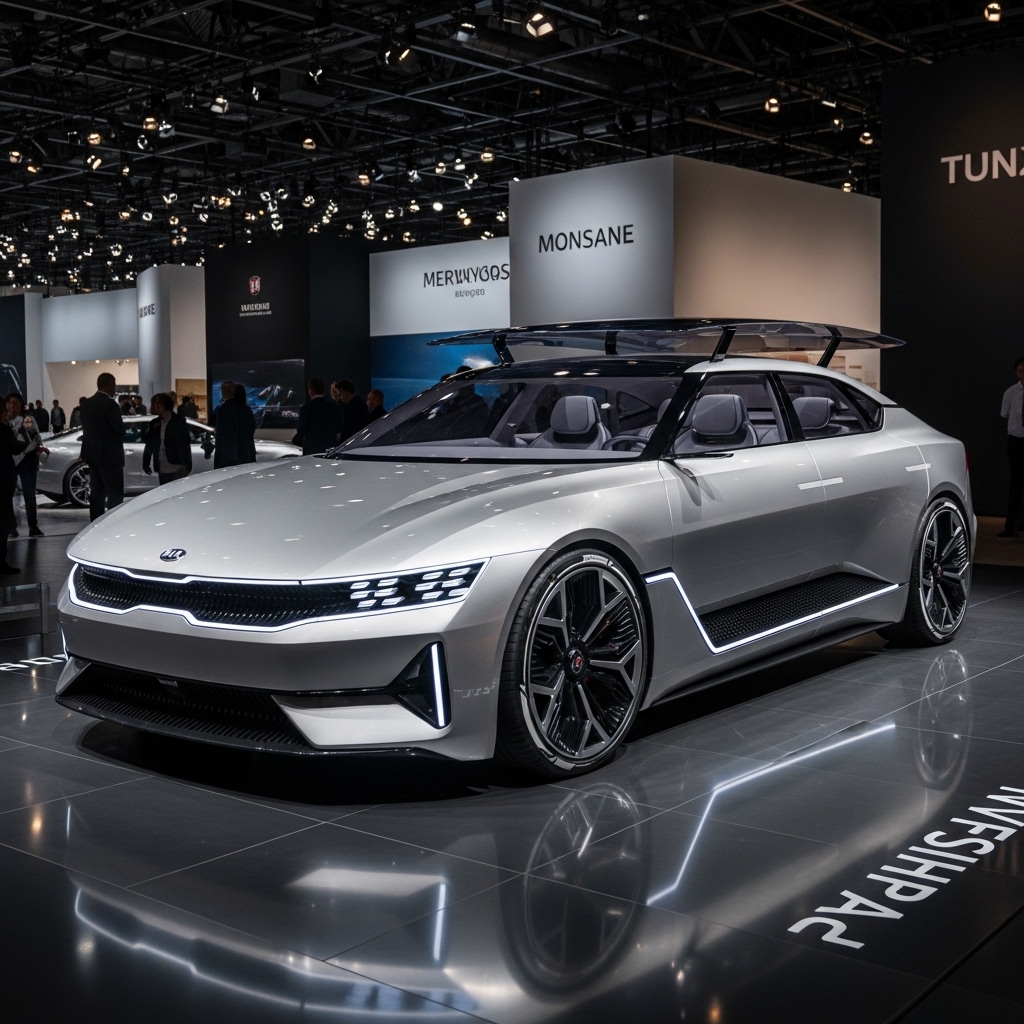
Kia’s Vision Meta Turismo concept is one of the clearest recent expressions of that shift. The vehicle, presented by Kia as part of its future-mobility design language, does not merely look futuristic. It appears to ask a deeper question: what happens when the emotional grammar of gaming begins to influence how a car is imagined, experienced and even controlled?
That question matters because the car industry is changing at several levels at once. Electric vehicles have altered packaging freedom, freeing designers from some of the old constraints imposed by internal combustion engines. Software has become central to how vehicles are sold and updated. Younger consumers are growing up in digital ecosystems where interaction is personalized, visual layers are dynamic and entertainment is not a separate category from everyday life. In that context, it is no longer surprising that automakers are looking at game design not as a novelty, but as a serious source of inspiration.
The Vision Meta Turismo embodies that mindset. Kia presents it as more than a sleek electric grand tourer. It is framed as an immersive mobility space, one that blends driving performance with digital interaction and lounge-like flexibility. Even the name suggests a collision of traditions: “Turismo” evokes the long-distance grand touring ideal, while “Meta” points toward a more networked, screen-infused and virtualized experience. The result is a concept that sits somewhere between a performance car, a rolling digital studio and a speculative gaming pod.
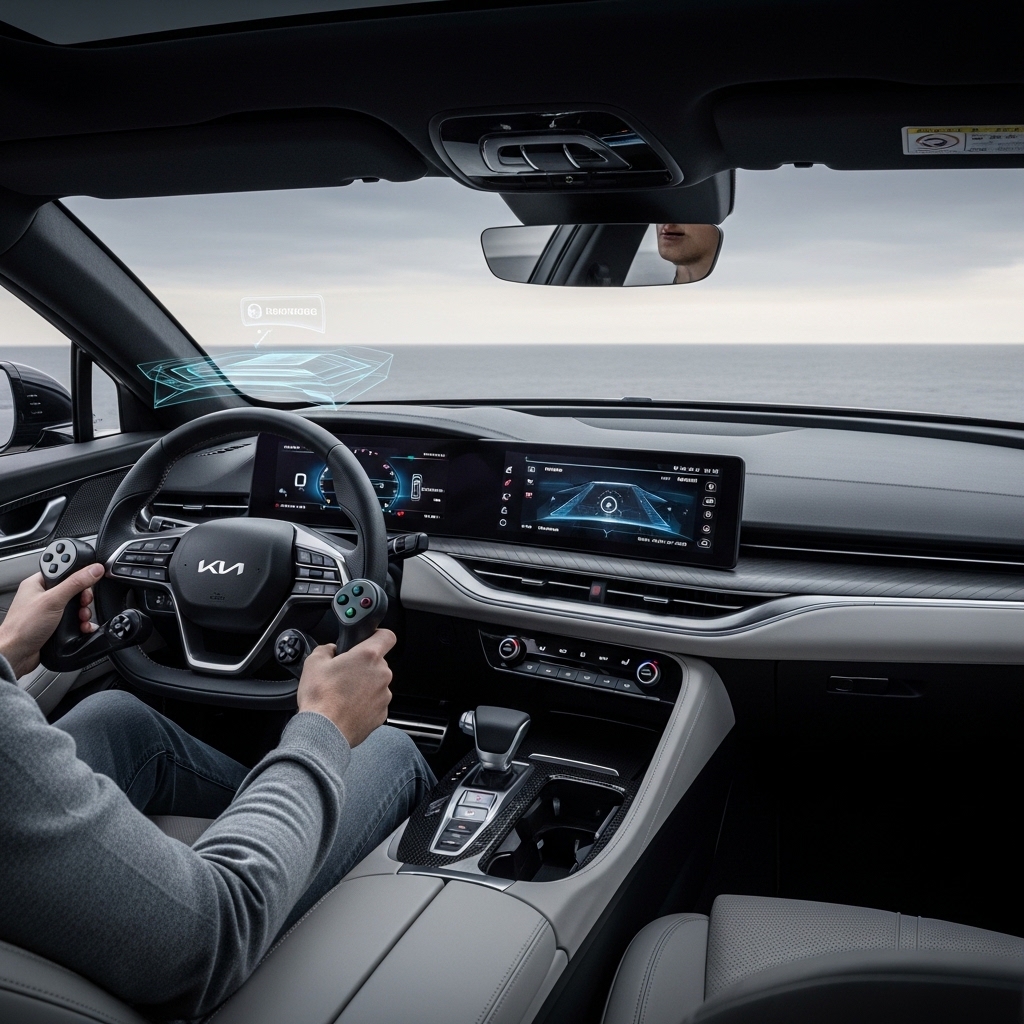
Its design language reflects that ambition. The exterior is futuristic and assertive, with a low stance, dramatic surfaces and a body shaped for visual impact as much as aerodynamic suggestion. Yet the more revealing story is inside. Kia has emphasized an interior built around shifting modes of use, not simply one fixed driving posture. The car offers different experiential worlds — including Speedster, Dreamer and Gamer — implying that the vehicle can change identity according to mood, context or purpose. That is a very game-like idea. In video games, environments transform, interfaces respond and the experience changes depending on what the player wants to do. In the Vision Meta Turismo, the driver is no longer just an operator. The driver becomes a user, possibly even a participant in multiple realities.
This is where gaming influence becomes culturally significant rather than merely stylistic. Traditionally, automotive design has treated the cockpit as a command center. The driver looks ahead, reads gauges and manipulates controls. Gaming, by contrast, has trained generations of users to expect immersion, rapid feedback, layered information and emotional engagement through interface. A steering wheel inspired by a game controller, joystick-like shifters, haptic responses and augmented-reality overlays are not simply decorative gestures. They reflect a broader shift in what intuitive control now means.
For digital-native consumers, a car that behaves like an inert mechanical object may feel less natural than one that offers configurable digital environments. The same person who customizes a game interface, builds a digital avatar or moves seamlessly between physical and virtual entertainment may expect a vehicle to be adaptive, expressive and responsive. That does not mean every car will become a toy. It means the boundaries between transport, media and interactive design are becoming more porous.
Kia is not alone in exploring that territory. The relationship between gaming and automotive culture has been deepening for years. Racing games have long introduced young audiences to car brands, performance myths and design fantasies well before those audiences become buyers. The Gran Turismo franchise, through its Vision Gran Turismo program, turned that relationship into a formal collaboration by inviting automakers to design dream machines specifically for the virtual world. In that framework, the game became a design laboratory. Companies could explore extreme forms, speculative technologies and emotional ideas that might never survive a production meeting, yet could still shape brand identity.
That feedback loop is now flowing in both directions. Where once carmakers designed fantasy vehicles for games, they are increasingly creating real-world concept cars that borrow the logic of games. The Vision Meta Turismo is a product of this moment. It is not only a car that could appear in a game. It is a car apparently imagined through a gaming sensibility.
There are practical reasons for that. Electric vehicles risk becoming visually homogeneous if they are designed only for efficiency and clean user interfaces. Gaming offers automakers a way to restore drama, individuality and narrative. A vehicle can have modes, characters and emotional arcs. It can sound different, feel different and display different information depending on the experience the user wants. In the age of software-defined vehicles, those ideas are easier to prototype than ever before.
There is also a business case. Carmakers are fighting for attention in a crowded and expensive transition toward electrification. Younger buyers may feel less emotionally attached to engines and gearboxes than previous generations did. To win them over, brands need a new vocabulary of desire. Gaming provides one. It speaks in immersion, personalization, community and sensory experience. A concept like the Vision Meta Turismo suggests that future brand loyalty may be built not only on horsepower or range, but on interface design and emotional engagement.
Still, there are risks in importing game culture too directly into automotive design. Driving is not a simulation. Public roads are complex and dangerous environments that demand clarity, safety and responsibility. A car can be playful, but it cannot allow entertainment logic to undermine focus. Augmented reality, dynamic displays and emotive controls may enrich the experience, but only if they are designed within strict limits. The challenge for automakers will be to capture the appeal of gaming without turning real driving into distraction.
There is another tension as well. Many consumers say they want simpler cars, fewer distracting menus and more tactile trust. That may explain why Kia’s concept does not rely only on giant screens. Its gaming influence appears to include physicality: joystick-like interaction, deliberate haptics and a sense of embodied control. In that respect, the concept is interesting because it does not imagine the future as purely touchscreens and silence. It imagines a digitally enhanced machine that still wants to feel alive in the hand.
That may be the most compelling lesson of game-inspired design. Good games are not only visual. They are about feedback, rhythm, control, reward and emotional pacing. If automakers learn from that intelligently, the future car may become more engaging without becoming more confusing. A vehicle might better understand when its user wants intensity, calm, focus or sociability. It may shift from commuter tool to private retreat to performance machine, all within one design language.
Whether the Vision Meta Turismo ever reaches production in recognizable form is almost beside the point. Most concept cars exist to test ideas, not to preview a showroom model directly. But concept cars matter because they reveal what companies think the future should feel like. In Kia’s case, the answer appears to be this: future mobility will not be designed only around transportation efficiency. It will also be designed around experience.
That is a telling message for the broader industry. For much of automotive history, aspiration came from the road trip, the racetrack and the open highway. In the next era, part of that aspiration may come from the screen. A generation raised on immersive worlds, competitive play and interface fluency is now old enough to shape markets. Carmakers can either ignore that culture or translate it into design.
Kia has chosen translation. The Vision Meta Turismo suggests that the future car may no longer be defined only by what happens under the hood or beneath the floor. It may also be defined by what happens in the mind of the user: how the machine frames motion, how it tells a story and how it turns mobility into an experience that feels at once physical and digital.
When car design takes inspiration from gaming, the result is not simply a flashier dashboard. It is a new theory of what a car is for. Not just to move people from one place to another, but to immerse them, respond to them and speak the language of the generation now taking the wheel.