As households face stress, high prices and digital fatigue, the kitchen is re-emerging not only as a place to prepare food, but as a refuge for attention, memory, control and connection.
The return of the home-cooked meal is not simply a story about food. It is a story about people trying to recover a sense of control in lives that often feel fragmented, expensive and overstimulated. After years of delivery apps, hurried lunches, inflationary pressure and blurred work-life boundaries, the kitchen table is again becoming a place where many households seek something more than dinner. They are seeking calm.
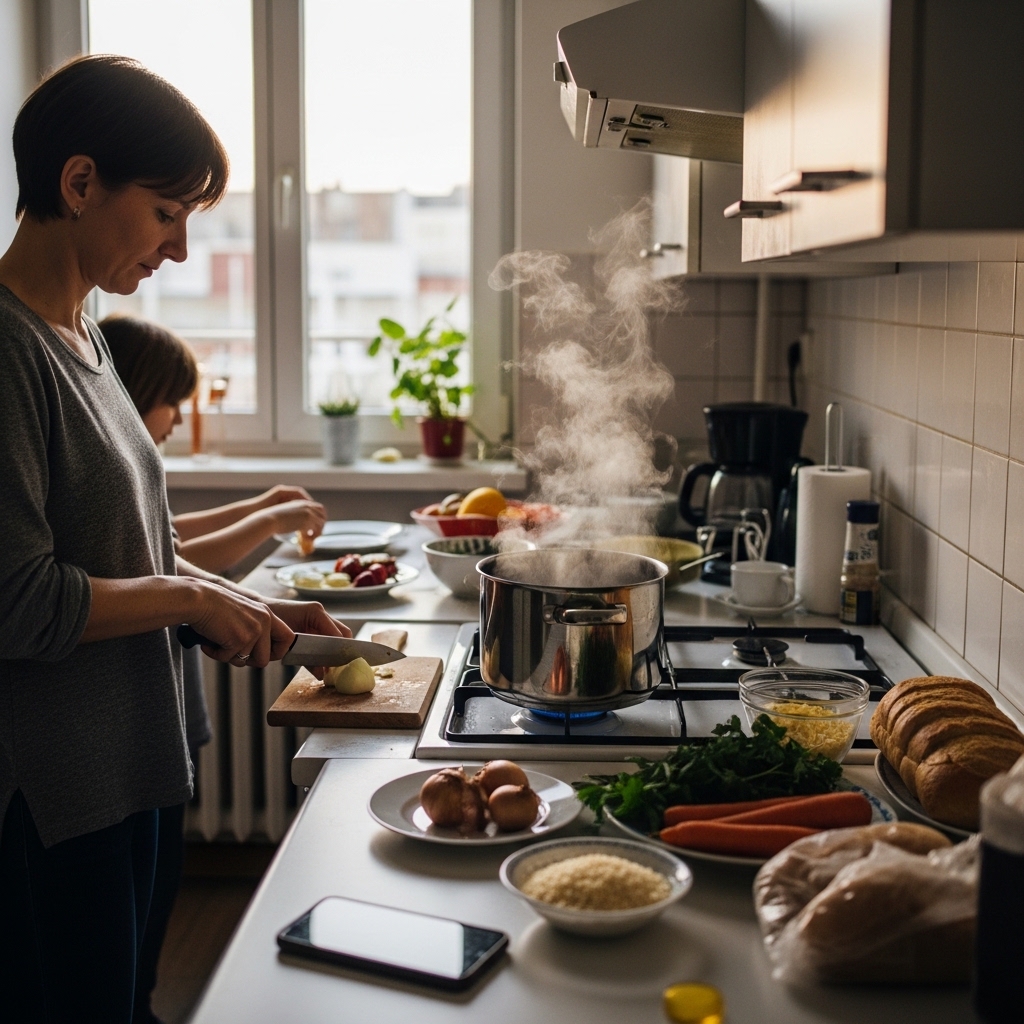
Across cities and suburbs, the change is visible in small rituals: a pot of soup left to simmer on a Sunday afternoon, bread dough rising beside a laptop, parents teaching children how to chop vegetables, young professionals replacing one delivery order with a simple rice bowl, retirees reviving recipes that had almost disappeared from family memory. These acts may look ordinary. But for many people, cooking has become a private method of repair.
The appeal begins with the body. Home cooking gives people more control over ingredients, portions, seasoning and timing. It can reduce dependence on highly processed foods and make it easier to build meals around vegetables, grains, legumes, eggs, fish or modest cuts of meat. But the growing emotional power of cooking cannot be explained by nutrition alone. The deeper attraction lies in the act itself: washing, cutting, stirring, tasting, waiting and serving. In a culture built around speed, cooking forces a different tempo.
Researchers have increasingly examined the connection between cooking and well-being. A systematic review of cooking interventions found evidence that such programs may positively influence psychosocial outcomes including socialization, self-esteem, quality of life and mood, while also noting that the evidence remains preliminary and limited. More recent work in culinary medicine has suggested that structured cooking workshops may help improve mood and reduce hopelessness and tiredness among some clinical patients. The science is not a license to call every dinner therapeutic. But it supports what many home cooks already describe: the kitchen can provide a rare combination of focus, creativity and practical reward.
Cooking offers something that many modern tasks do not: a visible beginning, middle and end. An email inbox refills. A social-media feed never concludes. Economic anxiety rarely resolves in a day. But a meal can be finished. Vegetables become stew. Flour becomes bread. Leftovers become tomorrow’s lunch. The mind, surrounded by unfinished demands, receives a small but concrete proof that effort can produce completion.
That sense of agency matters. Many people live with pressures they cannot immediately change: housing costs, unstable work, family obligations, political tension, climate anxiety and health concerns. Cooking cannot erase those forces. But it can create a bounded space where decisions still belong to the person making the meal. How much garlic, how long to simmer, whether to add lime, who receives the first bowl — these are small choices, but they are choices. In stressful times, even modest control can feel restorative.
The economics of eating have also pushed households back toward the stove. In the United States, USDA data show that food-away-from-home prices rose faster than food-at-home prices in both 2024 and 2025, continuing pressure on people who eat frequently at restaurants or through delivery. The pattern varies by country and city, and grocery bills have also strained families. Still, for many households, cooking at home remains one of the few adjustable parts of a budget. Meal planning, batch cooking and using leftovers are not new ideas, but they have gained new urgency.
Yet the return of home cooking should not be romanticized. Cooking can heal, but it can also exhaust. The burden still falls unequally, especially on women and caregivers who are expected to provide food after paid work, child care or elder care. A beautifully photographed dinner can hide invisible labor: shopping, planning, cleaning, remembering preferences, managing allergies, stretching money and negotiating time. For families working multiple jobs or living without safe kitchens, reliable transportation or affordable fresh food, the idea of cooking as therapy can sound like a privilege.
That contradiction is central to the modern home-meal revival. Cooking is being celebrated as self-care at the same time that many people are too tired to do it. The most honest version of the trend does not demand perfection. It does not insist that every sauce be homemade or every meal be wholesome. It leaves room for frozen vegetables, canned beans, instant noodles improved with an egg, supermarket rotisserie chicken, rice cookers, shared meals and leftovers. Healing does not require culinary performance. Sometimes it is simply the decision to feed oneself with attention.
The pandemic changed the emotional meaning of the kitchen for millions of people. For some, lockdowns turned cooking into a survival skill and a rare source of structure. For others, it intensified domestic labor and burnout. Years later, the memory remains complicated. But one lasting effect is clear: many people rediscovered the home meal as a social anchor. When offices, schools and public life were disrupted, eating together became one of the few repeated ceremonies left.
Now, the revival is less about emergency and more about intention. People are cooking to reconnect with family traditions, to reduce screen time, to manage anxiety, to save money, to teach children, to support health or simply to slow down. In immigrant households, recipes can preserve language and memory. In young households, cooking can become a way to build identity outside the algorithms of consumption. Among older adults, familiar dishes can summon continuity when other parts of life change.
There is also a sensory reason cooking feels healing. Modern life is dominated by abstract work: messages, spreadsheets, passwords, notifications, documents and images. Cooking returns the body to texture, smell, sound and heat. Onions soften. Oil crackles. Rice steams. Herbs bruise under a knife. Hands learn what the mind cannot fully explain. The experience is physical, immediate and grounded.
This is why baking, in particular, gained symbolic power in recent years. It demands patience and rewards attention. It is also forgiving in a way that life often is not. A failed loaf can be tried again. A cake can sink and still be eaten. A recipe can be adjusted. In the kitchen, mistakes are not always disasters; they are information. For people accustomed to professional or social pressure, that can be quietly liberating.
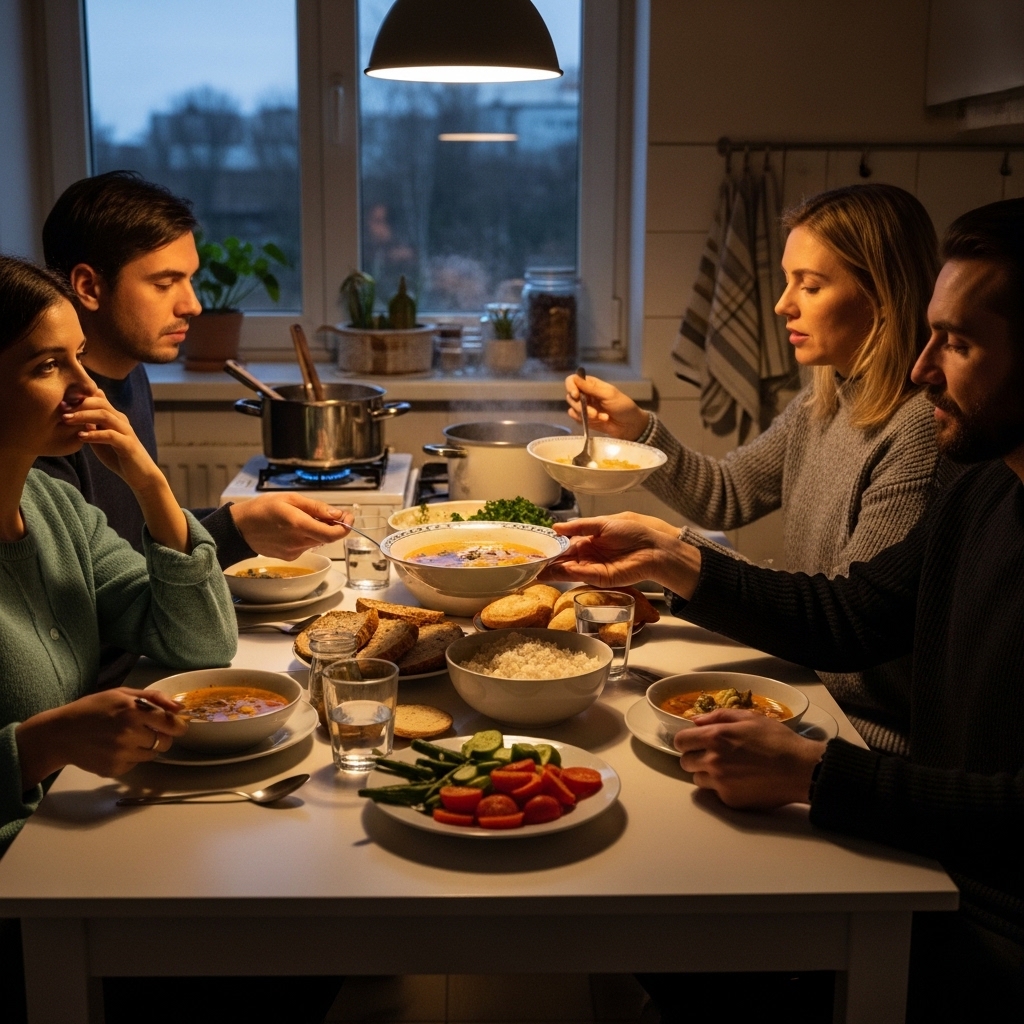
Cooking also heals through connection. A meal is one of the simplest ways to say what is often difficult to express directly: I noticed you, I remembered you, I want you to be well. The act of feeding another person carries emotional weight across cultures. It appears at births, funerals, holidays, recoveries, apologies and reunions. A home-cooked meal does not need sophistication to communicate care. A bowl of porridge, a plate of noodles or a reheated stew can carry more comfort than an elaborate restaurant dish.
The digital world has helped and complicated this revival. Online recipes, short videos and cooking communities have made techniques more accessible than ever. A beginner can learn to make dumplings, dal, pasta or sourdough from strangers across the world. But the same platforms can turn cooking into another arena of comparison. Perfect kitchens, expensive cookware and flawless plating can make ordinary meals feel inadequate. The therapeutic value of cooking may depend on resisting that performance culture.
The future of home cooking will likely be hybrid. People will still use delivery, meal kits, prepared sauces, frozen foods and restaurant meals. The return of the home meal does not mean a rejection of convenience. It means a desire to reclaim part of eating from speed and outsourcing. The goal is not to cook everything. It is to make cooking meaningful enough that it survives modern pressure.
For public health experts, this shift presents an opportunity. Cooking skills can support better diets, stronger family routines and more confidence around food. But asking individuals to cook more without addressing time poverty, food prices, housing insecurity and unequal labor would miss the point. A society that wants people to heal in the kitchen must also make kitchens possible: affordable ingredients, safe housing, predictable schedules, food education and shared responsibility at home.
The home meal is returning because it answers several needs at once. It is practical in an expensive world. It is sensory in a digital world. It is social in a lonely world. It is slow in a hurried world. Above all, it offers a form of care that is immediate and tangible.
Cooking will not solve the mental-health crisis, the cost-of-living crisis or the loneliness crisis by itself. But for many people, it has become a daily way to push back against all three. A meal at home may be modest, imperfect and quickly eaten. Still, in the act of making it, something human is restored: attention, memory, patience and the possibility that care can begin with a flame, a knife, a pot and enough food to share.