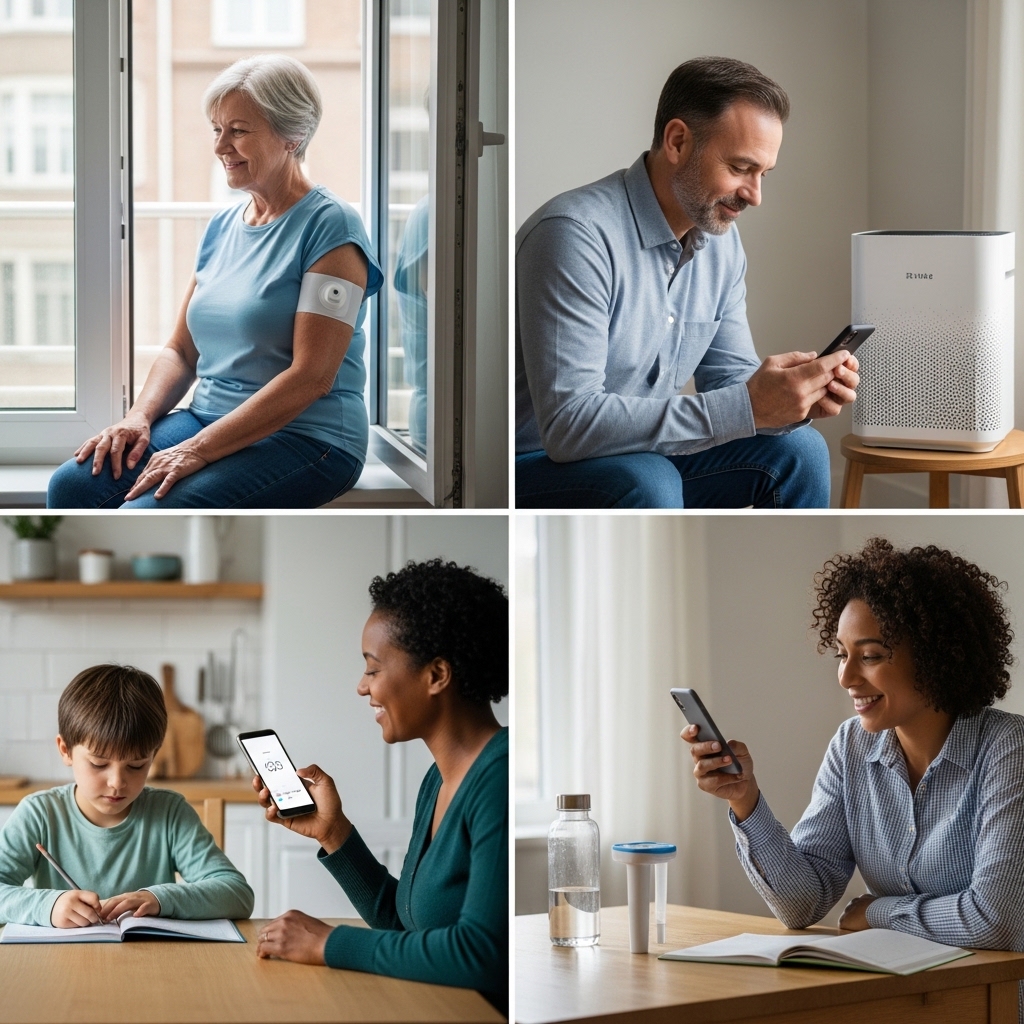
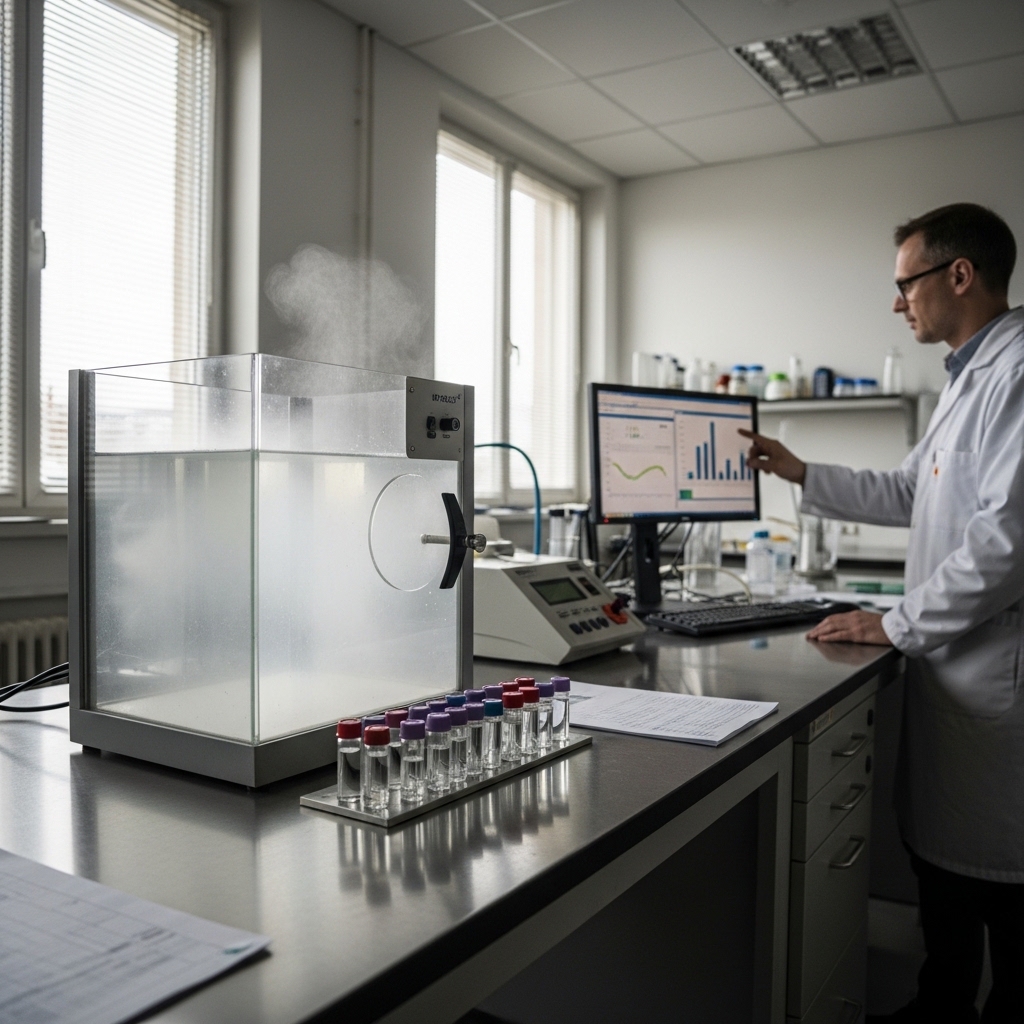
From cleaner air sensors to softer medical devices and smarter home health tools, a wave of practical innovation is moving beyond spectacle toward the ordinary human problems of comfort, safety and time.
The week’s most hopeful technology news did not come from a flying car, a talking robot or a faster artificial intelligence model. It came from a quieter place: laboratories and clinics trying to solve the small frictions that make daily life harder.
In Vienna, researchers reported a sensor that can detect tiny particles in air and water within minutes. In the United States, public health experts renewed attention on the simple but powerful value of cleaner indoor air. At MIT, scientists described materials that could make future wearable devices softer and more responsive to the body. At NIST, researchers pointed toward tiny light-based systems that could one day make computers and medical sensors faster and more efficient. Across health care, disability support and environmental monitoring, the most meaningful inventions of the moment are not promising to change humanity overnight. They are trying to make ordinary life less punishing.
That may be the real good news.
For years, technology has often been sold as disruption. The newest inventions were judged by how dramatically they could overturn industries, replace workers or command attention. But the inventions now gaining traction in health, environmental science and assistive technology suggest another measure of progress: whether a parent can know the air in a child’s bedroom is cleaner, whether an older person can move more safely, whether a patient can be monitored without another painful device, whether a community can detect contamination before it becomes a crisis.
The phrase “life easier to breathe” is more than metaphor. Air quality has become a daily concern in cities, schools, homes and workplaces. Wildfire smoke, traffic pollution, industrial emissions and poorly ventilated indoor spaces have turned clean air into a public health priority. The new sensor work from TU Wien speaks directly to that problem. The technology is designed to detect fine particulate matter in air and nanoparticles in water quickly, using optical methods sensitive enough to identify extremely small contaminants. That matters because pollution is often invisible until it is already causing harm.
A faster sensor does not remove pollution by itself. But detection changes behavior. It can tell a household when to run a purifier, a school when to improve ventilation, a city when pollution is rising near a roadway, or a water utility when a sample needs urgent attention. Good public health often begins with measurement. People cannot respond to what they cannot see.
The same principle is shaping renewed interest in indoor air. The National Institutes of Health has highlighted research into how air pollution can damage the supportive material around lung cells and make breathing harder. The practical advice remains almost humble: reduce indoor exposure where possible, improve ventilation, use effective filters and pay attention to the air people actually breathe for most of the day. After the pandemic, many buildings upgraded filtration and ventilation. The larger lesson is still unfolding: indoor air quality is not a luxury feature. It is infrastructure for health.
That idea has special importance for children, older adults and people with asthma, chronic obstructive pulmonary disease or heart disease. A purifier in a bedroom may not sound like a breakthrough compared with a new drug or surgical robot. But for someone who wakes less congested, misses fewer school days or breathes more easily during wildfire season, the impact is immediate. Some of the week’s best inventions are not glamorous because they do not ask to be noticed. They work best when life simply feels more normal.
In medical technology, a similar shift is underway. The future of wearable health devices may depend less on adding more screens and more notifications, and more on making sensors comfortable enough to disappear into everyday life. MIT researchers working in ionotronics and soft materials are exploring systems in which information moves through ions, rather than only through conventional electronics. The promise is a better bridge between machines and biological tissue. For patients, that could eventually mean wearable or implantable devices that bend, stretch and communicate with the body more naturally.
This is not yet a consumer product ready for a pharmacy shelf. But it belongs to a broader movement in medicine: devices that treat the body as soft, wet and moving, rather than forcing it to accommodate rigid hardware. The implications are wide. Softer biosensors could monitor wounds without irritating skin. Flexible implants could help nerves or muscles communicate with machines. Smart gels might support rehabilitation, prosthetics or long-term monitoring. For people who already live with illness, disability or aging bodies, comfort is not a minor feature. It determines whether technology is used at all.
That point is especially clear in assistive technology. The World Health Organization has long emphasized that assistive products can support education, employment, mobility, communication, self-care and participation in everyday life. Yet access remains uneven. A device that helps someone read, walk, hear, cook, type or communicate is not merely a gadget. It is a bridge to independence. The current wave of AI-enabled tools, speech interfaces, smart prosthetics, fall-prevention systems and adaptive home technologies could be transformative if they are affordable, durable and designed with disabled users rather than merely for them.
The best inventions in this space often solve problems that other people do not notice. A cup that does not spill for someone with tremors. A hearing aid that filters speech in a noisy room. A wheelchair system that navigates a narrow apartment. A phone interface controlled by eye movement. A wearable alert that calls for help after a fall. None needs to look futuristic to be revolutionary. The standard is whether it returns control to the person using it.
There is also encouraging movement in water and environmental monitoring. Around the world, communities need faster, cheaper ways to test water quality, track pollutants and respond to climate-driven stress. Recent reporting on clean water technology points to advances in smart sensors, AI-enabled monitoring, membrane filtration, nanofiltration and modular treatment systems. These tools matter because water safety is often a local problem with global consequences. A village well, a school tap, an industrial discharge point or a flooded neighborhood may need reliable testing long before a centralized laboratory can respond.
The same logic applies to agriculture and cities. Smart sensors can help farmers use less water. Pollution detectors can help officials enforce safety standards. Compact treatment units can support disaster zones where infrastructure has failed. As extreme weather becomes more common, resilience will depend not only on massive engineering projects but also on smaller, distributed tools that give communities information and options.
Even advances in computing hardware can belong in a good-news column when they support practical gains. NIST researchers have described chip-scale lasers capable of producing many wavelengths of light, a development that points toward more powerful light-based circuits. The immediate language of photonics can sound distant from ordinary life. But better optical systems can improve communications, sensors, medical imaging, environmental detection and data processing. In a world where artificial intelligence and health monitoring require huge energy and computing resources, efficiency is not an academic concern. It affects cost, access and sustainability.
The common thread across these inventions is not spectacle. It is relief.
Cleaner air sensors may relieve uncertainty. Better filtration may relieve breathing problems. Soft electronics may relieve discomfort. Assistive devices may relieve dependence. Faster environmental testing may relieve fear after contamination or disaster. More efficient chips may relieve some of the energy pressure created by the digital systems now embedded in medicine, transport, research and communication.
There are reasons for caution. Laboratory breakthroughs often take years to become reliable products. Some never do. Medical devices must pass safety testing and regulatory review. AI-enabled tools can fail if trained on narrow data. Sensors can produce false alarms. Consumer health products can overpromise. Clean technology can remain too expensive for the communities that need it most. A week of promising inventions does not erase the structural problems of health care access, disability rights, climate risk or pollution.
But optimism does not require naivety. It only requires evidence that people are working on the right problems.
This week’s encouraging inventions point toward a more mature idea of innovation. The future may not arrive as a single dazzling machine. It may arrive as a better filter in an apartment, a small sensor in a water plant, a soft patch on a patient’s skin, a quiet alert that prevents a fall, or a laboratory tool that helps doctors see disease earlier. It may be measured not in awe, but in fewer hospital visits, fewer missed school days, fewer unsafe taps, fewer exhausted caregivers and fewer people forced to adapt their lives around poorly designed technology.
That is why these developments matter. They suggest a technology culture slowly learning that the highest purpose of invention is not to make life faster, louder or more automated. It is to make life more livable.
In a difficult news cycle, the good news is not that machines are becoming more powerful. It is that some of them are becoming more humane.