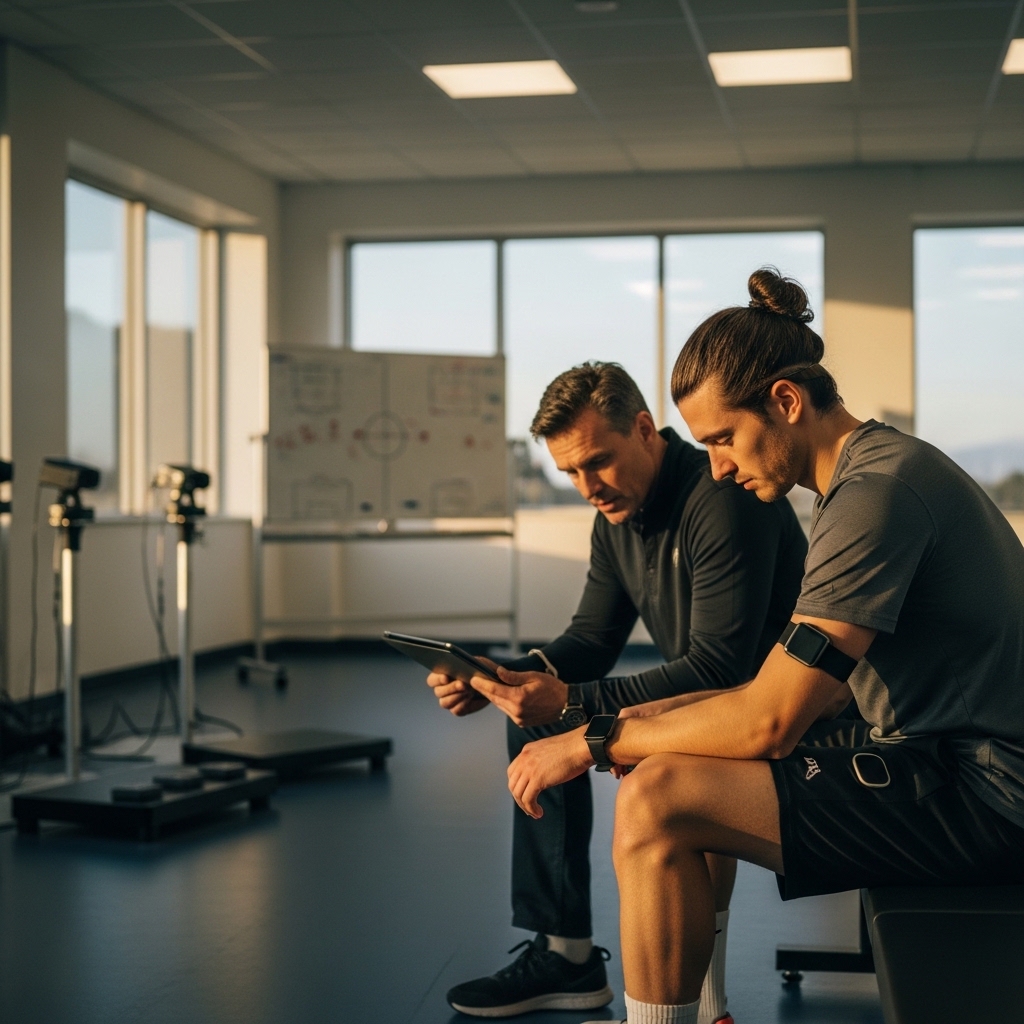
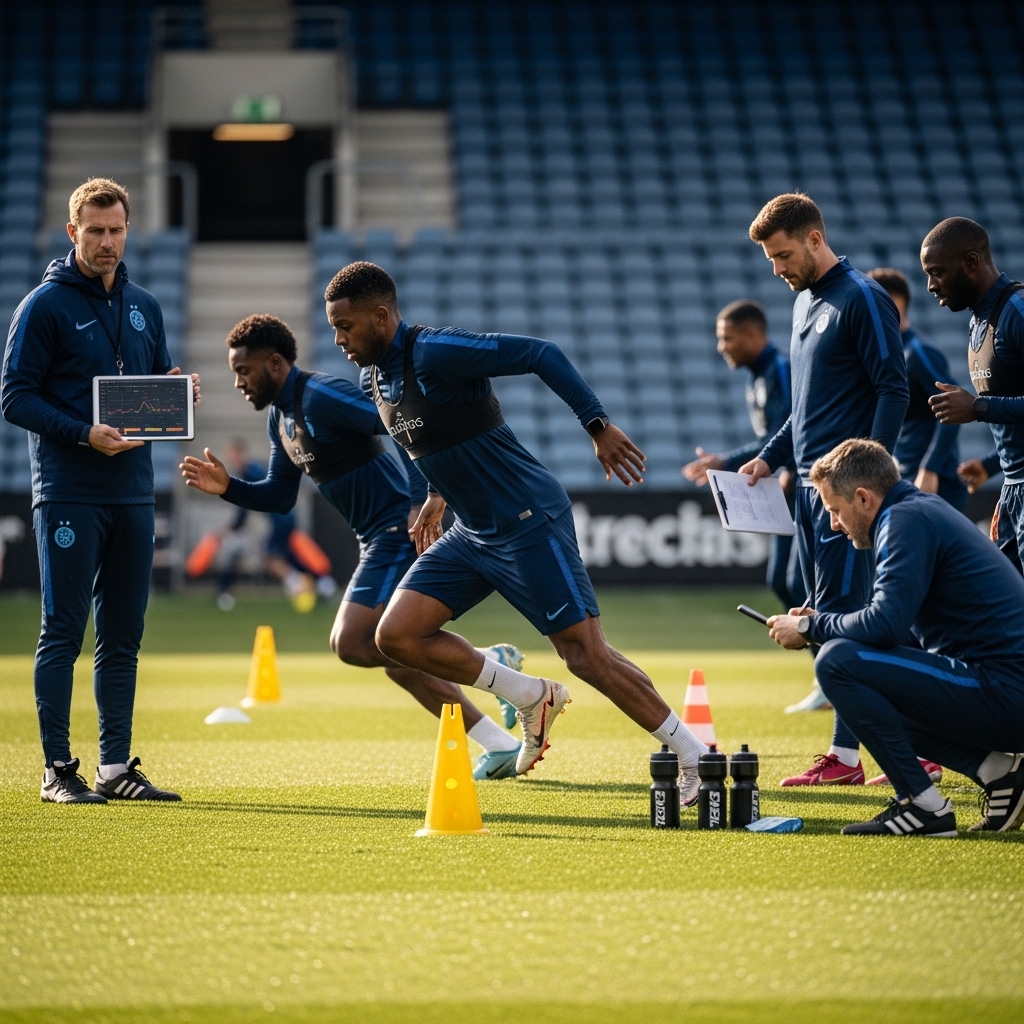
From wrist wearables to GPS vests and AI dashboards, modern training is being reshaped by streams of biometric and performance data — but the human coach is not disappearing yet.
The coach once stood at the center of athletic knowledge with a stopwatch, a whistle, a notebook and an instinct sharpened by years of watching bodies move under pressure. A tired stride, a dropped shoulder, a mistimed jump or a nervous glance could tell an experienced trainer what a spreadsheet could not. That era has not ended. But it is being transformed by a new layer of technology that sees, measures and predicts what even the best human eye can miss.
Across professional stadiums, Olympic training centers, university gyms and increasingly ordinary running paths, athletes now train inside a dense web of watches, chest straps, GPS vests, smart rings, force plates, motion cameras and software platforms. These devices collect heart rate variability, acceleration, speed, sleep, recovery, jump load, running mechanics, impact force, hydration patterns and workload. The result is a new form of coaching in which advice is no longer based only on observation and experience, but on continuous evidence gathered from the body itself.
The change is most visible in elite sport. Football players often wear tracking vests under their shirts during training, measuring distance covered, high-speed runs, sprint loads and positional movement. FIFA’s Electronic Performance and Tracking Systems, known as EPTS, include wearable, camera-based and local positioning technologies used to monitor and improve player and team performance. Basketball teams use player-tracking systems and biomechanical analysis to study movement efficiency, fatigue and injury risk. Endurance athletes rely on watches that estimate training load and recovery status. Golfers, cyclists, swimmers and tennis players increasingly receive feedback not just from coaches, but from sensors embedded in equipment, clothing or wearables.
The most important shift is not the existence of data. Sport has always produced numbers: times, scores, distances, weights, win-loss records. What is new is the intimacy and frequency of the measurements. A coach in the past might know an athlete’s best 400-meter split or maximum lift. Today, a performance staff may know how that athlete slept, how their nervous system recovered overnight, how many accelerations they performed in the previous session and whether their left leg is producing less force than usual.
This information can change decisions that once depended on instinct. A player who says he feels ready may show abnormal fatigue markers. A runner who looks strong may be accumulating dangerous load. A swimmer may discover that small technical inefficiencies appear only when fatigue begins. A basketball player may be cleared for practice but restricted from high-impact jumping. Training becomes less about pushing everyone through the same session and more about adjusting the day to the athlete’s current condition.
Artificial intelligence is accelerating that shift. Wearables no longer simply display numbers. They increasingly interpret them. WHOOP, for example, has promoted AI-powered coaching that uses biometric data and performance science to answer individual health and fitness questions. Consumer smartwatches now offer recovery recommendations, running guidance and sleep analysis. In professional sport, AI systems can combine tracking data, video, medical history and opponent tendencies to support both training plans and tactical decisions.
This is where technology begins to look like a coach. It can tell an athlete to reduce intensity, suggest a recovery day, flag a pattern of overtraining, compare current performance to historical baselines or identify movements linked to injury risk. It can deliver feedback instantly, repeatedly and without fatigue. A human coach cannot watch every athlete every second. A sensor can.
But replacing a coach is different from changing coaching. Data can detect that an athlete is not recovering well; it cannot always know why. A low readiness score may reflect poor sleep, stress, illness, travel, family problems or anxiety before a major competition. A GPS dashboard may show that a footballer is sprinting less, but only a coach may know whether the player is protecting an injury, following tactical instructions or losing confidence. Numbers can reveal a pattern. Meaning still requires interpretation.
The most successful teams are not treating technology as a substitute for coaching judgment. They are using it as a second set of eyes. In many clubs, the modern coach works with sport scientists, data analysts, physiotherapists, nutritionists and psychologists. The head coach may still decide who plays and how the team trains, but those choices are increasingly informed by evidence generated by sensors and software.
This can make coaching more precise and more humane. In the past, athletes were often praised for tolerating extreme workloads. Pain and exhaustion were treated as proof of commitment. Data challenges that culture by showing that more work is not always better work. Recovery becomes measurable. Fatigue becomes visible. Injury prevention becomes part of performance rather than a separate medical concern.
The same tools are also reaching amateurs. A recreational runner with a mid-range smartwatch can now track pace, cadence, heart rate zones, sleep and training strain. A teenager can receive video-based feedback on a basketball shot. A weekend cyclist can compare power output and recovery across months. For many people, technology provides access to guidance they could not afford from a personal coach.
Yet this democratization carries risks. Consumer devices can create the illusion of certainty. Readiness scores and recovery metrics may look scientific, but they are often estimates built from algorithms that users do not fully understand. Accuracy varies by device, sport, skin tone, movement type and fit. A watch may be useful for trends but unreliable for medical conclusions. An athlete who obeys every alert may become anxious, while another may ignore the body’s own signals because the dashboard appears normal.
There are also privacy concerns. Athletic data can be deeply personal. Heart rate, sleep, menstrual cycle information, stress levels and injury markers can reveal more than performance. In professional sport, the question of who owns this data is becoming increasingly important. Does it belong to the athlete, the team, the league, the device company or the broadcaster? Could a player’s recovery data influence contract negotiations? Could injury-risk models affect selection or insurance? As sensors become more powerful, the governance of sports data will matter as much as the technology itself.
The fan experience is changing too. Broadcasters have begun using biometric and tracking data to make live sports more immersive. Viewers may see a golfer’s heart rate before a decisive putt, a basketball player’s shot difficulty calculated in real time or a football team’s pressing intensity visualized on screen. These features can deepen understanding, but they also turn private physical stress into entertainment. The line between insight and intrusion is still being negotiated.
For coaches, the future will demand new skills. The best coaches will not need to become software engineers, but they will need data literacy. They must know which metrics matter, which are noise, when to trust a model and when to challenge it. They must also communicate data in ways athletes can use. A chart does not motivate by itself. A coach still has to translate evidence into belief, discipline and action.
That is why the idea that technology will replace coaches is too simple. It may replace some coaching tasks: counting repetitions, recording splits, monitoring load, analyzing video clips and generating routine recommendations. It may expose weak coaching by making vague intuition less defensible. It may give athletes more independence, especially in individual sports. But the emotional, ethical and strategic dimensions of coaching remain stubbornly human.
An athlete does not merely need to know what the body is doing. They need to understand what the moment requires. They need trust after failure, calm before pressure, restraint when ambition becomes dangerous and courage when fear becomes rational. Sensors can measure fatigue, but they cannot fully measure desire. Algorithms can recommend a lighter session, but they cannot look an athlete in the eye and decide whether today calls for protection or challenge.
The future coach may therefore look less like a commander and more like an interpreter. Around them will be streams of data from watches, sensors, cameras and AI systems. Their job will be to turn those streams into judgment. Technology will make training more visible, individualized and responsive. It will also make sport more complex.
The whistle and stopwatch are not gone. They now sit beside dashboards, wearables and predictive models. Coaching is not disappearing. It is being upgraded, questioned and forced to become more precise. In the most advanced teams, the coach of the future will not be replaced by data. The coach who ignores data may be replaced by one who understands it.