As artificial intelligence, lightweight displays and wearable computing converge, the phone may become less of a screen in the hand and more of an invisible engine in the pocket.
The smartphone screen has been the defining window of modern life for nearly two decades. It is where people read the news, call a doctor, hail a ride, translate a menu, pay for coffee, record a protest, comfort a child, and scroll through the private theater of their days. But in the technology industry’s most ambitious laboratories, another idea is gathering force: the screen may not need to live in the hand at all.
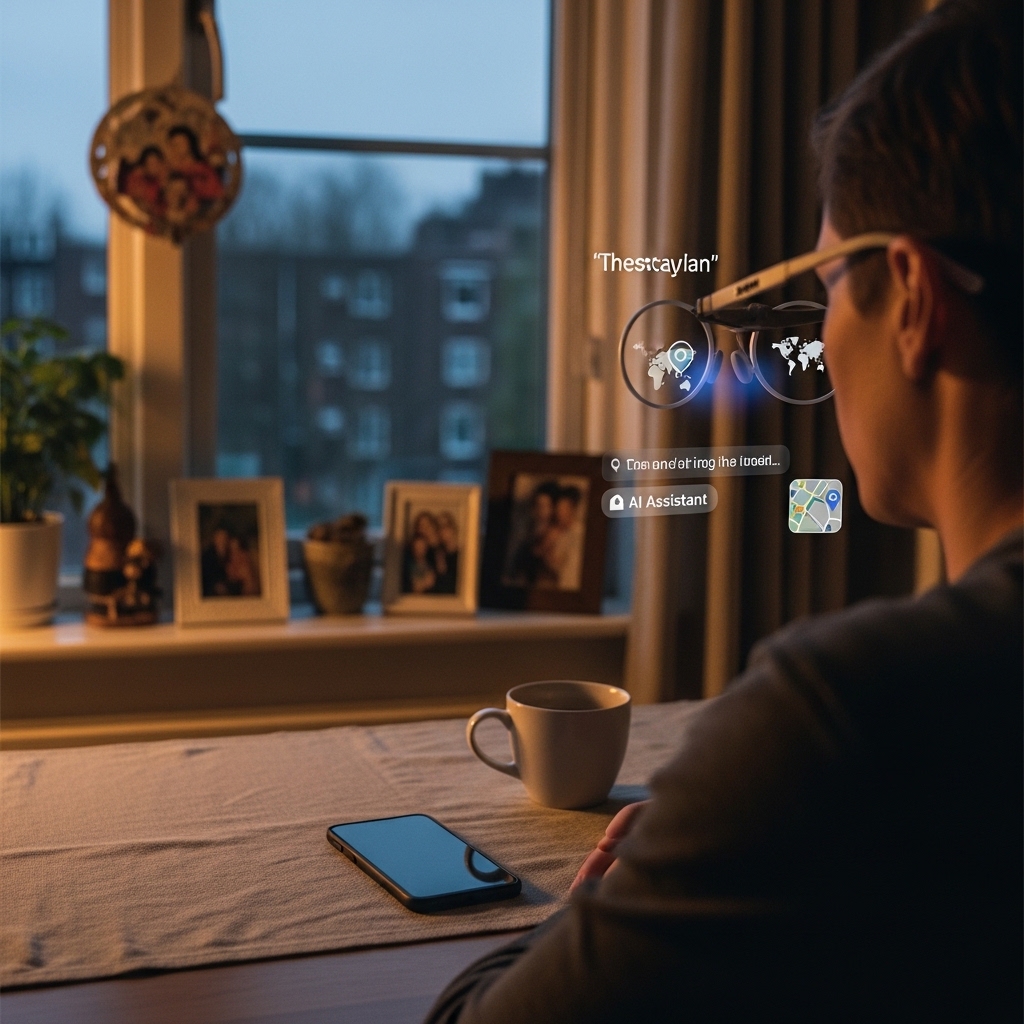
Augmented reality glasses, long promised and often disappointing, are moving from speculative demos toward practical consumer products. The latest devices do not yet replace phones. Most still depend on smartphones for connectivity, computing, apps or account management. Yet their direction is clear. They aim to move digital information from a glowing rectangle to the user’s field of vision, making messages, maps, translation, video calls and artificial intelligence feel less like things one opens and more like things that appear when needed.
The question is no longer whether smart glasses can capture photos, play music or answer basic voice commands. That threshold has already been crossed. The harder question is whether AR glasses can eventually do what the smartphone screen does better than any previous technology: combine utility, intimacy, portability and habit in a device billions of people trust enough to touch hundreds of times a day.
For now, the answer is cautious. The smartphone is not about to vanish. Global shipments remain measured in the hundreds of millions per quarter, and research firm IDC forecast worldwide smartphone shipments at roughly 1.25 billion units for 2025. That scale is difficult to challenge. Phones are affordable across price tiers, supported by mature app ecosystems, packed with powerful cameras and processors, and socially accepted in nearly every setting. AR glasses, by contrast, are still proving that they can be useful, comfortable, attractive and respectful of privacy at the same time.
Still, a shift has begun. Meta’s Ray-Ban smart glasses helped normalize the idea that wearable cameras, microphones, speakers and AI assistants could be built into familiar eyewear rather than futuristic headsets. EssilorLuxottica, Meta’s eyewear partner, said the glasses had sold 2 million pairs since their late-2023 launch and aimed to expand production capacity to 10 million pairs annually by the end of 2026. Later market reports suggested sales accelerated strongly in 2025, driven by the appeal of fashionable frames rather than bulky hardware.
That distinction matters. The history of wearable computing is littered with technically impressive products that failed the public test of style, comfort and social behavior. Google Glass became a cultural warning sign more than a mass-market device. Virtual reality headsets have found strong use in gaming, training and industrial settings, but they remain difficult to wear casually in public. Even Apple’s Vision Pro, an engineering showcase launched as a spatial-computing device, has faced reports of weak sales, high pricing concerns and questions about mainstream demand.
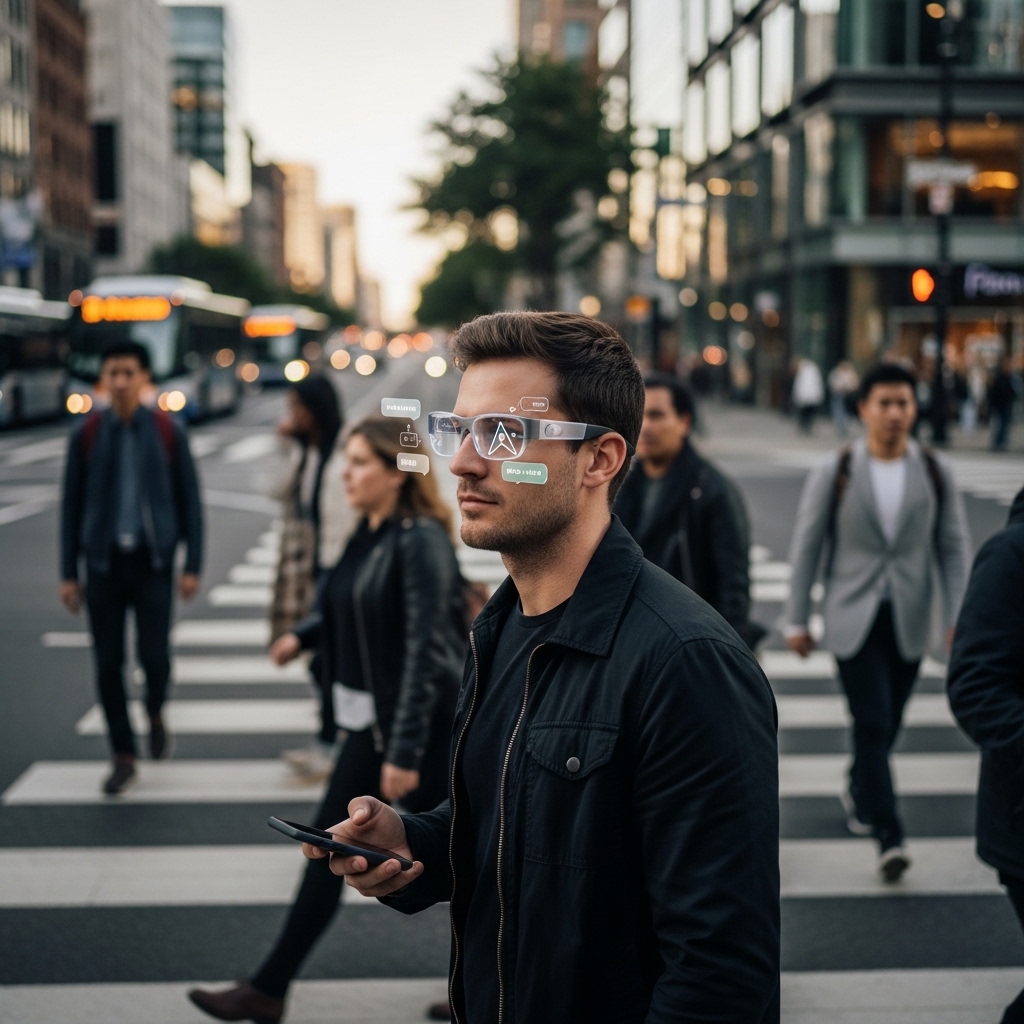
AR glasses promise a different path. Instead of isolating the user inside a headset, they try to overlay digital information onto the real world. A commuter might see a train delay without pulling out a phone. A mechanic might view repair steps while keeping both hands on machinery. A traveler might read live translation across a foreign-language sign. A parent might record a child’s first bicycle ride from eye level. A doctor might review patient notes without turning away from the bedside.
The smartphone screen, in this vision, becomes less central because the world itself becomes the display. But making that vision ordinary requires solving a stack of hard problems simultaneously. Displays must be bright enough for sunlight, sharp enough for text, wide enough to feel natural and efficient enough to preserve battery life. Cameras and sensors must understand the environment without creating a sense of constant surveillance. Voice assistants must become reliable in noisy streets. Gesture controls must work without making users look strange. Batteries must last through a day. Frames must be light, durable and fashionable.
Meta’s Orion prototype, unveiled in 2024, illustrated both the promise and the gap. The company described the device as true augmented reality glasses with holographic displays, contextual AI and controls involving eye tracking, hand tracking and a neural wristband. It was not a mass-market product. It was a statement of intent: a future interface in which a user could place 2D and 3D content around the physical world and interact with it without holding a phone.
Google is moving along a parallel route. Its Android XR effort, developed with partners including Samsung and Qualcomm, brings Gemini AI to headsets and glasses. At Google I/O 2025, the company demonstrated glasses that could support real-time translation, visual assistance and access to Google apps through voice and contextual AI. The strategic logic is obvious: if the next computing platform moves to the face, the operating system, assistant and developer ecosystem must move with it.
Snap has taken another route, focusing heavily on developers and creative AR experiences. Its fifth-generation Spectacles use waveguide displays and offer a 46-degree diagonal field of view, according to the company. But the device is also a reminder of the constraints that still define the category: advanced AR glasses often have limited battery life, high cost, developer-focused distribution or a form factor that is still too large for everyday mass adoption.
The breakthrough may come not from one spectacular product, but from gradual substitution. The phone screen is unlikely to disappear suddenly. Instead, some tasks may migrate first. Listening to messages, taking quick photos, receiving navigation cues, making hands-free calls, asking AI to identify an object, translating short conversations and checking notifications are all natural fits for glasses. These are glanceable, contextual tasks. They do not require the full attention of a phone screen.
More complex tasks may remain on phones, tablets or laptops for years. Writing long emails, editing video, managing finances, reading detailed documents, playing visually complex games and shopping with multiple comparisons still benefit from a stable rectangular screen. The smartphone may become the processor, modem, wallet and fallback display for glasses rather than being displaced altogether. In that scenario, the phone screen does not vanish; it becomes less frequently touched.
Artificial intelligence changes the equation. Earlier generations of AR struggled partly because they lacked a killer use case. AI assistants may provide one. A screen shows information after a user searches for it. Glasses with AI could see what the user sees, hear what the user hears, and respond in context. That could make computing feel less like navigating apps and more like asking a capable companion. The interface would be conversation, gaze and gesture rather than tapping icons.
But that same capability raises the central public concern: privacy. Glasses with outward-facing cameras can make bystanders feel recorded even when recording is not happening. AI systems that interpret surroundings may process sensitive information in homes, hospitals, schools, workplaces and public spaces. Designers can add recording lights, consent features, on-device processing and data controls, but social trust will be as important as technical safeguards. A phone camera is visible when raised. A camera on glasses is always present.
There is also the matter of attention. Smartphones are already criticized for pulling users away from their surroundings. AR glasses could reduce that friction by making digital information less physically intrusive. They could also make distraction more constant, placing alerts directly in front of the eye. The success of the category may depend on restraint: showing less information, at better moments, rather than turning daily life into a floating dashboard.
Economics will shape adoption as much as technology. Smartphones reached global scale because they became available at many prices and served many needs. AR glasses must move beyond premium early adopters. They need prescription support, regional language support, strong after-sales service, compelling battery cases, durable lenses and designs that work across cultures. They must also persuade developers to build experiences that are not just phone apps projected into the air.
The most likely future is hybrid. Over the next several years, smart glasses may become a popular companion device, especially for photos, audio, translation, navigation and AI assistance. True AR glasses with full-color displays and spatial interfaces will improve, but they will probably enter the mainstream more slowly. The smartphone screen will remain the trusted workhorse while shrinking in symbolic importance. People may still own phones, but they may look at them less.
That would still be a profound change. The disappearance of the phone screen does not have to mean the disappearance of the phone. It may mean the end of the phone as the first place people turn their eyes. The device that changed the world by putting the internet in every pocket may eventually give way to an interface that puts the internet across ordinary sight.
For consumers, the transition will not be decided by keynote speeches or prototypes. It will be decided in small daily moments: whether glasses can guide someone through an unfamiliar city, translate a conversation without embarrassment, record a memory without ruining it, answer a question faster than a phone, and then disappear into the background. The smartphone won because it was useful every hour. AR glasses will need to be useful without demanding to be noticed.
The screen may not disappear tomorrow. But its monopoly over digital life is beginning to weaken. The future of computing may still be mobile, personal and always connected. It may simply no longer require people to look down.